Womenswear Sales Manager Job Description
Leading the womenswear sales team — territories by channel, coaching, key accounts and the women's division number
A womenswear sales manager leads the team that sells women's clothing lines to the retail trade. The manager carries the women's division number — the total the womenswear sales organisation must deliver — while personally holding only its largest relationships. The rest of the work runs through people: hiring and coaching representatives, assigning territories and channels, setting account targets, joining the appointments that matter, and converting a team's separate pipelines into one dependable forecast for the fastest-moving side of the apparel business.
More Sales & Selling Job Descriptions by Letter:
Territories, Channels and Targets
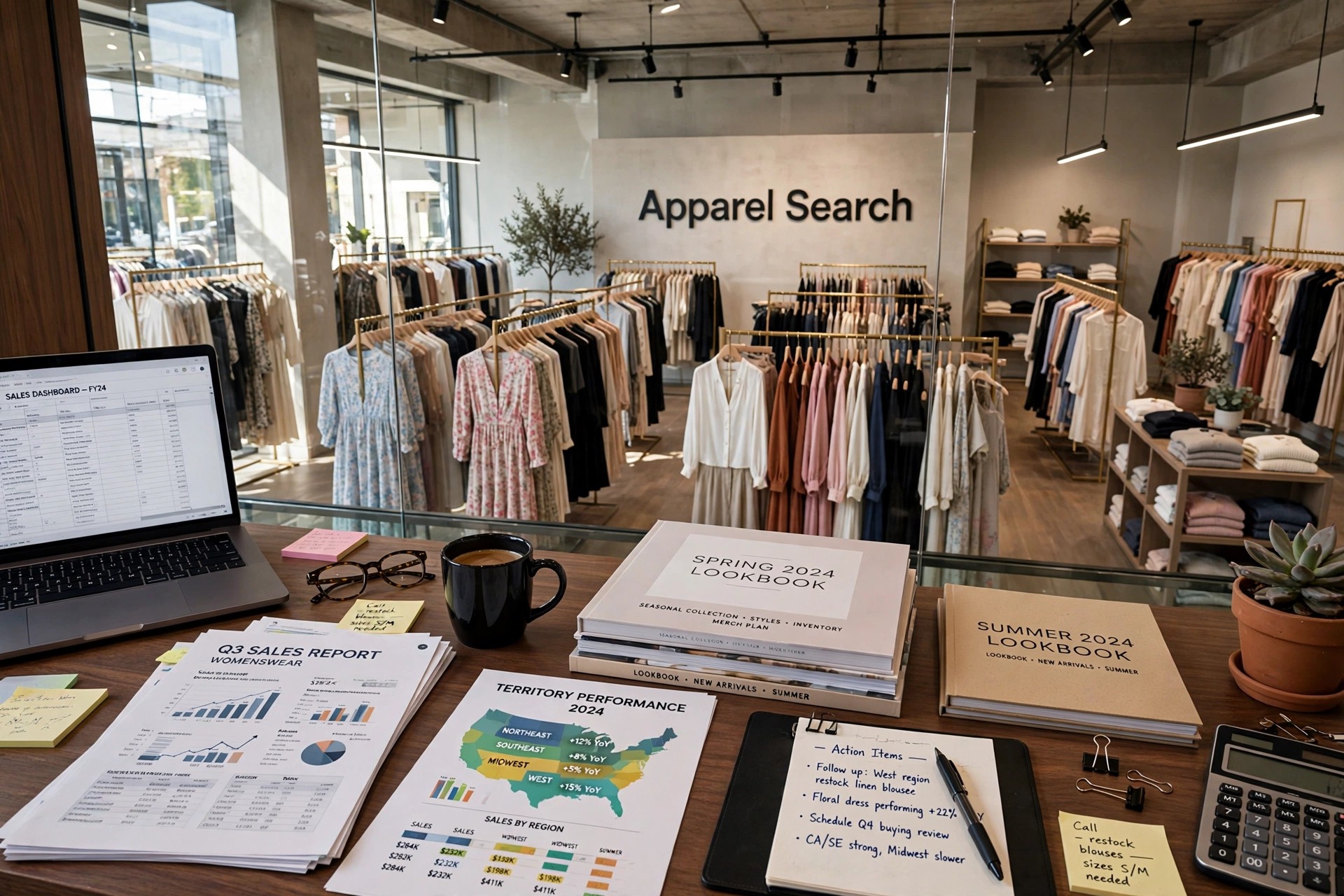
The manager divides the womenswear market before the team sells it. Territories are drawn around the channel map — department store groups handled centrally, specialty chains by region, boutique territories by geography and travel load — so that each representative's book matches how the accounts in it actually buy. Targets are then set account by account from the division budget downward, using last season's results, the account's own trajectory and the strength of this season's women's collections, category by category: a dress-led season and a denim-led season do not load the same accounts.
Market weeks are the manager's operational peak. Showroom scheduling, key-account appointments, sample-set allocation across the team and daily order-intake tracking all run through this desk. When intake lags, the manager decides where recovery realistically lives — a reorder programme on a proven dress, an additional drop offered to chains with open-to-buy, boutique appointments brought forward — rather than passing the gap upward and hoping the season repairs itself.
Coaching a Womenswear Team
Womenswear selling demands more product fluency from representatives than any other side of the trade: categories that turn over quickly, colour stories that must be presented as designed wholes, and fit knowledge across dresses, separates and tailored pieces. The manager builds that fluency deliberately — riding along on appointments, reviewing how each representative presents a collection, and correcting assortment advice that would overload a small account or under-serve a large one. A representative who sells a boutique more than its customers can absorb has not won an order; they have bought next season's refusal, and coaching exists to prevent exactly that.
Performance is managed on evidence. The manager reviews sell-through reports with each representative — which categories are moving at which accounts, where reorders should be chased, where a style must be exited before markdown season — and turns those reviews into the team's rolling forecast. Representatives whose numbers are challenged learn to defend them with account facts; that discipline is what senior leadership is actually buying from this role.
Key Accounts and the Division's Relationships
The largest women's accounts — the department store groups and national chains whose orders shape the division — are held at this level or jointly with their representatives. The manager leads the seasonal negotiations on terms, marketing support and delivery programmes, presents the collection's headline stories to senior buyers, and resolves the problems too big for a territory: a late drop across a chain's doors, a fit issue in a core separate, a dispute over an exclusive colour or style.
Those relationships set the ceiling on the whole division, so the manager also guards their quality between seasons: honest delivery promises, early warning when a collection is running late, and no commitment made to one major account that quietly breaks a promise to another. Credibility accumulated here is the division's real distribution asset, and it is spent carefully.
Skills, Qualifications and Career Path — and the Neighbouring Titles
This is a senior appointment built on a womenswear selling record: years of carrying women's accounts personally, demonstrated assortment judgement across the categories, financial fluency with targets, margins and markdown exposure, and the presence to face a retail group's senior merchants. Employers promote from their own womenswear representatives wherever possible, because the account knowledge and the team's respect are both earned in the territory.
Two neighbouring pages should not be confused with this one. The womenswear sales page, beside this one under W, is the selling role itself — the manager's team members, not their leader. The sales manager — womenswear page under S approaches womenswear sales management from the line and fabric-family side of the business; this page is the team-leadership role under its womenswear-first title, and the pair are flagged here rather than merged, because employers advertise both titles. Upward, the path runs to national sales management and the vice-president of sales office.
Common Questions
What does a womenswear sales manager do?
Leads the representatives who sell women's clothing lines: drawing territories and channel assignments, setting account targets, coaching category and assortment skills, running market weeks, holding the largest women's accounts and delivering the women's division sales total.
How is this different from the womenswear sales role?
The salesperson carries accounts and writes orders personally. The manager carries the division total through a team — hiring, coaching, target-setting and key-account leadership — and personally holds only the largest relationships.
How does this differ from the sales manager — womenswear page under S?
The titles are a flagged near-duplicate pair. The S page approaches the work from the womenswear line's own management; this W page is the team-leadership treatment under the womenswear-first title employers also advertise. Both are kept and cross-referenced.