Women's Sweater Sales Job Description
Selling women's knitwear — yarns, gauges, weights and the cold-weather calendar of the sweater business
Women's sweater sales is the knitwear specialism inside women's apparel selling: representing sweater and knitwear lines to department stores, women's specialty chains, boutiques and online retailers. The product is technical in a way cut-and-sew clothing is not. A sweater is described by its yarn, its gauge, its weight and its construction before its colour is even mentioned, and it sells on a calendar dominated by autumn deliveries and the holiday gift trade. The specialist salesperson speaks knitwear fluently — fibre, stitch and fit — and plans a buyer's knitwear department around weather that has not happened yet.
More Sales & Selling Job Descriptions by Letter:
The Product: Yarns, Gauges and Weights
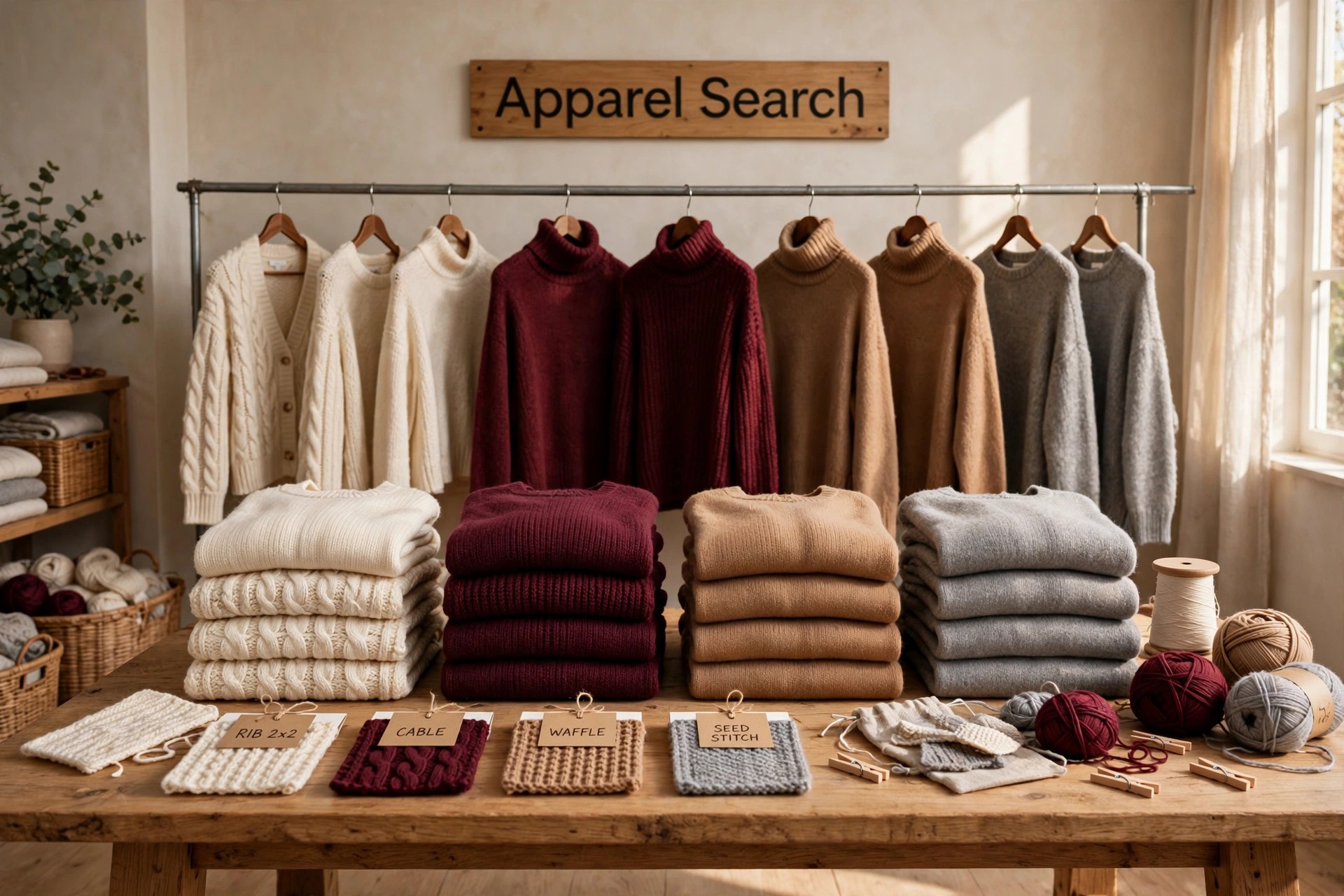
The line is organised by yarn and weight. Fine-gauge knits in merino, cotton blends and lightweight synthetics form the layering and twinset end of the range; mid-weight pullovers and cardigans carry the core season; chunky, textured and novelty knits — cables, ribs, jacquards and embellished styles — carry the fashion and gift business. The salesperson presents each group with its fibre story straight: natural fibres and their care, blends and what they add in durability or price, and the synthetic yarns that hold colour and shape through repeated washing.
Construction knowledge is the daily language. Gauge decides how fine a fabric knits up; fully-fashioned and cut-and-sew construction sit at different price points and behave differently in fit; necklines, sleeve shapes and body lengths define the season's silhouettes. Buyers expect the representative to explain why one cardigan costs twice another — yarn cost, stitch complexity, hand-finishing — in terms a department can pass on to its own customers. Swatches and yarn samples travel with the line, because knitwear is judged by hand as much as by eye.
The Sweater Calendar: Autumn Weight and Holiday Gifts
Sweaters are the most weather-exposed category in women's apparel. The bulk of the year's business is written for autumn and early winter delivery, and its success is decided by temperatures the salesperson cannot control — an unseasonably warm October can strand a heavy knit programme, while an early cold snap empties the department before the reorders can land. Selling the line therefore means planning depth honestly with the buyer: enough core weight to serve a normal season, transitional lighter knits to open it, and identified chase styles whose yarn and production lead times allow a mid-season reorder if the cold arrives.
The holiday season splits the range in two. Gift sweaters — novelty, embellished and luxuriously soft styles, presented and packaged as presents — are bought on a different logic from the self-purchase core range, at different price points and with a hard selling deadline. Spring brings a smaller, lighter knit season of cotton and fine-gauge styles. The specialist tracks all three sub-seasons separately for each account, because a buyer strong on gift knitwear may be weak on core, and the line presentation should follow the account's actual business, not the range's average.
Fit, Care and Quality Conversations
Knitwear fit behaves differently from woven fit: garments grow, relax and recover, and a style that measures correctly flat can wear a size differently on the body. The salesperson guides buyers on how each yarn and construction wears — which styles are cut relaxed, which are meant close — and feeds fit and quality reports from accounts back to the maker with specifics: pilling complaints on a blend, shrinkage after washing, a neckline that stretches in wear. In knitwear, quality evidence is the brand's reputation, and it is built or lost on exactly these reports.
Care is part of the sale for the same reason. Fibre content and care labelling must be accurate, and the salesperson helps buyers position hand-wash and delicate-care styles where their customers will accept them, rather than letting a beautiful but high-maintenance garment generate the department's returns. Honest positioning at the order stage is cheaper than the argument after the returns arrive, and knitwear buyers remember which representatives warned them.
Skills, Qualifications and Career Path
Employers look for women's apparel sales experience plus genuine knitwear literacy: fibre types and blends, gauge and construction, sweater weights and seasons, and the sizing behaviour of knitted garments. A feel for colour matters more here than in most categories, because a sweater range lives or dies on its colour story within a fairly stable set of silhouettes. Representatives often arrive from knitwear buying or from women's departments where they sold the category at retail and learned its weather risks first-hand.
The path runs to larger knitwear accounts and to the department store groups whose sweater departments anchor the category, then to sales management for knitwear or wider women's divisions. The specialism also sits naturally inside the broader womenswear role described elsewhere in this directory: the generalist sells the whole women's range including its knitwear, while this page's salesperson sells sweaters alone, in the depth the category's yarns, gauges and weather calendar demand.
Common Questions
What does a women's sweater salesperson sell?
Women's knitwear lines — pullovers, cardigans and knit tops across fine, mid-weight and chunky gauges — to department stores, specialty chains, boutiques and online retailers, planned around the autumn season and the holiday gift trade.
What product knowledge does sweater selling require?
Yarns and fibre blends, gauge and construction methods, sweater weights, how knitted garments fit and relax in wear, and care requirements — enough to explain price differences between styles and to position each garment honestly for a buyer's department.
Why is weather such a factor in sweater sales?
Most sweater volume is delivered for autumn and winter. A warm autumn strands heavy knits; an early cold snap sells the department out before reorders can arrive. The salesperson plans core depth, transitional weights and chase styles around that exposure.