Sales Manager — Knits Job Description
Leading sales of sweaters and knitwear — yarn, gauge and stitch as a commercial language
A knits sales manager leads the selling of knitwear — sweaters, cardigans, knit tops and dresses, and the jersey and sweater-knit programmes of a fashion company — and manages the representatives who carry those lines to knitwear buyers. The category has its own physics. Knit garments are looped, not woven: they stretch, they grow, they pill, and their cost is written in yarn prices and machine gauge long before a stylist sketches one. The manager who leads knit sales must therefore be two people at once — a sales leader running targets and territories like the general sales manager elsewhere in this section, and the team's senior knitwear merchant, able to argue a sweater's value from its fibre content and stitch construction in front of a buyer who handles nothing else.
More Sales & Selling Job Descriptions by Letter:
Knitwear Knowledge as the Sales Tool
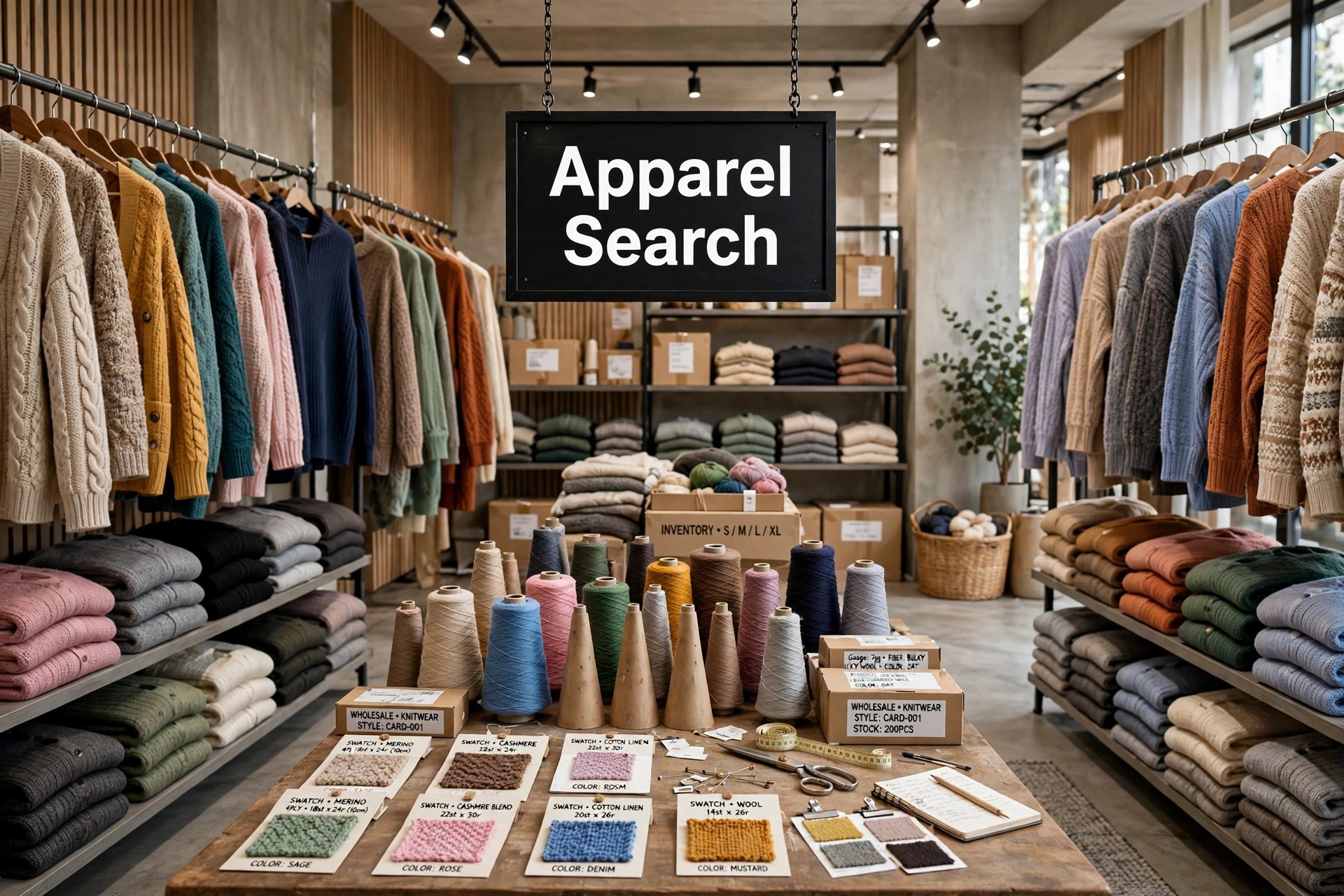
No category punishes vague product knowledge faster. Buyers ask about gauge — how fine the knitting is — about yarn composition and ply, about fully-fashioned versus cut-and-sew construction, linking quality at the seams, and how a style will behave after twenty washes. The knits sales manager trains the team to answer in that vocabulary, builds the line's selling stories yarn by yarn — why the lambswool blend justifies its ticket, what the cotton knit does in a warm-climate store — and prices the range so each construction tier makes sense against the one above it. When a buyer's quality complaint arrives, it is this manager who can tell a genuine knitting fault from a storage problem, and whose verdict both sides accept.
Yarn economics sit underneath every target. A spike in wool or cashmere prices rewrites the season's margin structure months before selling starts, and the manager plans around it: shifting the mix toward blends that hold the price points, protecting the hero styles whose yarn defines the line's reputation, and briefing the team early on which tickets will move and why. Representatives who understand that their sweater costs what it costs because of what is in it sell with conviction; the manager's first job each season is giving them that understanding, swatch cards in hand.
An Autumn-Weighted Season
Knitwear selling leans hard toward the cold half of the year. The autumn and holiday sweater business — including the gift sweater, bought by someone else for warmth and generosity — can decide the category's whole result, while spring knits sell lighter: fine-gauge cardigans, cotton sweaters, knit tops that behave almost as woven blouses in the assortment. The manager sequences the team's effort accordingly, front-loading key-account attention on the autumn buy, defending the delivery dates that cold weather makes immovable, and building the spring programme as a genuinely different offer rather than a thinner repeat of autumn.
Weather is the category's uncontrolled variable, and the manager plans for it openly with accounts: phased deliveries that let a buyer commit deeper if the season turns cold, reorder-ready core styles held in replenishable yarns, and honest conversations about what a warm autumn does to both sides' open-to-buy. Climate differences between territories matter more in knits than in almost any category — the northern representative's heavy-gauge story is the southern representative's dead stock — so territory assortments are set locally, under this manager's eye, rather than from one national template.
Accounts: Sweater Buyers and Knitwear Departments
The customers are knitwear and sweater buyers — sometimes a dedicated desk inside a department store group, sometimes folded into a broader women's or men's buying office — plus the sweater and knitwear specialists among catalogues and online retailers. These buyers judge a supplier on construction consistency across a production run, on shade continuity between deliveries, and on the pilling and shrinkage performance their customers report. The manager's account work is built on that evidence: wear-test results, returns data by style, and the discipline of never substituting a yarn mid-season without telling the buyer first.
Team management follows the general pattern — territories, targets, market-week discipline, coaching on appointments — with a knitwear twist: the manager checks that each representative's order book is balanced across gauge and price tiers, because a team that sells only the fashionable novelty sweaters leaves the replenishment basics, the category's quiet profit engine, to competitors. Key sweater programmes at major accounts are co-sold by the manager, whose construction fluency is the company's closing argument when a buyer is choosing between two similar-looking cardigans at different prices.
Skills, Qualifications and Career Path
Employers want a sales record in knitwear or a closely allied category, management evidence, and technical knit literacy — yarns, gauges, stitches, garment construction and the quality faults proper to knitted goods — that survives a buyer's questioning. Textile study helps and is common in the role's holders, as is time in knitwear product development or merchandising, where the cost and construction instincts are formed. The fabric and knit resources linked below are the standing reference shelf for the category's technical side.
Progression runs to general sales management for managers who broaden beyond the category, to national roles within knitwear-specialist companies whose whole business is this page's subject, or into knitwear merchandising and product leadership, where the same yarn-and-gauge judgement directs what gets made rather than what gets sold. Within this directory the contrast cases are the wovens manager — the looped fabric's opposite number — and the menswear and womenswear managers, whose categories cut across both fabric families.
Common Questions
What does a sales manager for knits do?
Leads the sales team carrying sweaters and knitwear lines: setting knitwear targets and territories, training representatives in yarn, gauge and construction knowledge, planning the autumn-weighted selling season, and co-selling key sweater programmes to knitwear buyers.
Why does knitwear sales management need technical yarn knowledge?
A knit garment's cost, quality and behaviour are set by its yarn and construction — fibre, ply, gauge, fully-fashioned or cut-and-sew. Buyers test that knowledge, quality complaints turn on it, and yarn price movements reshape the season's margins, so the manager must be the team's senior knitwear merchant.
What makes the knits selling season distinctive?
Its weight toward autumn and holiday: the cold-weather and gift sweater business dominates the year, weather swings move results, and territory assortments differ sharply by climate — heavy gauges that thrive in northern accounts are unsellable in warm ones.