Knit Fabric Guide
This hub organizes the whole knit world of Apparel Search in one place: how knitted fabric is constructed, the mills that produce it, the wholesalers who stock it, and the stores where sewers buy it by the yard.
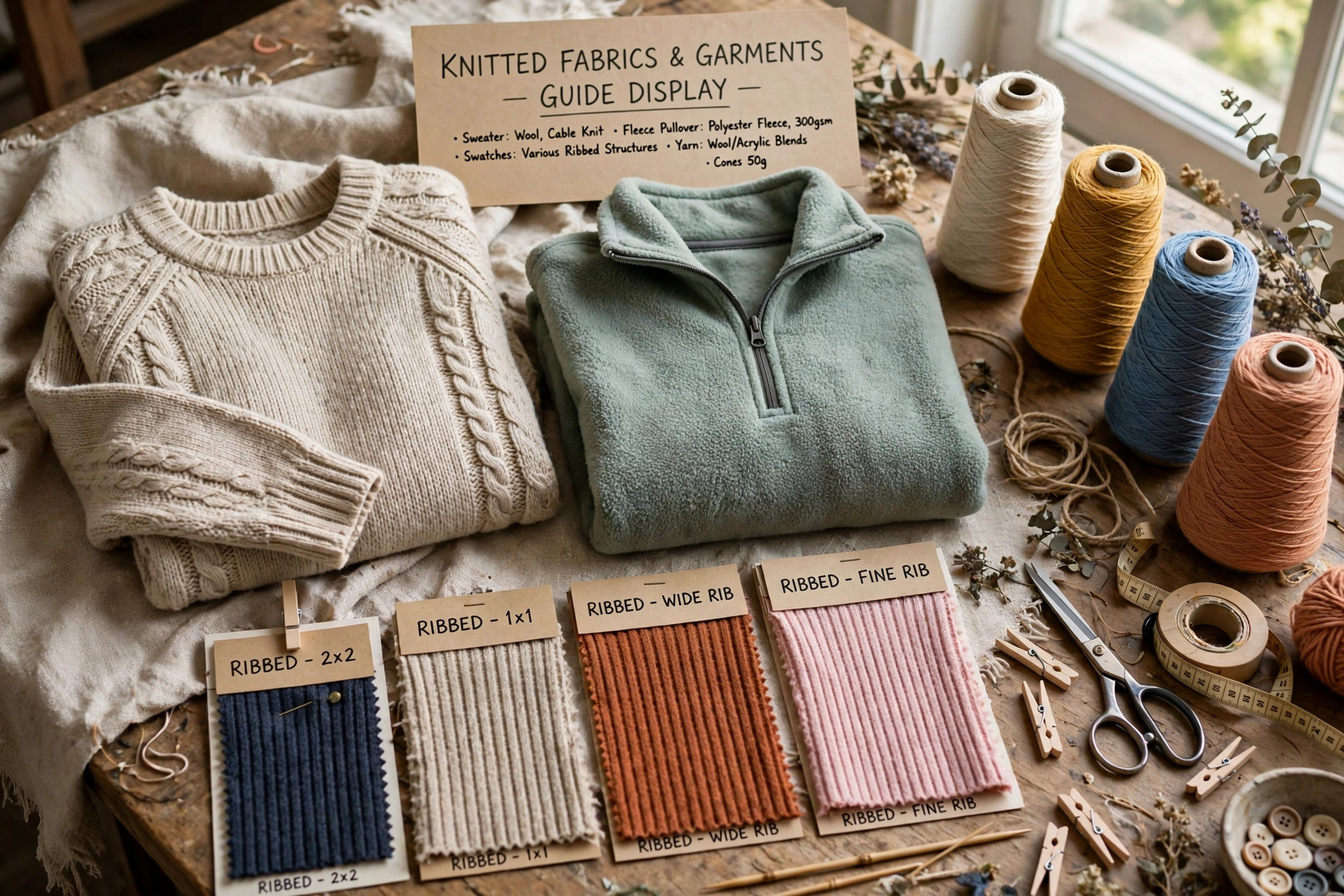
Begin With Construction
Every sourcing decision in this section gets easier once the construction vocabulary is clear. Knits are loop structures, and the two great branches, weft knitting and warp knitting, produce fabrics with different stretch, stability and surface character. Our main knit explainer walks through jersey, rib, interlock, pique, fleece, ponte, tricot and mesh, explaining what each family feels like and which garments it suits. A linked Apparel Search guide to knitted fabrics adds background reading, so you can arrive at any supplier conversation already knowing the difference between a stable interlock and a fluid single jersey.
That vocabulary pays for itself quickly. A mill enquiry that names the construction, fiber, weight and width earns a precise quote, while a request for stretchy fabric earns a pile of unsuitable swatches. A wholesaler can pull the right stock roll when you ask for a cotton-Spandex interlock of a stated weight, and a store clerk can lead you straight to the ponte when you explain that your knit dress must hold a tailored shape. The explainer page in this hub is therefore not decoration; it is the tool that makes the three directory pages work.
The Three Supply Routes for Knits
Mills are the origin: circular and warp knitting producers who turn yarn into greige and finished fabric, from century-old domestic mills to high-volume exporters specializing in fleece, bamboo knits or knitted pile. Wholesalers and converters hold the middle ground, stocking jersey, rib, interlock and performance stretch fabrics, and in some cases knitting, dyeing and printing to order for apparel manufacturers. Stores complete the chain at retail, cutting yardage for home sewers and small studios, and offering the hands-on testing, classes and advice that knit fabrics particularly reward.
Most knit users move between routes as their needs change. A designer may prototype in store-bought ponte, produce a first run from a wholesalers stocked interlock, and graduate core styles to a mill program once reorder volumes are proven. A costume or dance studio may live permanently with stretch specialists. This hub is arranged so each route has its own page with its own directory listings, letting you compare like with like: mill against mill on machinery and specialism, wholesaler against wholesaler on stock depth and minimums, store against store on range and service.
Jersey Lives Here Too
New visitors sometimes arrive looking for jersey and land in the knit section, or the reverse, so it is worth stating plainly: jersey is a knit, the best-known member of the weft knit family, and Apparel Search gives it a section of its own because the T-shirt trade built around it is so large. If your interest is specifically that single-knit cloth, its weights and its mills, wholesalers and stores, the jersey hub in this Fabric Search area covers it in depth. If your interest spans rib, fleece, warp knits and sweater knits as well, stay here, because this section treats the whole family.
Keeping the two sections distinct also keeps each one focused. Jersey pages can concentrate on one construction and its weights, curl, and tee and dress uses without re-explaining the entire knit family. Knit pages can compare constructions against each other, which is the decision most knit buyers actually face. Cross-reading both sections is easy, and together they form the complete knitted-fabric area of this guide, sitting alongside the woven, nonwoven and specialty fabric sections you can reach from the main fabric directory.
How to Work Through This Hub
Read the explainer first if constructions are new to you, then pick the supplier page that matches your quantity and timeline. For production research, open the mills page and note which machine types and fibers each listing emphasizes; for stocked fabric on a deadline, open the wholesalers page; for a test length this week, open the stores page and plan to stretch-test at the bolt. Whichever route you take, carry the same discipline with you: sample first, test the sample the way the garment will be used and washed, and scale up only after the fabric has earned it.
Suggestions shape this guide: readers are invited to propose additional resources. If you run a knit mill, wholesale a knit line, or keep a store where stretch fabrics are a strength, Apparel Search welcomes hearing about it through its main contact channels. A directory is only as useful as its listings are current and relevant, and the knit trade changes its fibers, finishes and specialties often enough that reader knowledge genuinely improves the next visitor's research.
Looking for Fabric Mills and Suppliers?
Step out to the complete Apparel Search fabric section to compare knits with woven and specialty fabrics, or open the Fabric Search hub to start another fabric family from its guide page.