Knit Fabric Stores
Retail stores are the friendliest place to learn stretch fabrics, because every bolt can be pulled, draped and compared by hand. Here is how to test a knit in the shop and match it to the garment you plan to sew.
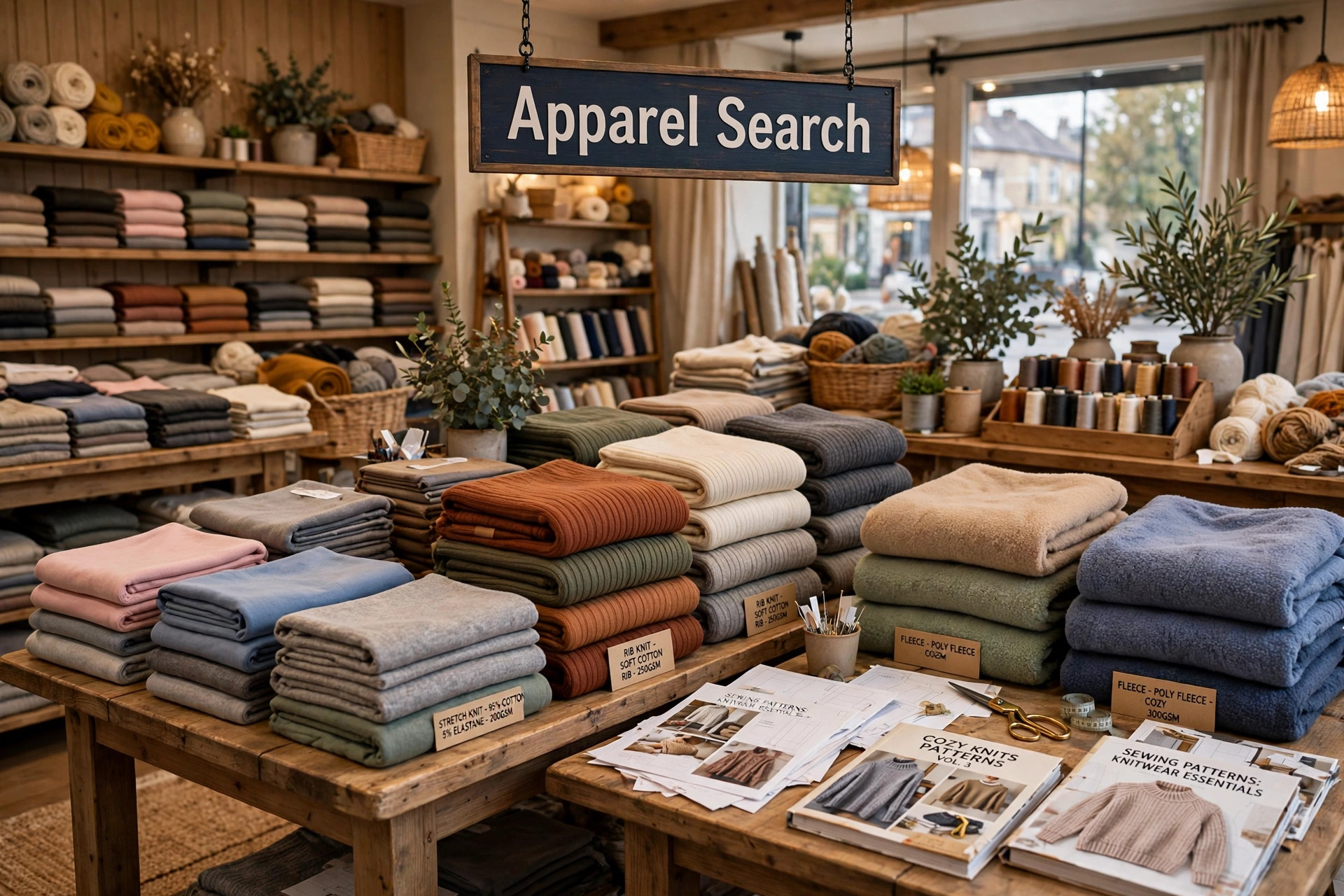
Why Knits Reward In-Person Shopping
A woven fabric can be judged largely by sight, but a knit keeps its secrets in its behavior. Two bolts that look identical in a photograph can differ completely in stretch percentage, recovery, drape and surface durability, and those four qualities decide whether a finished garment fits beautifully or bags out by lunchtime. In a store you can stretch a corner, watch it recover, drape a length over your arm, and hold it to the light. That five-minute examination is worth more than any product description, which is why knit fabric stores remain essential even in an online age.
The retailers below show the range of help available. Bolt Fabric Boutique in Portland offered a fresh, design-led selection for people building a handmade life. J.P. Knit and Stitch in Jamaica Plain, Massachusetts paired yarn and fabric with classes, Knit Nights and Sewing Nights, selling community alongside materials. Sawyer Brook built a mail-order reputation since 1974 on distinctive, high-quality fabrics for home sewers. Vogue Fabrics brought more than sixty-five years of retail depth, from fashion fabrics to corset and tailoring supplies, with a wholesale warehouse behind the store.
Testing Stretch and Recovery at the Bolt
Bring a small ruler or use the store cutting table markings. Grip a measured ten units of fabric across the width, stretch it comfortably, and note the stretched measure: the difference is your stretch percentage, which you can compare directly with the figure your pattern requires. Then release and watch. Good recovery means the fabric returns promptly to its starting size; poor recovery leaves it slightly widened, a warning that waistbands will loosen and knees will bag. Repeat along the length, because some knits stretch both ways and some almost entirely across the width.
While you test, examine the surface. Rub a small area briskly with your fingers or a coin to preview pilling, check that printed patterns sit on straight loop columns rather than drifting, and look at the cut edge: heavy curling is normal in single jersey but should not make the fabric impossible to lay flat. Ask whether the bolt end lists fiber content and care, and photograph the bolt end with your phone alongside the fabric, so the information survives after the length is cut and the receipt is lost.
Matching Store Knits to Patterns
Patterns for knits are drafted for a stated stretch, so respect the number. A pattern expecting moderate stretch will strain and pull in a stable ponte, and will sag and pool in a four-way athletic knit with far more stretch than the draft assumes. Stable knits such as interlock, ponte and firm sweatshirt fleece are the forgiving starting point for beginners: they feed evenly, hold a crease for hemming, and tolerate a standard presser foot. Slippery rayon jerseys, open meshes and very lofty sweater knits ask for more technique and are better second or third projects.
Fabric Mart specializes online in wholesale and discount designer fabric, while J and O Fabrics and Knits and Bolts each carried broad ranges where a sewer could compare a bargain knit against a premium one side by side. Use that breadth deliberately: buy the good fabric for the garment front and center of your wardrobe, and the inexpensive fabric for muslins, childrens play clothes and experiments. A store that stocks both ends of the range, and staff who sew themselves, will usually steer you to the right tier without any hard sell.
Classes, Notions and the Long Game
The best knit purchases include the supporting cast. Ballpoint and stretch needles, a twin needle for hems, clear elastic for shoulder seams, and knit fusible interfacing for facings all live in the same store, and buying them with the fabric guarantees the project starts instead of stalling. Stores that run classes, as J.P. Knit and Stitch did with its sewing and knitting nights, also give you somewhere to bring a wobbly neckband and get it fixed by demonstration, which is the fastest form of sewing education there is.
Keep a swatch file from every store purchase: a labeled cutting, the fiber and price, the store name and the date, stapled to a note on how the garment behaved after five washes. Within a year that file becomes your personal knit database, telling you which store bolts pill, which recover forever, and which colors fade, in a way no review site can match to your own machine and habits. Retail knit shopping, done this way, stops being guesswork and becomes a craft skill that improves with every bolt you test.
Knit Fabric Stores in This Directory
Seven stores are listed below, each with a short description of what it sells.
Bolt Fabric Boutique
Portland fabric boutique in the Alberta Arts District offering contemporary designer fabrics and one-of-a-kind finds for sewers making colorful goods by hand.
Fabric Mart
Pennsylvania-based online fabric store specializing in wholesale fabric, discount designer fabric and more.
J & O Fabrics
A leader among online fabric stores, with hundreds of quality fabrics.
J.P Knit & Stitching
Yarn and fabric store in Jamaica Plain, Massachusetts, offering a carefully selected range plus knitting and sewing classes, Knit Nights, Sewing Nights and events.
Knits and Bolts
Vermont store at the junction of Routes 7 and 17 in New Haven, carrying fabrics, yarns and notions for sewing, quilting, knitting and crocheting.
Sawyer Brook Distinctive Fabrics
Mail-order fashion fabric service for home sewers, founded in 1974 in Orford, New Hampshire, known for quality and distinctive styling.
Vogue Fabric Store
Long-running fabric retailer with over sixty-five years of history, offering designer and fashion fabrics, bridal fabrics, notions, corset and tailoring supplies, plus wholesale fabrics.
Common Questions
How do I know if a store knit has enough stretch for my pattern?
Measure ten units across the width at the bolt, stretch it, and compare the increase with the percentage printed on your pattern envelope. Also confirm the stretch direction, since most patterns assume the greatest stretch runs around the body.
Which knit should a beginner buy first?
A stable, midweight interlock, ponte or cotton jersey with modest stretch. These feed evenly under the presser foot, do not curl excessively, and forgive small handling mistakes while you learn knit seams and hems.
What notions should I buy with knit fabric?
Ballpoint or stretch needles in the weight your fabric needs, a twin needle for hems, clear elastic for stabilizing shoulder seams, and knit interfacing if the pattern has facings or a waistband. Buying them together prevents a stalled project.
More to Explore
References & Further Reading
Looking for Fabric Mills and Suppliers?
Find more fabric retailers and every other fabric source in the Apparel Search fabric section, or browse families through the Fabric Search hub.