Knit Fabric Wholesalers
Knit wholesalers keep the stretch fabrics of the apparel trade on the shelf, from basic jersey and rib to swim and dance stretch cloth. Here is how their stock and custom programs work and how to order with confidence.
Stock Speed Versus Mill Control
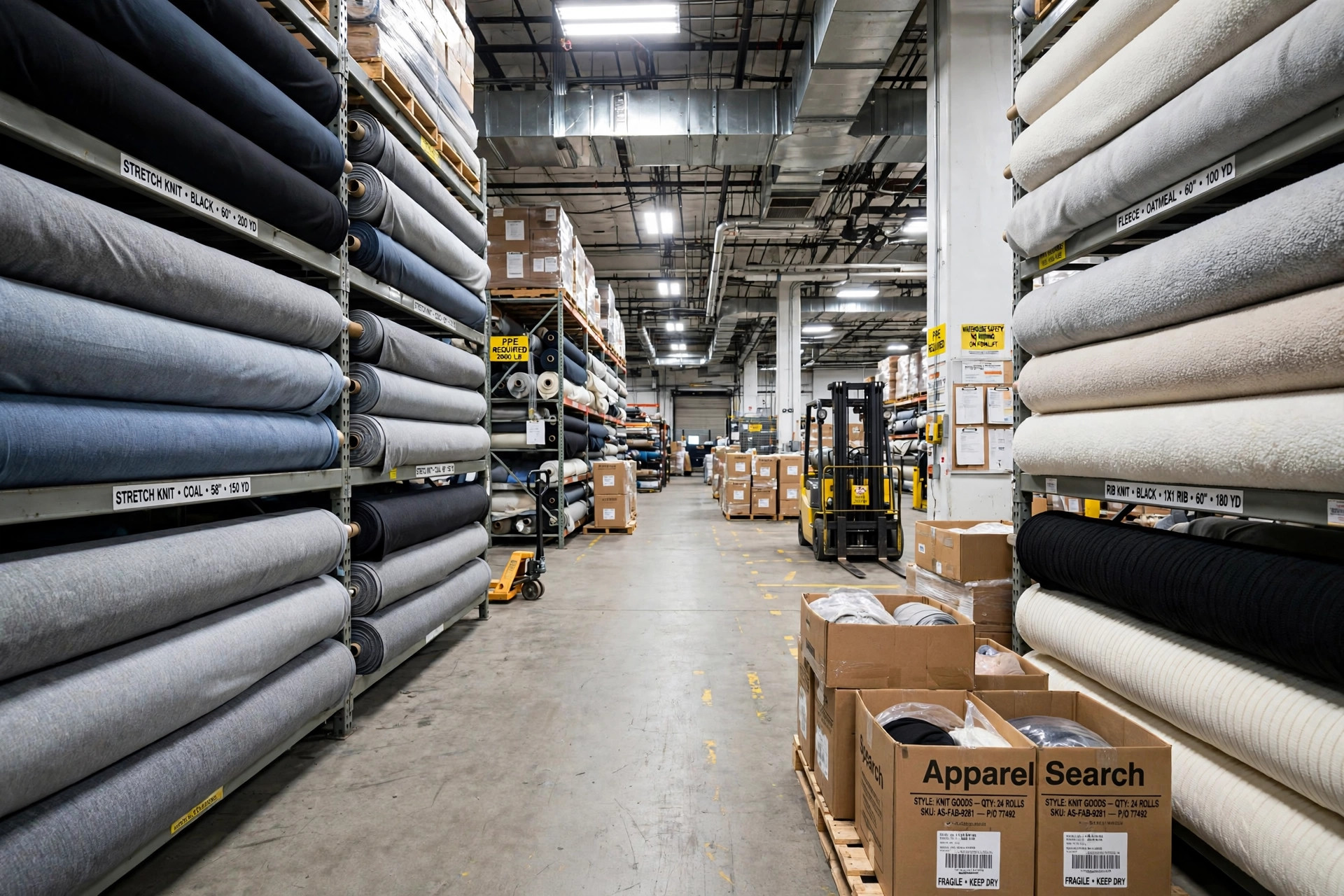
A knit wholesaler earns its place by holding finished fabric ready to ship. Apparel manufacturers working to retail delivery dates cannot always wait for a mill to knit, dye and finish an order, so they build styles around wholesaler stock programs: proven constructions, continuity colors, and re-orderable items that can be replenished mid-season. The cost of that speed is choice. You select from the constructions and shades the wholesaler runs, in the weights and widths it runs them, rather than specifying every detail the way a direct mill order allows.
The strongest listings in this category blur that line usefully. Eagle Fabrics, established in 1988 as a division of SFO Impact, fulfills the knitting, dyeing, finishing and printing needs of apparel manufacturers, which is a converter-style model: deeper involvement in making the fabric, not just shelving it. Pine Crest Fabrics, established in 1978, combined a very large stocked stretch range with custom-made fabric. Knowing whether a supplier is a pure stockist, a converter, or a hybrid tells you which requests, from a custom print to a rush reorder, it can realistically honor.
The Stretch Specialists and the Generalists
Pine Crest illustrates the specialist end of this market: flat and glitter stretch velvets, spandex prints, nylon tricots and hologram stretch fabrics, plus custom printing programs, aimed at swim, dance, gymnastics and athletic apparel, with headquarters in Portland, Oregon and a sales and art office in California. Those markets live or die on stretch, recovery and print durability, so a specialist stocks depths and qualities a generalist cannot match. If your product is a leotard, a swimsuit or a performance uniform, start with the specialist and work outward.
Generalists cover the everyday knit wardrobe. Knit Fabrics USA, a Los Angeles converter and wholesale source, listed 1x1 and 2x1 rib jersey, French terry, rib Lycra, cotton Lycra and cotton and poly-cotton interlock among its large color range. Sand Textile stocked the full cotton knit family from baby rib and baby jersey to French terry, loop terry, rayon jersey and meshes. Broadway Textiles in Australia, tracing back to a family business of the early 1950s, specialized in sportswear, corporate and protective clothing fabrics with moisture-release finishes and high sun-protection ratings. Nick of Time Textiles competed on internet wholesale breadth, low minimums and same-day shipping from Allentown, Pennsylvania.
Minimums, Sampling and Reorder Discipline
Wholesale knit minimums are usually friendlier than mill minimums, sometimes as low as a single roll or a modest yardage per color, but they still exist and vary by item, so confirm them item by item. Order swatches or sample yardage first and sew a real prototype, because stretch fabrics reveal their flaws in a garment, not on a card: check growth at stress points, print cracking when stretched, and whether pale colors turn sheer over skin or lining. File the approved sample with the supplier item number and date, since stretch items with similar names can differ by mill source.
Reorder discipline is where knit programs succeed or fail. A stock item can be discontinued, re-sourced or shade-shifted between seasons, so never assume last years roll is this years roll. Re-approve a cutting from current stock before every production order, buy the full quantity for a style from one delivery where possible, and keep a safety length of core fabrics rather than discovering a stock-out with a cutting ticket already issued. Wholesalers who attend to continuity, with batch variation kept minimal, as Broadway Textiles emphasizes, are worth a small price premium for exactly this reason.
Checking a Knit Delivery
Inspect knit deliveries with the stretch in mind. Unroll and let a length relax, then measure width and weight, because fabric pulled tight on the roll reads narrower and lighter than it will after resting. Stretch a sample in both directions and compare recovery to your approved standard. Check prints stretched, not relaxed, since a design that looks perfect flat can crack or distort at wearing stretch. Wash, dry and remeasure a marked square for shrinkage both ways, and look down the roll for needle lines, holes, dye streaks and barre before the fabric is committed to markers.
Finally, remember the other way to meet knit suppliers: the trade show floor. You can also find knit fabric wholesalers at textile trade exhibits, and Apparel Search maintains a textile trade show listing for that purpose. Walking a show lets you stretch fifty fabrics in an hour, compare specialists side by side, and learn which constructions are coming next season. Combine show discoveries with the stocked reliability of the distributors listed here, and your knit sourcing covers both the proven core of a range and its next idea.
Knit Fabric Wholesalers in This Directory
Seven wholesalers are listed below, each with a short description of what it stocks.
Eagle Fabrics
Wholesale fabric company established in 1988, a division of SFO Impact, fulfilling the knitting, dyeing, finishing and printing needs of apparel manufacturers.
Broadway Textiles
Australian textile company begun in the early 1950s, specializing in sportswear, corporate and protective clothing fabrics, with moisture-release fabrics, high sun-protection ratings and same-day shipping for early orders.
Fabric by the Yard
Online store offering a wide variety of fabrics by the yard at wholesale prices, including cotton, silk, linen, wool, blends, synthetics, prints and knits.
Knit Fabrics USA
Los Angeles wholesale fabric source and converter of knit fabrics supplying manufacturers nationwide, carrying rib jersey, French terry, rib Lycra, cotton Lycra and interlock in many colors.
Nick of Time Textiles
Family-owned Allentown, Pennsylvania wholesaler offering a large selection of wholesale fabrics online with low minimums, same-day shipping and samples of many knits and patterns.
Pine Crest Fabrics
Knit fabric wholesaler established in 1978, offering stocked and custom stretch fabrics including stretch velvets, spandex prints and nylon tricots for swim, dance, gymnastics and athletic apparel.
Sand Textile
Wholesale supplier of cotton knit fabrics including cotton spandex, cotton jersey, baby rib, 1x1 and 2x1 rib, interlock, French terry, rayon jersey and meshes at wholesale prices.
Common Questions
What is the advantage of a knit wholesaler over ordering from a mill?
Speed and smaller quantities. The wholesaler holds finished, inspected stock you can sample and ship quickly, while a mill order waits for knitting, dyeing and finishing. The trade-off is less control over exact specification and continuity.
Why do stretch fabrics need to be tested in a sewn prototype?
Stretch, recovery, sheerness and print behavior only fully appear under wearing strain. A swatch can look perfect while a garment bags at the knees or a print cracks when stretched, so a sewn and worn prototype is the real approval step.
How do I protect a reorder of a stock knit?
Re-approve a cutting from current stock before ordering, record the supplier item number and dye lot, and buy the full production quantity at once where possible. Stock items change source and shade over time, so a sample from last season does not approve this season's stock.
More to Explore
References & Further Reading
Looking for Fabric Mills and Suppliers?
Compare wholesale sources for all fabrics in the Apparel Search fabric directory, or return to the Fabric Search hub for mills, stores and fabric guides.