Sales Assistant — Fashion Job Description
Entry-level sales support — samples, showrooms, order paperwork and the daily machinery of a fashion sales team
A fashion sales assistant is the support role that keeps a sales team selling. Working for a wholesale sales team, a brand's showroom or a sales agency, the assistant prepares the samples and paperwork the salespeople present from, processes the orders they write, keeps customer records and appointment diaries accurate, and absorbs the hundred small tasks that would otherwise pull experienced sellers away from buyers. It is the industry's standard entry point into wholesale fashion sales: junior in title, but placed at the exact centre of the selling process, where every part of how clothing is sold to stores can be learned by watching it happen.
More Sales & Selling Job Descriptions by Letter:
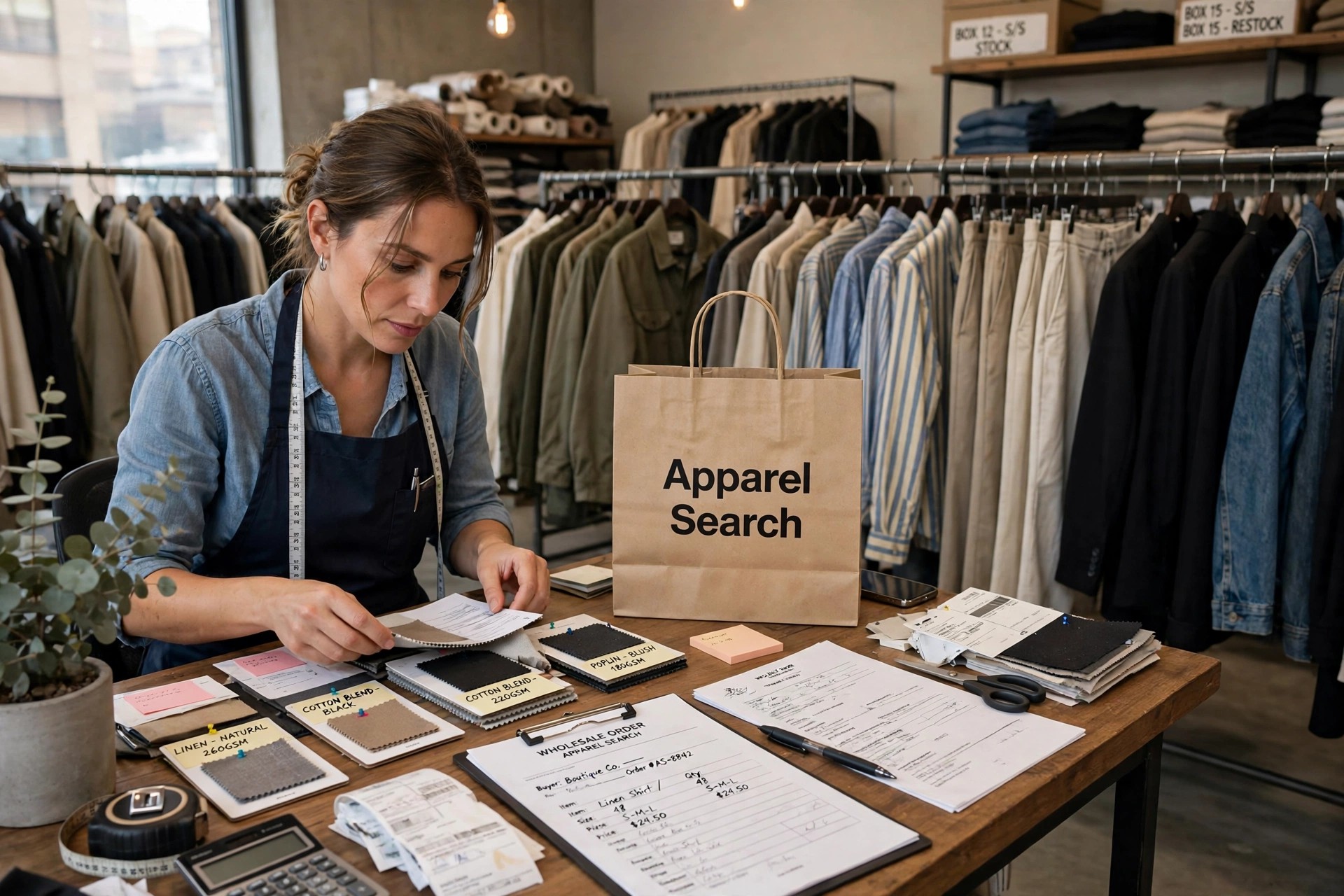
Samples, Showrooms and Selling Support
Sample handling is the assistant's home ground. Each season's sample range has to be received, checked against the line list, steamed, hung in range order and kept complete as samples travel to appointments and return; missing or tired samples are chased, repaired or replaced before a buyer sees them. The assistant prepares the selling kit around the samples — line sheets and price lists, lookbooks, fabric swatch cards, order forms — and sets the showroom for appointments: rails in presentation order, refreshments and paperwork ready, the previous buyer's samples cleared and the next range dressed. During market weeks, when appointments run back to back, that preparation is the difference between a calm showroom and a chaotic one.
In the appointment itself the assistant is the salesperson's second pair of hands: pulling sizes and colours, noting the buyer's selections and quantities on the order, fetching alternatives, and recording the follow-ups promised — a price check, a delivery confirmation, a swatch to send. It is superb training disguised as assistance, because the assistant hears how buyers reason about ranges, prices and delivery, season after season, across dozens of accounts, before ever carrying a target of their own.
Orders, Records and Office Work
After appointments, the assistant turns handwriting into business: writing up orders accurately, entering them into the order system, checking prices, discounts and delivery dates against the season's terms, and issuing confirmations. Errors here are the classic junior pitfall — a transposed style number or size ratio becomes a warehouse problem months later — so the role trains methodical checking, and good assistants develop the habit of querying anything that looks off rather than processing it blindly. The same care applies to the customer database: account details, buyer names and contact changes, appointment histories and order records kept current, because the whole team works from those records.
Communication support runs alongside: answering the showroom phone and email, booking buyer appointments and travel for the salespeople, sending out lookbooks and price lists, chasing accounts for missing order details, and liaising with the warehouse and production office about sample and order status. In a small agency the assistant may also handle invoicing support, commission statements and the trade-show logistics — stand samples, freight, display kit — that take a range on the road. The variety is real, and it is why the role suits organised people who like a day built from many short tasks rather than one long one.
Where Sales Assistants Work
The role sits in three main settings. A brand or manufacturer's own sales team employs assistants in its showroom or head office, supporting employed salespeople across a territory or account group. An independent sales agency, representing several brands, runs a showroom where assistants support the agency's reps across all its lines at once — the broadest education of the three. A retail head office occasionally uses the title for sales-support staff serving store groups, though the wholesale showroom is the role's home. Hours follow the selling calendar: market weeks and trade shows bring early starts, late finishes and occasional travel, against quieter order-processing weeks between seasons.
Pay and status reflect the entry level — typically a salary, sometimes with a small team bonus — but the role's real currency is proximity. Assistants meet buyers, learn ranges across brands, and are known to the sales managers who hire junior salespeople. Agencies in particular run on this ladder: the assistant who has kept a showroom immaculate through two market weeks is the first candidate considered when a junior rep's territory opens.
Skills, Qualifications and Career Path
Employers ask for organisation, accuracy and pace rather than qualifications: strong written and spoken communication, confident spreadsheet and order-system skills, a presentable manner for buyer-facing settings, and a genuine interest in fashion product — assistants handle garments all day, and the ones who learn fabrics, fits and range structure as they go are the ones who progress. A fashion business or retail background helps, as does any experience of administration under time pressure; driving licences matter for agencies whose assistants travel to shows. Discretion counts too: assistants see every account's prices and orders, and trustworthiness is assumed and tested.
The career path is the point of the job. The standard route runs sales assistant to junior salesperson with a small territory or account group, then to a full sales role — sales executive, account work, the product specialisms listed throughout the letter S pages of this directory — and onward to sales management. Some assistants branch instead into sales operations and order management, marketing support or showroom management, all of which value the same grounding. Few senior people in fashion sales started anywhere else: the assistant's chair is where the trade teaches its trade.
Common Questions
What does a fashion sales assistant do?
Supports a wholesale sales team or showroom: preparing and maintaining sample ranges, line sheets and price lists, setting up buyer appointments, noting and processing orders, keeping customer records and diaries, handling calls and mailings, and helping at market weeks and trade shows.
Is a sales assistant the same as a retail sales assistant?
The titles overlap in shops, but this page describes the wholesale support role — assisting salespeople who sell clothing lines to retail buyers. Front-line shop-floor selling is described on the Retail Sales page in this directory.
How does a sales assistant become a salesperson?
By learning ranges, buyers and order discipline from inside the team, then taking a junior territory or account group when one opens — the standard first step into sales executive and account roles, usually within the same company or agency that trained them.