Men's Footwear Sales Job Description
Selling men's shoes and boots — size runs, fit, seasonal styles and the footwear departments of retail
Men's footwear sales is the specialist selling of men's shoes and boots to the retail trade: department store shoe departments, footwear chains and independent shoe stores, athletic retailers and menswear stores that carry a shoe range. Footwear looks like apparel selling from a distance and behaves differently up close. Shoes are bought and stocked in size runs rather than garment quantities, fit is a technical subject in its own right, and the categories — dress shoes, casual shoes, boots, athletic and outdoor footwear — run on different seasons, price structures and retail customers. The footwear salesperson sells in sizes, widths and pairs, and is judged by how completely a store's run sells through.
More Sales & Selling Job Descriptions by Letter:
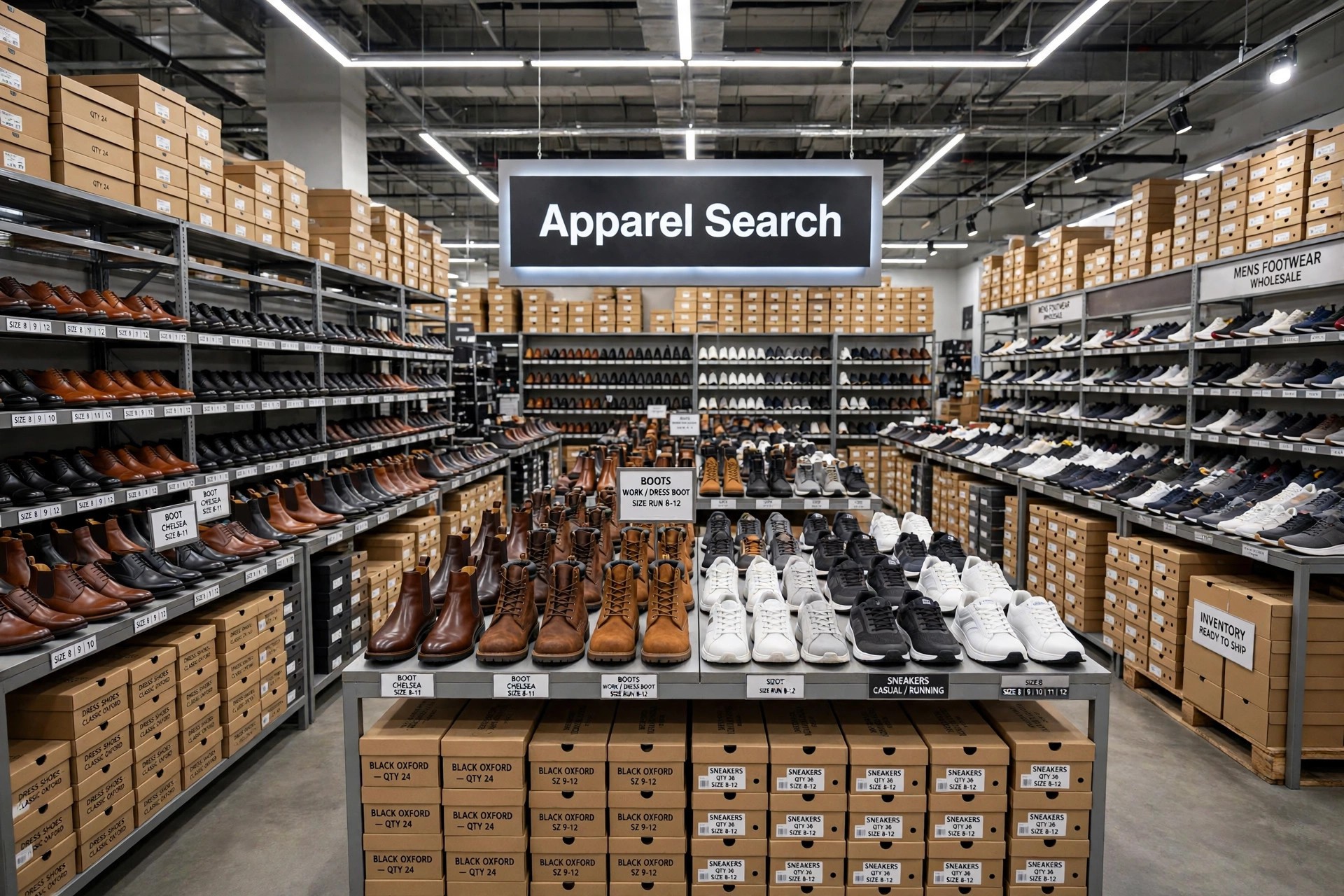
Selling Shoes by the Size Run
The basic unit of footwear selling is the size run: a style ordered across its size scale — with half sizes through the heart of the range — in the widths the account stocks. The salesperson helps the buyer set the curve for each style, weighting the sizes that store's customers wear, deciding where the run can be trimmed on slow sellers and where depth is needed on the core sizes that sell out first. An assortment that looks right on a line sheet fails if its curve is wrong, because a shoe customer whose size is gone does not buy a different size — the sale leaves the department entirely.
Presenting a footwear line is hands-on work. Samples are carried in sample cases and shown style by style: the dress range in its leathers and constructions, casual and comfort lines, boots by height and purpose, athletic styles by sport and technology story. The salesperson talks lasts and fit, leather grades and linings, sole constructions and country of origin, and prices each style against the department's architecture — opening price points, the core range and the premium styles that set the department's image.
Footwear Retailers and Their Buying
The account base is distinct from apparel. Shoe departments inside department stores buy alongside, but separately from, the clothing departments; footwear chains and family shoe stores buy in far larger pair volumes on tighter price points; athletic retailers run on launch calendars and franchise brand programmes that a general apparel seller never meets. Each channel expects its own service pattern — open-stock replenishment for the chains, seasonal pre-books for the independents, drop calendars for athletic doors — and the footwear salesperson's route and order routine are built around those rhythms.
Fit knowledge is the trade's entrance ticket. Buyers expect the salesperson to understand how a style fits — generous or narrow, long or short in the last — which widths to recommend for a store's clientele, and how materials change fit in wear, as leather relaxes and synthetics do not. Returns and fit complaints trace back to these calls, and a salesperson known for honest fit guidance keeps accounts that a harder seller loses. Store staff training on fitting is part of the service larger brands support, and the salesperson often delivers or arranges it.
Seasons, Categories and Replenishment
Footwear has two selling seasons but four moods: sandals and light shoes for spring, the boot-heavy autumn range, athletic product that turns over all year, and dress shoes tied to the tailored clothing calendar. The salesperson plans each account's commitments across that pattern, protects delivery dates for the weather-driven categories — boots that arrive after the first cold snap have missed their moment — and manages the replenishment business on continuity styles, where a store's reorder rate on a proven shoe is the purest measure of the original buy.
Category mix is the strategic conversation. A department heavy in dress shoes and thin in casual loses the customer whose work wardrobe went informal; an athletic mix without the season's key franchises looks dated in a month. The footwear salesperson brings the buyer the line's view of those shifts — which categories the brand is investing in, where prices are moving, what the athletic launch calendar holds — and that counsel, season after season, is what turns a sample-case visit into a standing order.
Skills, Qualifications and Career Path
Footwear sales employers look for selling experience and specific footwear literacy: size-run and width planning, fit and construction knowledge across dress, casual, boot and athletic product, and comfort with pair-volume arithmetic and replenishment systems. Many strong footwear sellers began in shoe retail, where fitting customers daily teaches the size curve better than any manual, or in athletic retail during the years the categories were learned from the shop floor up.
From a territory of independent shoe stores, progression leads to chain and department-store key accounts, footwear sales management, or brand-side roles with the athletic and dress-shoe companies whose programmes dominate the trade. The specialism travels well: footwear buyers and sellers form a distinct community inside fashion, and a record of complete size runs that sold through is its most portable credential. Sellers who prefer range breadth over depth take the opposite path into general menswear selling, which has its own page in this directory.
Common Questions
What does a men's footwear salesperson do?
Represents men's shoe lines to shoe departments, footwear stores and athletic retailers: presenting dress, casual, boot and athletic styles, planning each account's size runs and widths, managing seasonal orders and continuity replenishment, and advising on fit and category mix.
Why is footwear selling based on size runs?
A shoe only sells in the customer's size. Styles are stocked across a size scale with half sizes and widths, and the salesperson's assortment work is setting that curve per account — depth on the sizes that sell, discipline on those that do not — because a missing size loses the whole sale.
How is men's footwear sales different from men's fashion sales?
Men's fashion sales covers the full apparel assortment — tailoring, shirts, knitwear and casual clothing. Footwear sales is a single-category specialism with its own buyers, channels, fit knowledge and size-run stocking logic, sold in pairs rather than garments.