Licensed Apparel Sales Job Description
Selling clothing built on borrowed brands — licensor approvals, style guides and royalty-bearing product
Licensed apparel sales means selling clothing that carries someone else's brand: entertainment characters, sports leagues and teams, film and music properties, famous consumer brands and celebrity names, produced by a manufacturer under a licence agreement. The salesperson's product is therefore only half theirs. Every design, fabric application and hangtag exists inside a licensor's style guide and approval system, and the selling story runs on the property's popularity rather than the garment maker's name. It is a hybrid career — part apparel selling, part brand management — and the people who thrive in it learn to sell inside rules that ordinary apparel representatives never meet.
More Sales & Selling Job Descriptions by Letter:
Selling Inside the Licence
The licence defines the job's borders: which properties, which product categories, which territories and channels, and for how long. The salesperson sells only what the agreement covers — a licence for children's character sleepwear does not stretch to adult outerwear — and plans the line around the property calendar: film releases, sports seasons, anniversaries and the licensor's own marketing pushes, when retail demand for the property peaks. Presenting the line to buyers means presenting the property first — its audience, its media support, its retail track record — and the garments as the vehicle that converts that audience into apparel sales.
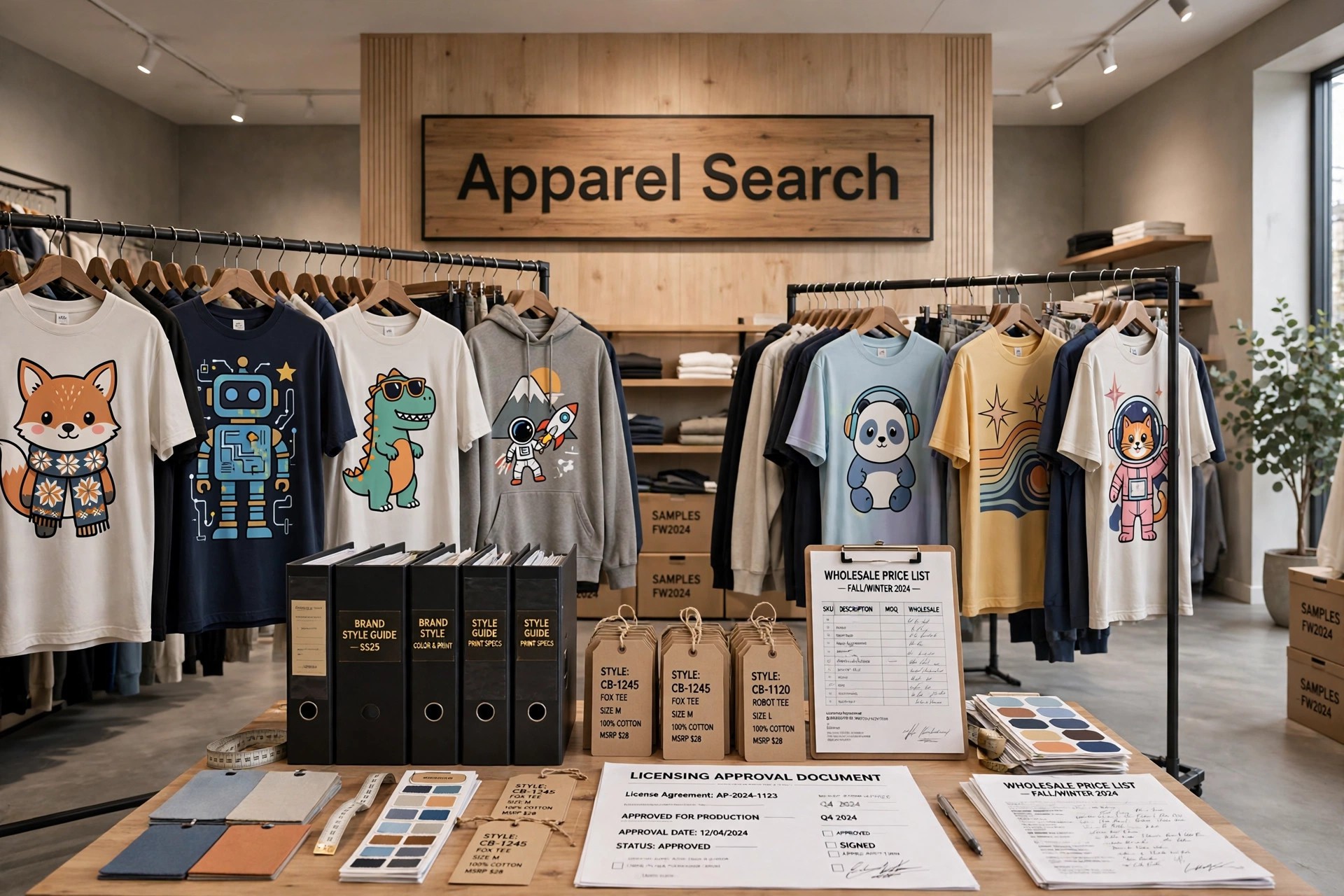
Approvals govern the calendar. Designs are submitted to the licensor at concept, pre-production and final sample stages, and nothing may be sold or shipped that has not cleared. The salesperson lives inside those lead times: showing a buyer a style that is still pending approval, with a realistic date for clearance, is normal practice — showing it as approved is a firing offence and a contractual breach. Samples, photography and even the wording of sales materials may require clearance, so the role keeps meticulous track of approval status across the line and is the account's reliable source on what can actually be delivered.
Royalties, Guarantees and the Commercial Frame
Licensed product carries costs plain apparel does not. Royalties — a percentage of sales paid to the property owner — and the minimum guarantees the licensee commits to are built into every price, so the salesperson negotiates margins with less room than an own-brand line allows, and understands which accounts and volumes move the guarantee position. Selling hard is existential here: a licensee that misses its minimums still pays them, so the sales team's order book is watched against the guarantee schedule property by property, and end-of-term sell-through matters as much as the opening order.
Channel discipline is the other commercial law. Licences commonly restrict where product may be sold — by retailer tier, by geography, sometimes by exclusivity to a single account for a property or category. The salesperson must refuse business the licence forbids, however attractive the order, and protect the property's positioning: a premium entertainment brand dumped into discount channels damages the licensor relationship that the whole business rests on. That refusal duty makes the role unusually senior in judgement, whatever its title.
Retail Programmes and Property Launches
Licensed apparel sells in programmes. Around a film release or a sporting event, the salesperson builds coordinated retail events: the core garment range, the promotional price-point items, the fixture and display plan the licensor approves, timed so product lands as the property's publicity peaks — and sells through before the moment passes. Event product is perishable in a way basic apparel is not; a style tied to a release date that arrives late is worth a fraction of itself, so delivery precision is a headline promise in every licensed sales presentation.
Between events, the evergreen properties — classic characters, heritage brands, team loyalties — run as continuity businesses with their own seasonal refreshes. The salesperson balances the portfolio for each account: the dependable evergreen volume that anchors the department, the event properties that create its excitement, and the new licences the company has signed, which need retail believers before their media moment arrives. Feeding retailer reaction back to the licensing team — which properties buyers are asking for, which are cooling — makes sales a genuine input into which licences the company renews or signs next.
Skills, Qualifications and Career Path
The role asks for solid apparel selling experience plus fluency in licensing practice: style guides and approval workflows, royalty structures, contract basics and the entertainment and sports calendars. Employers prize representatives who are as careful with paperwork as with buyers — approval logs, licence scope, channel restrictions — because one out-of-scope shipment can cost the company the licence itself. An eye for graphics and popular culture is a working tool here: judging which property a given retailer's customers will actually wear is the role's core commercial instinct.
Progression leads to senior licensed accounts, licensing sales management, or across the table into the licensor's own organisation — brand licensing and retail development roles at studios, leagues and brand owners hire people who have sold licensed product and understand retailers. Others move into licensing acquisition, helping manufacturers evaluate and sign properties. The specialism is portable across every category where brands are borrowed, from apparel into accessories, home goods and footwear.
Common Questions
What does a licensed apparel salesperson sell?
Clothing produced under licence — entertainment, sports, brand and celebrity properties on garments — sold to retailers within the licence's categories, channels and territories, working through the licensor's style guides and design approval process.
Why do approvals matter so much in licensed apparel sales?
Nothing may be sold or shipped until the licensor has approved the design and its application. Salespeople track approval status across the line, sell pending styles honestly with clearance dates, and never represent a style as approved before it is — a breach can cost the company its licence.
What extra costs shape licensed apparel pricing?
Royalties to the property owner and the licensee's minimum guarantees are built into every price, leaving less margin room than own-brand product, and channel restrictions in the licence limit where the product may be sold at all.