Sales Person — Fashion Industry Job Description
The general fashion salesperson role — who employs them, where they work and what the working week contains
Sales person is the plainest title in this category, and for many readers the right starting point: it describes anyone whose job is selling fashion goods wholesale — clothing, footwear or accessories — on behalf of a brand, a showroom or an agency, to the retailers who will resell them. Unlike the specialist pages around it, this one is not about a product family or a management level. It is about the occupation at its most general: who employs a fashion sales person, what fills the week, and what kind of person thrives in the work.
More Sales & Selling Job Descriptions by Letter:
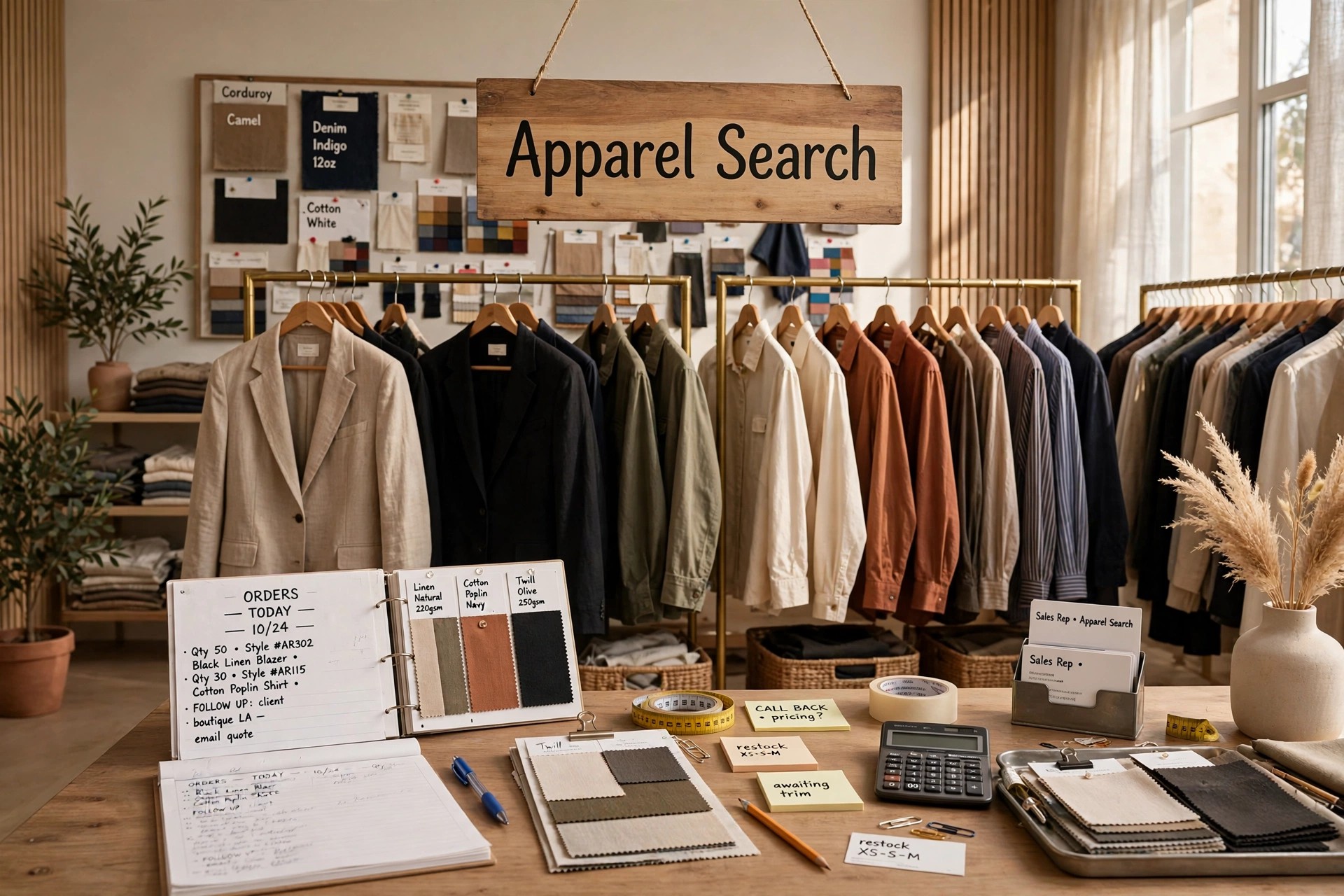
Who Employs a Fashion Sales Person
Three kinds of employer dominate. Clothing brands employ sales people directly, to sell their own collections into stores. Multi-line showrooms employ them to represent several non-competing labels under one roof, which is how smaller brands reach buyers efficiently. Independent agencies and self-employed representatives carry lines for commission, often across a region they know street by street. Each model feels different day to day — brand roles go deeper on one range, showroom and agency roles go wider across many — but the core transaction is identical.
The customers are retail buyers and store owners: department stores, chains, boutiques and online sellers. A sales person rarely sells to the public in this role; the skill is business-to-business persuasion, where the buyer is spending their employer's money against a budget and expects figures, not enthusiasm alone. Understanding that the buyer must resell everything they order — at a profit, in their town, to their customers — is the first professional lesson the job teaches.
The Working Week
In selling season the week is appointments: presenting collections in a showroom or at a buyer's premises, explaining fabrics, fits, prices and delivery dates, and writing orders accurately enough that a warehouse can pick and a factory can produce from them. Between seasons the work turns to follow-up — confirming orders, chasing production, warning buyers early about delays, arranging reorders on styles that are selling, and visiting stores to see how the goods look on real rails.
Administration is a larger share than newcomers expect. Order forms, line sheets, sample tracking, travel plans, expense records and customer notes fill the quiet hours, and sloppy paperwork becomes somebody else's crisis quickly. Most sales people also attend trade shows and market weeks, where a season's selling may be compressed into a few days of back-to-back appointments, and where stamina and preparation separate the organised from the overwhelmed.
Qualities and Skills That Matter
The visible skill is presentation: holding a buyer's attention through a rail of garments, telling the story of a collection in the order that makes it easiest to buy. Underneath sit less glamorous abilities employers test for — mental arithmetic on margins and discounts, memory for hundreds of style numbers and prices, honest judgement about what will suit an account, and the resilience to hear no frequently without taking it personally or giving up on the account.
Fashion knowledge is expected but can be built: fabrics, garment construction, sizing and the seasonal calendar matter more than trend forecasting, which belongs to designers and buyers. What cannot be taught as easily is reliability. Buyers reorder from sales people who return calls, admit problems early and deliver samples when promised; in a trade built on repeat seasons, one trustworthy person outsells a brilliant stranger.
Entry Routes, Pay Shape and Progression
Common entries are showroom assistant jobs, retail fashion experience, and junior roles supporting an established representative, where the newcomer learns paperwork and product before inheriting accounts. Formal qualifications are rarely specified; employers look for evidence of selling aptitude, fashion interest and numeracy, and a driving licence is a practical requirement for territory work. Pay typically combines a salary with commission on orders written, which is why earnings vary with the strength of the lines carried.
From this general role, careers specialise. Product specialisms fill most of this directory — menswear, womenswear, footwear, textiles and more — while other sales people grow into account management, showroom management or the regional and national management ladder. The Sales Assistant and Sales Executive pages describe the rungs immediately below and above the point where most sales people spend their middle years.
Commission, Confidence and Conduct
Because earnings usually rise and fall with orders, the sales person works under a pressure specialists in salaried roles may not feel: a weak season is visible in the pay packet. Handling that pressure professionally is part of the occupation. Chasing an unsuitable order to rescue a month's commission damages the account and the reputation together, and experienced sales people learn to let the wrong order go. Conduct is the long asset — buyers remember who protected them from a style that would not sell in their town, and they repay that honesty with first sight of the next season's budget, larger orders, and introductions to other retailers.
Common Questions
Is a fashion sales person the same as a shop assistant?
No. A shop assistant sells to the public in a store. A fashion sales person in this directory sells wholesale — presenting brands' collections to retail buyers and store owners, who then sell the goods to the public.
Do fashion sales people need qualifications?
Rarely formal ones. Employers look for selling aptitude, fashion product interest, numeracy and reliability, usually proven through retail, showroom assistant or junior representative experience rather than certificates.
How is a fashion sales person paid?
Typically a salary plus commission on the value of orders written, sometimes commission-led for independent representatives carrying lines for several brands. Earnings therefore follow the seasons and the strength of the lines represented.