Textile Bleaching & Dyeing Machine Operators Job Description
Running the wet-processing machines that prepare, bleach and colour yarn and fabric
Textile bleaching and dyeing machine operators control the machines that wash, bleach and dye yarn and finished fabrics and other textile products. Their stage of production — wet processing — is where grey cloth from the loom or knitting machine becomes the clean, white or coloured material the rest of the industry cuts and sews. The operator works to recipes and process sheets, loads machines, doses dyes and chemicals, controls temperature, time and liquor flow, and judges the result against the shade the customer ordered. It is machine operation where the machine is a chemical process, and the operator's colour judgement is as important as mechanical attention.
More Job Descriptions by Letter:
Start Here: Bleaching & Dyeing Work
Preparing and Bleaching: Making Fabric Ready for Colour
Before fabric can be dyed evenly it must be made absorbent and clean. Preparation stages wash out the sizes, oils and natural impurities that weaving and knitting leave behind: scouring removes waxes and dirt, and bleaching whitens cotton and other fibres so that later colours sit true and bright. Operators load fabric or yarn into the preparation machines, set the chemical feeds and temperatures from the process sheet, and run each batch for its prescribed time. A preparation fault is unforgiving — fabric scoured unevenly dyes unevenly, in patches no later stage can fully hide — so the operator checks absorbency and whiteness before releasing a batch onward.
Yarn follows the same logic in a different form: hanks or packages of yarn are washed, bleached or dyed before weaving or knitting, so that patterned cloth can be woven from already-coloured yarns. Package dyeing forces the dye liquor through the wound yarn under pressure, and the operator's care in loading — even winding, correct machine settings — decides whether the colour penetrates to the centre of every package or leaves pale cores that appear as defects in the finished cloth.
Dyeing: Recipes, Machines and the Judgement of Shade
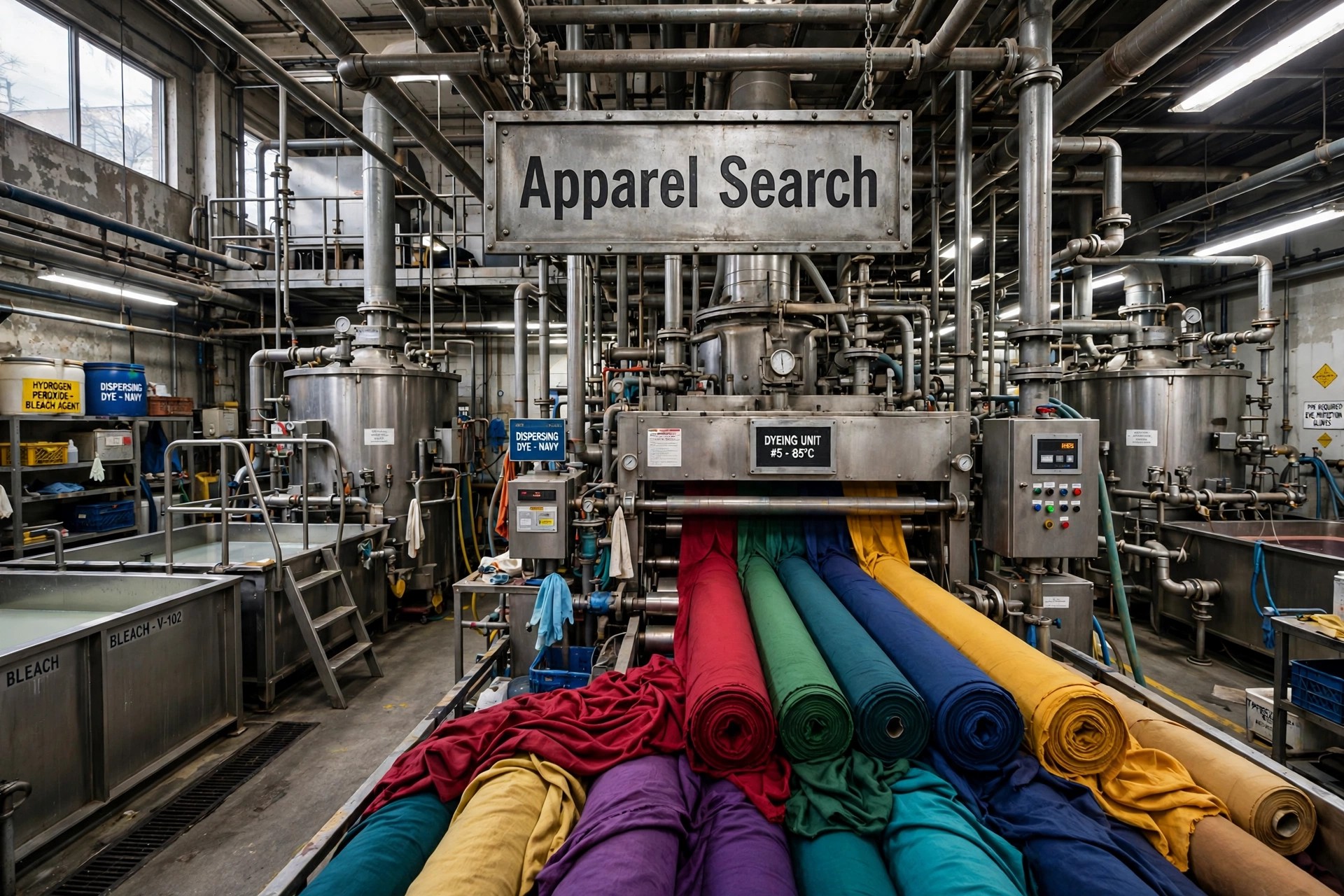
Dyeing itself is the controlled application of colour: the operator makes up the dyebath from the recipe — dyes weighed or dispensed, auxiliaries added to help the dye level and fix — loads the machine, and runs the temperature profile the dye class demands, holding and cooling at the stages where the chemistry fixes colour to fibre. Different fibres take different dye families, and blends take combinations, so a dyehouse operator's practical chemistry grows with every fabric family handled. Machines range from winch and jet systems that move fabric through the liquor to jiggers and pad ranges that pass cloth through it, and package and hank machines for yarn.
The batch is not finished when the machine stops. The operator draws a sample, dries it, and compares it against the standard under controlled light, because wet fabric reads darker and a shade approved carelessly costs a re-dye or a rejected delivery. Additions of dye to correct a shade — shading — are measured in fractions, and the decision to correct, re-run or pass is the operator's most consequential judgement. Washed-off and finished batches are then checked for levelness and fastness before they leave the dyehouse for drying and finishing.
Chemicals, Safety and the Working Environment
A dyehouse is a wet, warm and chemical workplace, and its safety disciplines are specific. Operators handle acids, alkalis, bleaching agents and dye powders, measure and mix them following the process sheet and safety data, wear the protective equipment each task requires, and keep dyes and chemicals stored, labelled and dispensed so that neither people nor batches are contaminated. Water and effluent matter as well: dyehouses use large volumes of water, and operators follow the plant's rules on draining, neutralising and recording what leaves the machine, because what goes down the drain is regulated as carefully as what goes onto the fabric.
The rhythm of the work is set by batch times that cannot be hurried: a dye cycle takes the hours its temperature profile takes, and a dyehouse runs its machines in sequence so that preparation, dyeing, washing-off and drying hand over to one another without queues of wet fabric waiting. Operators therefore tend several machines at staggered stages, plan their round around cycle ends, and keep records — batch cards, recipe sheets, shade results — that let any later fault be traced to its batch and its settings.
Skills, Training and Career Paths — and the Neighbouring Machine Trades
Operators usually train in the plant, starting on loading, unloading and preparation work under an experienced dyer, and progressing to running dye machines and then to shade judgement as their colour eye is trusted. The skills employers name are colour vision — formally tested in this trade, because shade matching is the job — practical chemistry, measurement discipline, machine care, and the patience to run a process exactly as written when a shortcut would risk a whole batch. Colourists and dyehouse technicians, who develop recipes and standardise shades in the laboratory, form the technical tier above the machine floor, and experienced operators are their natural recruits.
Career paths run from operator to senior operator across machine types, to shift or dyehouse supervision, into the colour laboratory as a technician, or into technical service for dye and chemical suppliers, where dyehouse experience is the qualification that matters. One boundary is worth drawing for anyone researching these roles: this page covers the wet-processing operators. The wider occupation of textile machine operation — fibre preparation, spinning, winding and the weaving and knitting machine trades — is described on its own page in this section, and the two are cross-linked rather than merged.
Common Questions
What do textile bleaching and dyeing machine operators do?
They set up, load and control the machines that wash, scour, bleach and dye yarn and finished fabrics: dosing dyes and chemicals to a recipe, running the temperature and time profile, sampling the result and judging its shade against the standard before the batch moves on.
Why does fabric need bleaching before dyeing?
Raw fabric carries sizes, oils and natural colouring that block even dye uptake. Scouring cleans it and bleaching whitens it, so colours dye level and true; fabric prepared unevenly dyes in patches that later stages cannot hide.
What skills does dyehouse work need?
Accurate colour vision (shade matching is the core judgement, and it is tested), practical chemistry, exact measurement and record-keeping, machine care, and strict chemical-safety habits in a wet, warm plant.