Cutters Job Description
Cutting fabric for clothing — the operation every garment starts with
Before sewing can begin, pattern pieces must be made, layouts determined, and fabric cut — and that work belongs to cutters. Cutters take the patterns and cut out the material, paying close attention to their work because mistakes are costly: an error at the cutting table is multiplied across every layer in the lay and cannot be sewn away later. This page explains how cutters work in both traditional and automated factories, the skills and coordination the job demands, how cutters are trained, and where the role can lead.
More Job Descriptions by Letter:
Start Here: Cutting and Fashion Jobs
What a Cutter Does
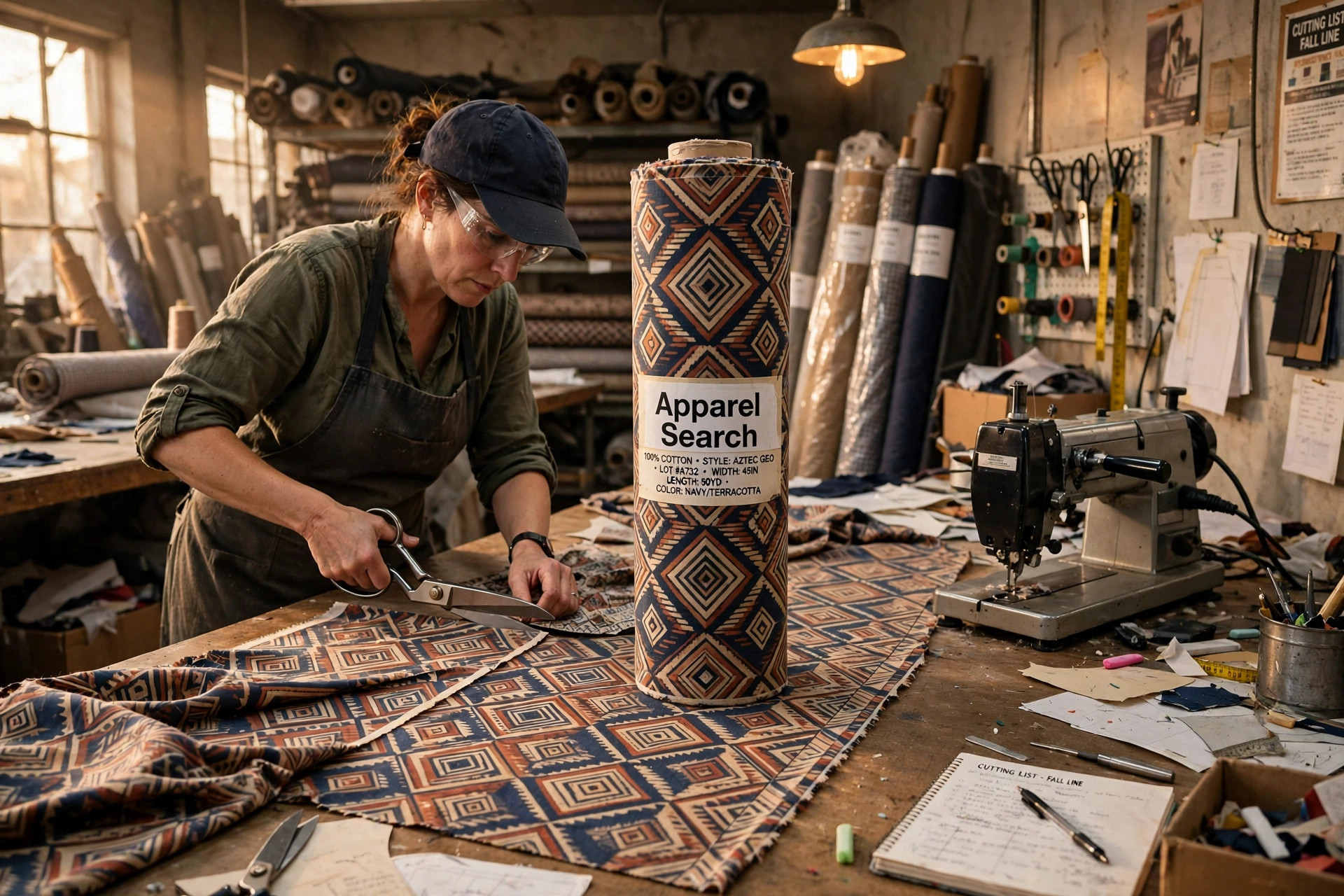
The cutter's work starts with the marker — the layout that places every pattern piece on the fabric as economically as possible while respecting grain lines, print direction and shade. Following the outline of the pattern, cutters place multiple layers of material on the cutting table to form a lay, then cut out the various pieces of the garment. In less automated companies, cutters use electric knives or other cutting machines to work through the lay; delicate materials may still be cut by hand, where feel and patience matter more than power.
Accuracy at this stage decides the economics of the whole order. Fabric is usually the largest single cost in a garment, so a careless marker or a wandering cut wastes money twice — once in cloth thrown away and again in garments that cannot be matched, shade-checked or assembled properly. Cutters therefore check lays before cutting, keep pattern pieces identified and bundled correctly for the sewing line, and separate shades and sizes so the machinists who follow them receive clean, complete work.
Hand Cutting, Machine Cutting and Automation
Traditional cutting is a craft skill performed standing at the table, guiding a straight or round knife through many layers while keeping the blade vertical and the top layer true to the marker. It demands a steady hand, strong concentration and respect for fast-moving blades; guards, chain-mail gloves and house rules about hands and blade paths are part of the daily routine in a well-run cutting room.
In more automated facilities the process is computer-driven: markers are made on screen and sent electronically to a computer-controlled cutting machine, and textile cutting machine setters, operators and tenders monitor the machine's work, loading lays, checking vacuum and blade condition, and inspecting the cut pieces it produces. Computers have become a standard tool for these occupations because patternmakers and markers increasingly design pattern pieces and layouts on a computer screen — so the modern cutter's skill is a blend of fabric knowledge and machine supervision rather than either one alone.
Skills and Abilities the Work Requires
Traditional cutters need exceptional hand-eye coordination, because the blade must follow the line exactly through layers that shift and stretch differently from one another. All cutters must understand textile characteristics — how a fabric drapes, frays, stretches or shows shade variation — and have a good sense of three-dimensional space, visualising how flat pieces become a garment in order to catch a misplaced notch or a reversed piece before it costs money.
Basic mathematics matters for counting layers, checking quantities against the order and working with measurements in inches or centimetres, and basic computer skills are important for anyone operating computer-controlled equipment. Stamina is part of the job as well: cutting is done standing, often for a full shift, moving lays and bundles around the table. Above all, cutters need the temperament to slow down at the checking stage — the few minutes spent verifying a lay are the cheapest quality control in the factory.
Training, Entry Routes and Career Path
Most production workers, cutters included, are trained on the job. Although a high school diploma is not required, some employers prefer it, and new cutters start under experienced workers, learning on simpler lays and fabrics before being trusted with expensive cloth or complex markers. Cutters and pressers are trained this way, while patternmakers and markers — the roles cutters work most closely with — usually have technical or trade school training, which shows the natural direction of advancement.
New entrants who want to run automatic cutting machines should expect to need technical training, available from vocational schools, alongside their basic computer skills. With experience, cutters progress to senior cutter and cutting-room supervisor roles, move sideways into marking and pattern work with further training, or build the fabric and costing knowledge that production management requires. Because cutting sits at the junction of pattern, fabric and cost, a good cutter understands a garment's economics better than almost anyone else on the factory floor — and that understanding is a genuine career asset.
Common Questions
Why is cutting described as the operation where mistakes are costly?
A cutter works through many layers of fabric at once, following a marker. One wrong line, wrong grain direction or mixed shade is repeated in every layer of the lay, wasting the most expensive material in the garment before sewing has even begun.
Do cutters still cut by hand, or is it all automated?
Both methods are in use. Less automated companies cut with electric knives and cutting machines guided by hand, and delicate materials may be cut by hand. Highly automated factories use computer-controlled cutting machines, with setters and operators monitoring the work.
What training do cutters need?
Most cutters are trained on the job, starting on simpler work under experienced cutters. A high school diploma is preferred by some employers but not required. Operating computer-controlled cutting machines may require technical training from a vocational school, plus basic maths and computer skills.