Clothing Retailers Job Description
The businesses that sell clothing to the public — and the occupations inside them
Retailers are the part of the clothing trade the public actually meets: the shops and stores that sell garments to the people who wear them. This page describes clothes retailing as an occupation area — the kinds of retail businesses that employ fashion's largest workforce, and the work done inside them, from the sales floor to the stockroom to the manager's office. A clothing retailer may be a one-shop independent, a department store, a national chain or an online operation with a fulfilment centre behind it, but all of them live by the same transaction: the right garment, presented well, sold to a satisfied customer.
More Job Descriptions by Letter:
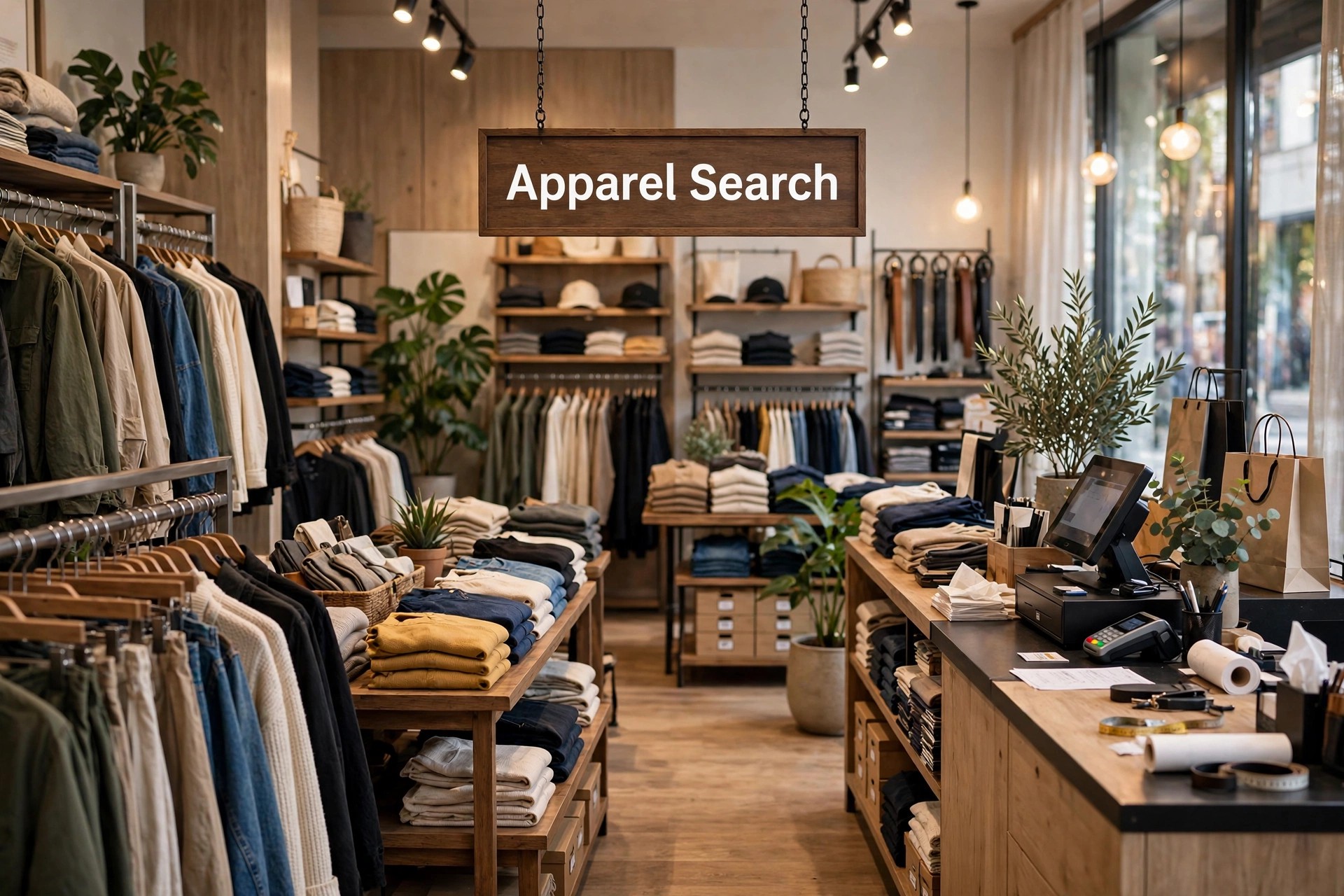
Start Here: Clothes Retailing
The Kinds of Clothing Retailers
Clothing retail spans formats with very different working lives. Independent boutiques and small chains are run close to their owners: staff do everything — selling, buying support, display, stock, the till — and learn the whole business by doing it. Department stores organise clothing into departments and concessions, with specialised staff and formal structures. National and international chains run hundreds of standardised stores to central systems, offering defined ladders from sales assistant to store, area and regional management. Value and outlet retailers compete on price and volume; luxury retailers on service, environment and exclusivity.
Online retailing has added a second shop floor that never closes. Pure online clothing retailers employ their people in buying, merchandising, photography, customer service and fulfilment rather than in shops, while established store retailers run both channels together — the store as showroom, collection point and returns desk for the website. The occupations described on this page increasingly span both: a modern clothing retailer's working week touches the till, the tablet and the delivery cage in the same shift.
The Work on the Sales Floor
Sales work in clothing is more skilled than it looks. Assistants greet and read customers, find sizes and alternatives, build outfits across departments, manage fitting rooms, and convert browsers into buyers without pressure that drives them out. Garment knowledge is the craft: fabrics and care, fit and alteration, how a size runs in this brand, what will arrive next week. Good clothing salespeople are remembered by their customers and asked for by name — in independents and luxury retail especially, personal repeat trade is the business.
Around the selling sits the floor's constant maintenance: deliveries unpacked, checked, ticketed, steamed and put out; rails and tables refolded and re-sized through the day; stock counted and discrepancies chased; markdowns applied when seasons turn. Retail work is physical, public and unsocial in its hours — evenings, weekends and sale periods are its peaks — and it suits people who take energy from a busy floor and visible results: a good day's trade is known by closing time.
Behind the Counter: Management, Buying and Merchandising
Store management turns a shop into a business. Managers roster and train staff, set and chase sales targets, control stock loss and cash, execute the company's display and promotion calendar, and answer for the store's figures. In chains, this is a defined professional ladder with real responsibility early; in independents, the manager is often the owner, and buying — choosing next season's stock from suppliers' ranges — joins the job, with the shop's survival riding on those choices.
At company level, retail employs the head-office occupations this section describes elsewhere: buyers who select the ranges, merchandisers who allocate and replenish stock across stores, and the planners who set the budgets both work to. A clothing retailer's floor staff feed those decisions with what customers actually ask for, try on and return. That loop — floor to head office and back — is why retail experience is prized throughout the fashion industry: it is the only seat with a direct view of the customer.
Skills, Entry and Career Paths in Clothing Retail
Entry to clothing retail is open: most sales roles need no qualifications beyond numeracy, presentation and the manner the work demands, and employers train product and systems on the job. What selects people is customer instinct — patience, observation, honest advice — plus reliability for the rota and stamina for the floor. Part-time and seasonal entry is common and genuinely leads somewhere: retail is one of the few industries where the chief executive may honestly have started on the till.
Career paths run up the store ladder to department, store, area and regional management; sideways into visual merchandising and display, buying and merchandising assistance, training and human resources; and outward into brand representation and wholesale, where retail knowledge sells to retailers. Retail experience is also the traditional foundation for opening a shop of one's own — the occupation teaches buying, presentation, staffing and cash in their unforgiving real proportions, and many independent clothing retailers began as someone else's sales assistant.
Common Questions
What kinds of businesses are clothing retailers?
Independent boutiques and small chains, department stores, national and international chains, value and outlet operations, luxury retailers, and online clothing retailers — all of which sell garments to the public, with formats that shape the jobs inside them.
What jobs are there in a clothing store?
Sales assistants, fitting-room and stockroom staff, cashiers, display and visual merchandising staff, department supervisors, and store managers — backed at company level by buyers, merchandisers and planners whose work the store's trading directs.
Is clothing retail a real career or a stopgap?
Both, depending on the person. It is fashion's largest employer and a genuine ladder — to store and regional management, buying, merchandising and display careers — as well as a common foundation for opening an independent shop.