Apparel Manufacturer Job Description
How garments get made — the firms, factory roles and skills behind apparel production
Apparel manufacturers are primarily engaged in the design, cutting and sewing of garments from fabric. That short definition covers a wide range of businesses and jobs, from a small workshop cutting and stitching a single product line to a large company coordinating production across many factories. This page explains what apparel manufacturers actually do, the roles people hold inside manufacturing, the skills and training those roles require, and how a career in garment production develops.
More Job Descriptions by Letter:
Start Here: Manufacturing and Fashion Jobs
What an Apparel Manufacturer Does
The core work of an apparel manufacturer is turning fabric into finished garments at a consistent quality and in the quantities a brand or retailer has ordered. Production normally begins long before sewing: the manufacturer reviews a design or technical pack, confirms measurements and construction details, sources or receives fabric and trims such as zips, buttons and labels, and makes a sample so problems can be corrected before bulk production begins. Once the sample is approved, fabric is laid up and cut into pattern pieces, those pieces move through sewing operations in a planned sequence, and finished garments are pressed, inspected, folded or hung, packed and prepared for delivery.
Not every manufacturer owns every stage of that process. Some manufacturers are contractors or subcontractors, which generally manufacture apparel from materials owned by other firms — the brand supplies the fabric and design, and the contractor supplies the cutting and sewing capacity. Other manufacturers are full-service businesses that develop the product as well as make it. Some are vertically integrated, producing the textiles from which they make garments, or even operating retail outlets of their own. Understanding which model a company follows matters for job seekers, because the same job title can mean hands-on factory work at a contractor and a much broader production-coordination role at a vertically integrated firm.
The Work on the Factory Floor
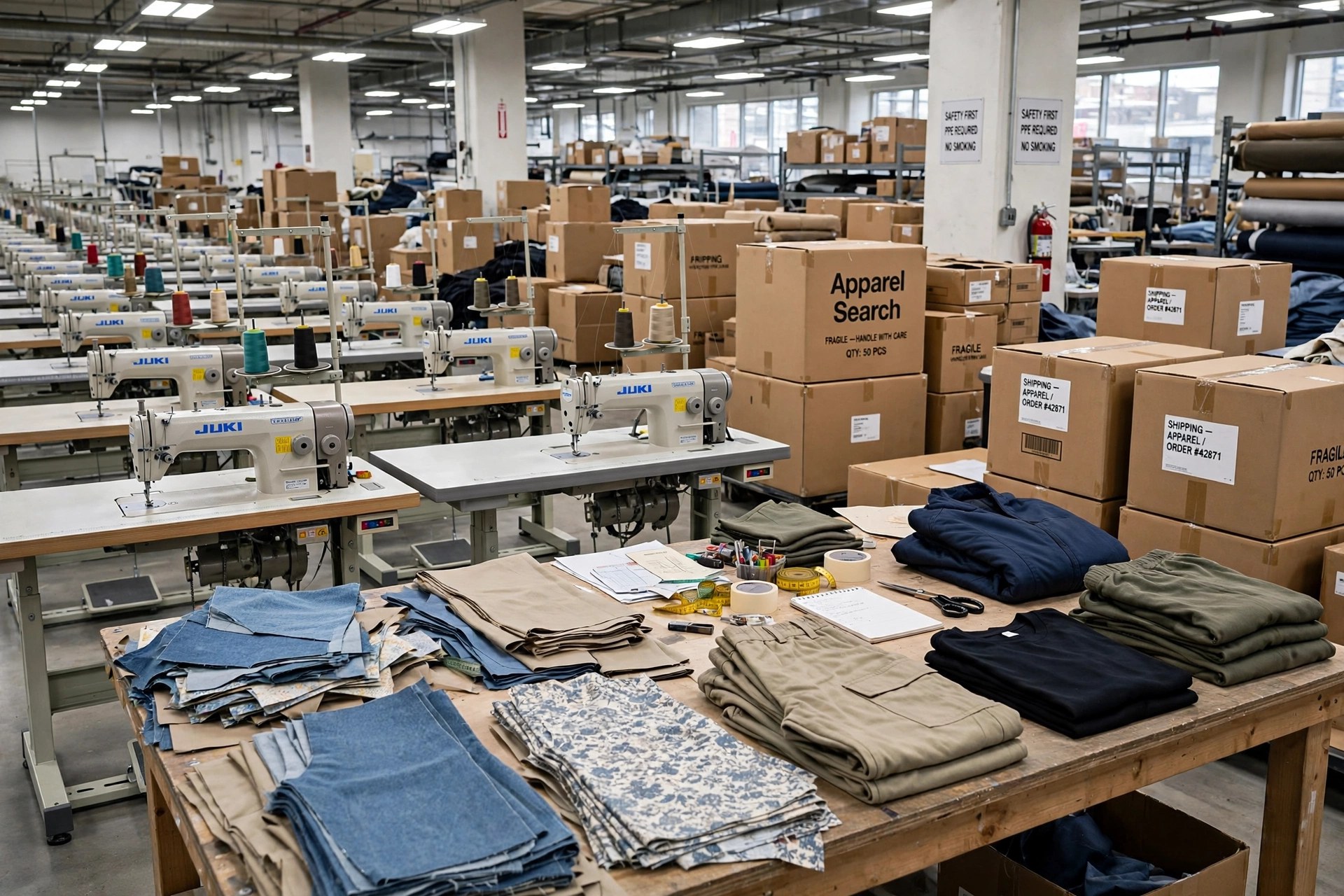
Apparel manufacturing jobs entail a variety of tasks, ranging from cutting fabric to stitching and assembling garments. Cutters lay out fabric, follow markers that place pattern pieces economically, and cut with hand tools or powered cutting equipment, taking care that grain, print direction and shade stay consistent across a garment. Sewing machine operators then join the pieces, operating a variety of equipment such as single-needle machines, overlockers and embroidery machines, often specialising in one operation — setting a sleeve, closing a seam, attaching a pocket — so a garment takes shape as it moves down the line.
Tailors work differently from operators on a production line: they create complete garments from fabric, including cutting, sewing and finishing, and their work suits bespoke, sample and alteration settings where each piece receives individual attention. Around both groups sit the jobs that keep production honest and moving — pattern makers who translate designs into workable shapes, machinists and mechanics who keep equipment running, quality controllers who check measurements and stitching against the approved sample, and pressers, packers and warehouse staff who finish and dispatch the order. Every role depends on the one before it, which is why a delay or error at cutting can idle an entire sewing line.
Skills and Abilities the Work Requires
Apparel manufacturing jobs are fast-paced and require a good eye for detail and the ability to work quickly and efficiently. Garments must meet quality standards and must be aesthetically pleasing, so workers learn to spot a twisted seam, a mismatched check or a skipped stitch while production is still moving, not after cartons are packed. Good hand-eye coordination is essential, because operators must accurately maneuver fabric and other materials through a machine at speed while keeping seam allowances even and fingers safe.
Strong problem-solving and time-management skills matter just as much. When a machine starts breaking thread, a fabric behaves differently from the sample, or an order's delivery date moves forward, experienced workers diagnose the cause, fix what they can, and escalate what they cannot before the problem multiplies across hundreds of garments. Reliability is a skill in itself: production is planned around each station being staffed, and supervisors notice people who arrive ready, keep their workstation organised and communicate early when something is wrong. Basic numeracy — counting pieces, reading measurements in inches or centimetres, and recording output accurately — underpins almost every task on the floor.
Qualifications, Training and Entry Routes
Apparel manufacturing jobs are typically entry-level positions, and many employers train new sewing operators, cutters' assistants and packers on the job, starting them on simpler operations while an experienced worker or trainer checks their output. Formal education requirements at entry are usually modest, but a short course in garment technology, sewing or textiles gives a new starter a real advantage: it teaches machine handling, fabric behaviour and construction order before speed is expected. Apprenticeships and vocational programmes that combine classroom learning with factory placements follow the same logic and are a common route in established manufacturing regions.
Progression routes are clearer than many people expect. With experience and additional training, workers can advance to supervisory or management positions — line supervisor, production coordinator and factory manager roles all reward people who understand the whole process rather than one operation. Workers may also specialize in specific areas, such as patternmaking or fabric dyeing, where deeper technical knowledge commands better pay and more responsibility. Computer-aided design and marker-making, automated cutting and production-planning software have added a technical ladder alongside the traditional one, so workers who add digital skills to factory experience widen their options considerably.
Work Environment and Career Path
Workers in apparel manufacturing jobs usually work in a factory setting, operating machinery and equipment to cut, shape and assemble garments. The environment is practical and team-based: rows of workstations, trolleys of cut work moving between sections, and production boards tracking how an order is progressing against its delivery date. The work can involve long periods of sitting or standing at one operation, repetitive movements and factory noise, and it follows the rhythm of orders — busy when a large programme is shipping, quieter between seasons — so flexibility about tasks is valued.
A career in this part of the industry offers something few other fashion jobs can: a complete understanding of how clothing is physically made. That knowledge transfers. Experienced manufacturing staff move into quality assurance, production management, sourcing and technical roles with brands and retailers, precisely because they know what a factory can and cannot do, what a specification must contain, and where costs and problems hide in a garment. Apparel manufacturing jobs are an important part of the fashion industry, and they provide a genuine opportunity for those looking to enter it — with the right skills and dedication, workers can find success in apparel manufacturing jobs and build from the factory floor into the wider industry.
Common Questions
Is apparel manufacturing an entry-level way into fashion?
Yes. Many production roles, including trainee sewing operator, cutting assistant and packing jobs, are entry-level and include on-the-job training. Short garment-technology courses and apprenticeships help new starters progress faster.
What is the difference between a contractor and a vertically integrated manufacturer?
A contractor generally manufactures apparel from materials owned by another firm, supplying cutting and sewing capacity. A vertically integrated manufacturer controls more stages itself, sometimes producing the textiles it sews and even operating retail outlets.
How do manufacturing workers advance?
With experience and further training, workers move into supervisory and management roles or specialize in areas such as patternmaking, fabric dyeing, quality control or computer-aided design and production planning.