Finishing Fabrics
Textile finishes and apparel finishing contractors directory.
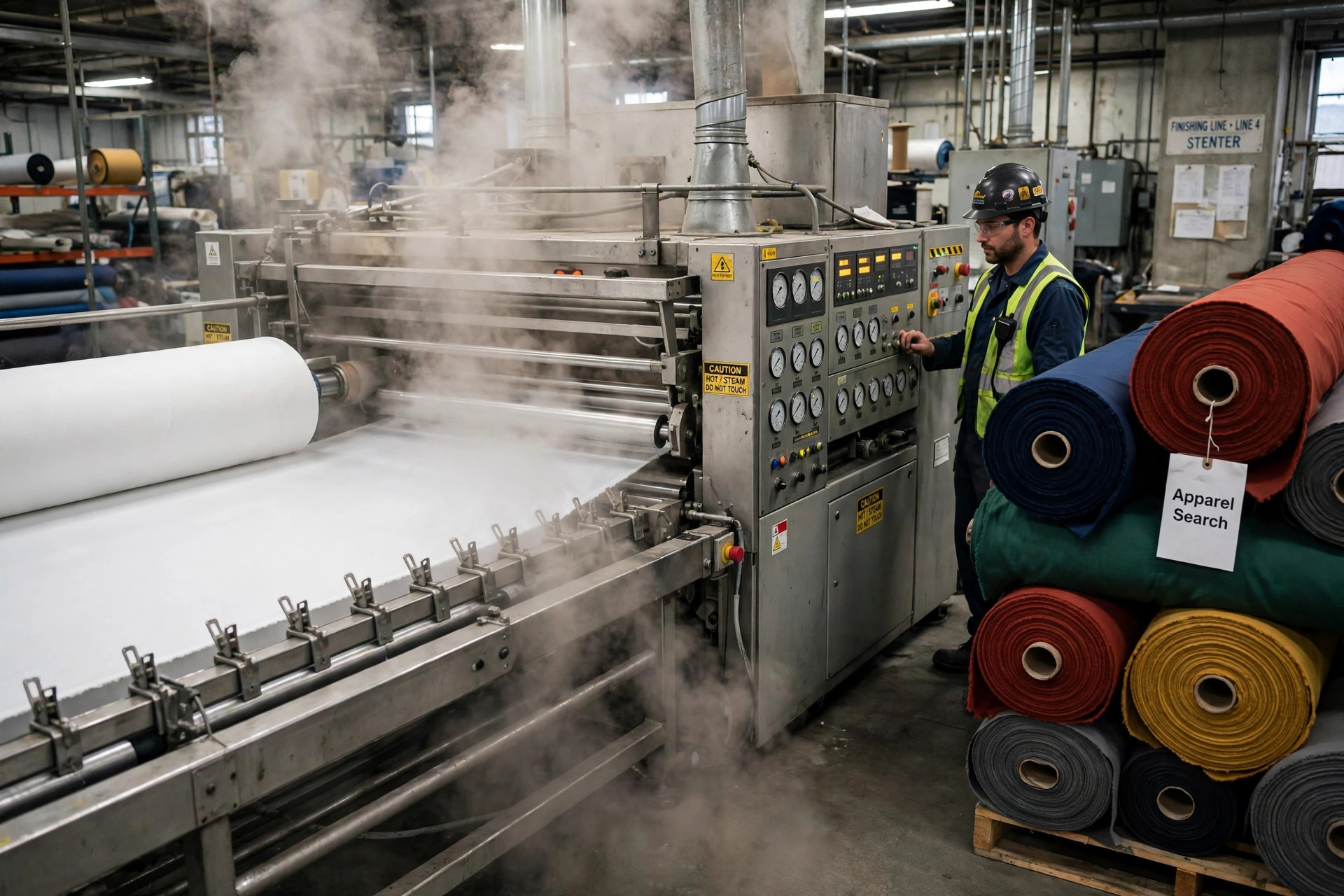
Finishing is the final series of operations that turns greige goods — fabric as it comes off the loom or knitting machine — into the finished textile a garment factory can cut. Finishing operations are predominantly wet operations: washing, bleaching, dyeing and the application of size and other ingredients that give the fabric particular characteristics, such as stiffness, water proofing or stain resistance. Almost every property a customer can feel or test in a finished garment, from softness to water repellency, was decided at the finishing stage.
Finishing is also used for garment renewal. Old inventory can be wet processed into fresh new colors, or refreshed with specialized finishes such as enzyming, softening and siliconing garments. This directory organizes the finishing trades by process: each category below leads to a page explaining that process and listing the contractors that offer it, so a brand can go from a finish it wants to a company that applies it.
Finishing Process Directories
Fabric Finishing and Garment Finishing
The directory covers two related moments in production. Fabric finishing happens to yardage, before cutting: preparation, bleaching and dyeing, then functional finishes applied by padding, coating or exhaustion, and finally drying, curing and inspection on wide finishing ranges. Garment finishing happens after sewing, in laundries and wash houses, where completed garments are washed for shrinkage and hand feel, faded for fashion, or given their functional finish one garment at a time.
Many finishes can be applied at either stage, and the choice matters. A water repellent padded onto fabric covers every seam allowance evenly; the same finish applied to a finished jacket treats the garment as it will actually be worn, zips, seams and all. The process pages in this directory say which stage each trade usually works at, and the contractors listed can advise on the right stage for a given product.
Wet Finishing and Dry Finishing
Most of the processes in this directory are wet: they happen in water, in washing machines, dye vessels and pad baths. Washing, bleaching, dyeing, enzyme work, stonewashing and the application of softeners, stain resists and water repellents all belong to wet finishing, and they share an infrastructure of water supply, steam and effluent treatment. A smaller family is dry: sandblasting and stoneblasting abrade garments mechanically, shearing crops fabric surfaces, and pressing and inspection finish the product without water.
In practice a garment often passes through both families in sequence — dry abrasion for localized fading, then a wet wash to even the shade and soften the hand — so contractors who offer several processes under one roof are easier to brief. The category pages group the trades so that sequence can be planned: start from the effect, read the processes that create it, then contact the contractors that run them.
Choosing a Finishing Process
Choose by the property the garment must have at the end. For a faded fashion effect, the candidates are stonewashing, enzyme washing, bleaching, acid washing, sandblasting and vintage distress work, each with its own look and risk profile. For hand feel, look at silicone washing and garment washing. For function, the choices are anti-microbial finishing, stain resist and water repellant treatments. For rescue and correction, fix wash and depilling exist to save lots that have gone wrong.
Whatever the process, the working method is the same: define the target with a sample or a test standard, run a trial on the actual fabric or garment, measure the result, then lock the recipe for production. The process pages explain the tests and controls for each trade, and chemical importers into Europe should also check the REACH page linked below, since finishing chemistry is where most restricted-substance questions arise.
More Finishing & Manufacturing Resources
Common Questions
What is textile finishing?
Finishing is the final series of operations that produces finished fabric from greige goods. The operations are mostly wet processes in which size and other ingredients are applied to give the fabric characteristics such as stiffness, water proofing, softness or stain resistance.
What is the difference between fabric finishing and garment finishing?
Fabric finishing is applied to yardage before cutting, on wide finishing ranges. Garment finishing is applied to sewn garments, usually in laundry and wash equipment — washing, fading, softening and functional treatments done one garment at a time.
Can finishing renew old inventory?
Yes. Garments and fabric can be wet processed into fresh new colors, or refreshed with specialized finishes such as enzyming, softening and siliconing. Renewal finishing is a standard service of the contractors in this directory.