Anti-Microbial Garment Washing
Contractors that apply anti-microbial finishes and washes to garments and fabrics.
Anti-microbial finishing gives a garment a built-in defense against the bacteria that cause odor. The treatment does not sterilize clothing or make medical claims; what it does is inhibit the growth of odor-causing microbes on the fabric itself, so a shirt, sock or base layer stays fresher between washes. For sportswear, workwear, socks, underwear and healthcare-adjacent apparel, that is a genuinely useful property, and it is one of the most requested functional finishes a garment contractor can apply.
This page explains how anti-microbial treatments are applied during garment washing and finishing, how durable they are, how their performance is tested, and what a brand should specify when ordering the finish. A garment finishing contractor that lists anti-microbial washing among its services appears below.
Anti-Microbial Finishing Resources
How Anti-Microbial Finishes Are Applied
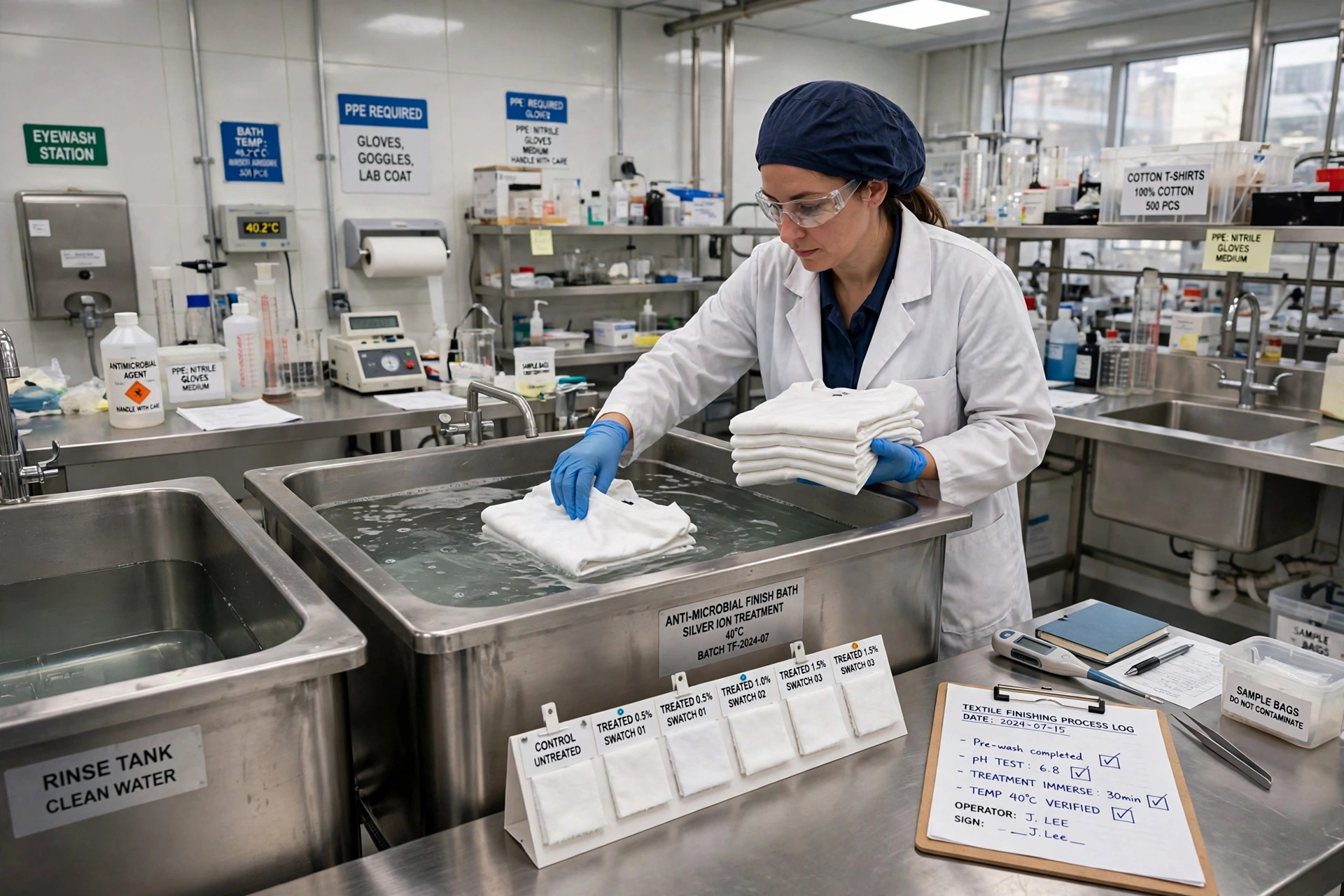
Most garment-level anti-microbial treatments are applied in the wash itself. The active agent — commonly a silver-based compound, a quaternary ammonium silane, or another registered antimicrobial chemistry — is dosed into the final bath of the garment wash, where it deposits onto the fibers and bonds as the load is extracted and dried. Silane-based agents form a durable molecular layer on the fiber surface; silver-based agents release silver ions that interfere with bacterial metabolism. Either way, application through the wash suits finished garments because no extra handling or curing line is needed.
Fabric-level application also exists: mills can pad the finish onto yardage before cutting, which gives very even coverage and is preferred for large uniform programs. A contractor will ask which route a buyer wants, because garment application treats seams, trims and linings as worn, while fabric application happens before the garment exists and every cut edge is treated equally.
Durability, Testing and Honest Claims
Durability is the central question. A well-bonded anti-microbial finish is typically rated to keep working through dozens of home launderings, gradually declining rather than failing at once. Performance is verified by laboratory methods such as AATCC TM100 or ISO 20743, which measure the reduction of test bacteria on treated fabric against an untreated control, and durability claims are checked after a stated number of wash cycles. A brand ordering the finish should ask for test reports tied to the actual chemistry and fabric being used, not a generic brochure figure.
Claims discipline matters just as much. In the United States, treated-article rules generally allow claims that the finish protects the fabric itself — controlling odor-causing bacteria on the garment — but not claims that it protects the wearer from disease. Contractors and brands that keep their language to freshness and odor control stay on the right side of those rules and, just as importantly, describe what the finish honestly does.
Specifying Anti-Microbial Work
When ordering, state the garment types and fabrics, the chemistry family if your brand restricts certain agents, the durability target in wash cycles, and the test method your quality team will accept. Cotton and cotton blends take most agents readily; some finishes behave differently on polyester or nylon, so the contractor should trial your actual fabric. Also agree where the claim will appear — hangtag wording is usually reviewed by the brand, while the contractor is responsible for the process records behind it.
Anti-microbial finishing is frequently combined with other wash effects: a softening silicone wash for hand feel, for example, must be sequenced so the softener film does not block the antimicrobial agent from reaching the fiber. An experienced finishing contractor will order the baths correctly and flag combinations that work against each other before production, not after.
Anti-Microbial Finishing Contractor Listings
Garment finishing contractors that offer anti-microbial washing among their services.
Bennett Dye Co
(USA) Bennett Dye Co. has been an established dye house for over 75 years, and has specialized in garment finishing since 1983. They offer many garment enhancements, including direct, reactive and pigment dyeing. In addition they do enzyme wash, garment wash, stone and acid wash (denim or cotton garments) as well as tie-dyeing.
Services: dyeing textiles (direct dyeing, reactive dyeing, pigment dyeing, tie dye), enzyme wash, garment wash, stone wash, acid wash, depilling garment wash, anti-microbial garment washing, water repellant garment wash, stain resist garment finishing.
Address: 2552 N. 3rd St., Philadelphia, PA 19133, USA. Phone: 215-739-0432. Fax: 215-426-3120. E-mail: Bennettdye@aol.com. Contact: Lee Sunderland.
More Manufacturing Resources
Common Questions
What does an anti-microbial finish on clothing actually do?
It inhibits the growth of odor-causing bacteria on the fabric itself, so garments stay fresher between washes. It protects the article, not the wearer, and reputable contractors keep claims to odor and freshness control rather than health protection.
How long does an anti-microbial garment finish last?
A properly bonded finish is usually rated through dozens of home launderings, with performance checked by tests such as AATCC TM100 after a stated number of wash cycles. Longevity depends on the chemistry, the fabric and how the garment is washed and dried.
Can anti-microbial treatment be combined with other washes?
Yes, but sequencing matters. The antimicrobial bath is normally applied so the agent reaches and bonds to the fiber before any softener film is added. A contractor should trial the exact combination on your fabric before production.