Bleaching Contractors
Industrial bleaching contractors for apparel and textiles.
Bleaching does two quite different jobs in the apparel industry, and bleaching contractors usually do both. The first is preparation: removing the natural color, seed fragments and impurities from cotton fabric or garments so the cloth is a clean, even white ready for dyeing or sale as white goods. The second is fashion: bleach washing denim and colored garments down through graduated shades, from a gentle rinse of color to the palest ice blue, as a style effect in its own right.
This page explains the main bleaching methods a contractor uses, how fashion bleach effects are controlled, the damage and effluent issues that have to be managed, and how to specify bleaching work. The listings below are contractors and processors that offer bleaching among their garment services.
Bleaching Resources
Preparation Bleaching and Fashion Bleaching
Preparation bleaching is normally done with hydrogen peroxide in an alkaline bath, after scouring has removed waxes and pectins from the cotton. Peroxide bleaching whitens evenly, leaves the fabric absorbent for dyeing, and breaks down to water and oxygen, which is why it dominates modern preparation lines. Hypochlorite bleaching is faster and cheaper but harsher, and it survives mainly in fashion work where its aggressiveness is the point.
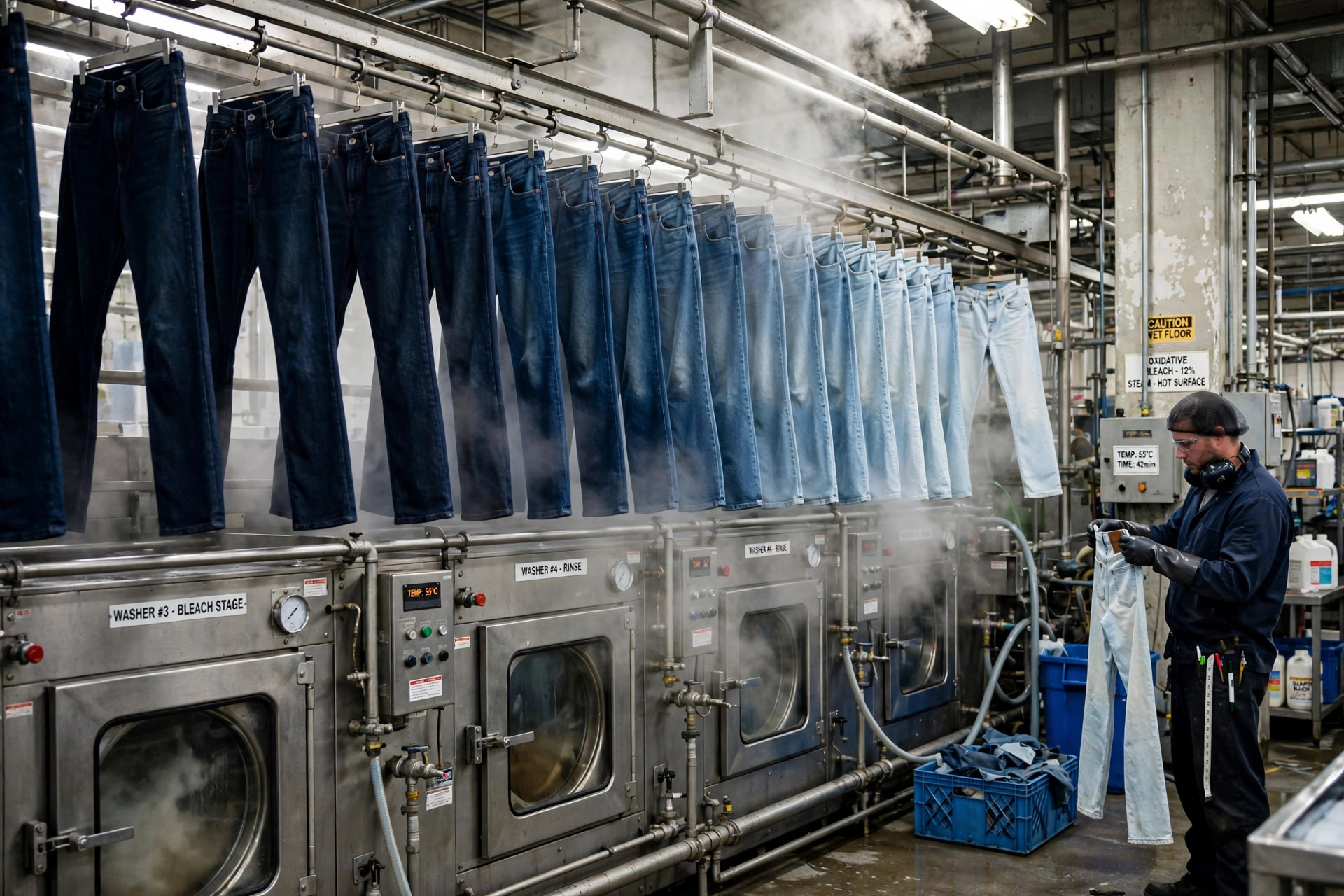
Fashion bleaching of garments — the bleach wash — uses sodium hypochlorite (or permanganate sprays for localized effects) to strip dye from finished jeans and garments. The contractor controls the final shade through bleach concentration, temperature and time, pulling the load through a series of shade approvals. A full bleach can take indigo denim almost to white; a light bleach gives the soft, sun-faded cast that premium denim lines use as a base for further hand finishing.
Controlling Damage and Effluent
Every bleach that removes color also attacks cellulose, so strength loss is the standing risk. Contractors manage it by keeping baths at the mildest effective strength, adding stabilizers to peroxide systems, watching time and temperature closely, and testing tensile strength on finished lots. Chlorine systems add a second obligation: residual bleach must be neutralized with an anti-chlor rinse, or garments yellow and weaken in storage and the first customer wash smells of chlorine.
Effluent rules shape the chemistry a laundry can offer. Hypochlorite discharge is restricted in many jurisdictions because of chlorinated by-products, which is one reason laundries have shifted fashion work toward peroxide, ozone and permanganate techniques where the style allows. When comparing contractors, ask which bleach systems they run and how their discharge is treated — the answer tells you a lot about the plant.
Specifying Bleaching Work
Give the contractor a shade target, not a recipe. For preparation work, specify the whiteness level and absorbency your dyeing needs; for fashion work, supply an approved shade garment or a recognized shade standard and agree an acceptable range, because a drum load never bleaches perfectly uniformly. Trial loads on your actual fabric are essential: the same bath that gently fades one denim can streak another with different indigo penetration.
The bleaching contractors below include full-service garment wet processors that combine bleaching with washing, dyeing and other finishes, which suits brands that want one plant to take a garment from greige or rigid denim to a finished, shelf-ready shade.
Bleaching Contractor Listings
Contractors and processors offering bleaching for garments and textiles.
Hytex
The latest addition to their production process is laundering or wet processing — they offer specialized services to fit the needs of the apparel industry. They provide a full service garment dyeing facility with on-site testing, a full color lab, product development, and quality control throughout the finishing of each garment. For denim wet processing they offer all types of wash, including prewash, stonewash, bleached wash, enzyme washes, antique and sandblasting finishes, and more. Hytex started operating in 1981 as a company that does contract silkscreen printing in a rented shop-house; the business was then confined to manual silkscreen printing using long wooden tables.
Services: garment printing, garment dyeing, garment washing, enzyme wash, stonewash, bleaching, sandblasting.
KEETEX
(India) KEETEX is a manufacturer and exporter of textile fabrics from India, located in Maharashtra state, manufacturing textile fabrics for customers across the world. KEETEX is one of the leading manufacturers of industrial and garment fabrics in India. The firm was established in 1994 and has created its own market with quality supplies. They have a complete process house with bleaching, dyeing, printing and finishing facilities at their sister concern M/s. Arihant Yarn Processors Pvt. Ltd., with all necessary facilities to control quality and reliability of their products. They manufacture 100% cotton fabrics, 100% polyester and blended fabrics in various constructions, weights and widths.
Products: 100% cotton fabrics, 100% polyester fabrics, blended fabrics; industrial and garment fabrics. Processes: bleaching, dyeing, printing, finishing.
Laundry Specialties
Laundry Specialties is a commercial laundry which specializes in processing garments for the apparel industry. Some of the services they provide are garment washing, enzyme washing, stone washing, bleaching (denims etc.), fix wash (crocking etc.) and silicone wash. They also provide rework services and packaging.
Services: commercial laundering, garment washing, enzyme washing, bleaching, fix wash, silicone wash, stone washing, refurbishing.
Contact: Richard or Chuck. Address: 431 N. Jordan Street, Allentown, PA 18102, USA. Phone: 610-351-3860. Fax: 610-770-1785. E-mail: richard@laundryspecialties.com
Magna Cleaners Inc
(Pennsylvania) Magna Cleaners provides commercial laundry service to a variety of clientele. Their facility is equipped with the latest washing, drying and finishing equipment. They process everything from bulk commercial laundry down to single piece sample lots. They also provide garment washing, enzyme washing, stone washing, bleaching (denims etc.), fix wash and silicone wash. They also do rework services and packaging.
Services: commercial laundering, garment washing, enzyme washing, bleaching, fix wash, silicone wash, stone washing, refurbishing.
Address: 361 W. Gordon St., Allentown, PA 18102, USA. Phone: 484-894-8906. E-mail: sales@magnacleaners.com. Contact: Al Fodero.
More Manufacturing Resources
Common Questions
What is the difference between preparation bleaching and a bleach wash?
Preparation bleaching whitens undyed cotton fabric or garments so they can be dyed evenly or sold white; it usually uses hydrogen peroxide. A bleach wash is a fashion treatment that strips dye from finished, colored garments — most often denim — to reach a lighter fashion shade.
Does bleaching weaken fabric?
It can. Bleach removes color by oxidation, which also attacks cellulose fibers, so contractors control concentration, time and temperature, neutralize chlorine systems with an anti-chlor rinse, and check strength on finished lots. Well-run bleaching keeps strength loss within the garment’s tolerance.
Why are laundries moving away from chlorine bleach?
Chlorine bleach is fast and effective but creates chlorinated by-products in effluent and is hard on fabric and machines. Many laundries now use hydrogen peroxide, ozone or permanganate techniques for fashion effects where the style allows, and reserve hypochlorite for work that truly needs it.