Water Repellant Garment Finishing
Contractors that apply water repellant finishes to garments.
A water repellant finish is what makes rain bead up and roll off a jacket instead of soaking straight in and turning the fabric dark and cold. The treatment — in modern form usually called a durable water repellent, or DWR — coats the fibers of the outer fabric so water cannot spread on them. It is the first line of weather defense on outerwear, workwear, uniforms and outdoor clothing, and it is a finish a garment contractor can apply to finished pieces as well as a mill finish on fabric.
This page explains how repellent finishing works, the important difference between water repellent and waterproof, how the finish is tested and renewed, and what to specify when ordering it. A finishing contractor listing the service appears below, with a link to water repellant fabric mills for the fabric-stage route.
Water Repellant Resources
How Durable Water Repellents Work
Untreated fabric wets out because water spreads across its fibers by surface tension. A DWR finish reverses that: the polymer treatment lowers the fibers’ surface energy so water molecules prefer each other to the fabric, gathering into beads that sit on the surface and roll or shake off. The fabric’s pores stay open, so the garment remains breathable and its hand and appearance barely change — repellency without a plastic feel is precisely what the finish is for.
Chemistry has been changing under regulatory pressure. Long-chain fluoropolymer repellents set the historical performance standard but are being phased out in many markets over environmental persistence; current contractors work mainly with short-chain or non-fluorinated (often called C0) repellents, which bead water well though they repel oils less strongly than the chemistry they replaced. A brand specifying repellency today should ask which chemistry family is being applied and record the answer with the order.
Repellent Is Not Waterproof
The distinction decides whether a garment keeps its wearer dry. A repellent finish sheds light rain and splashes and delays wet-out, but water under pressure — a heavy downpour, kneeling in wet grass, shoulder straps pressing a wet shell — will pass through an uncoated fabric no matter how good its DWR is. Waterproof performance requires a membrane or coating plus sealed construction, which is a fabric and garment-engineering decision, not a finishing bath.
What DWR does for a waterproof garment is protect its comfort: when the face fabric of a membrane jacket wets out, breathability collapses and condensation makes the wearer feel wet from inside. That is why repellent finishing matters even — especially — on waterproof clothing, and why its maintenance, below, is part of owning such a garment.
Testing, Durability and Renewal
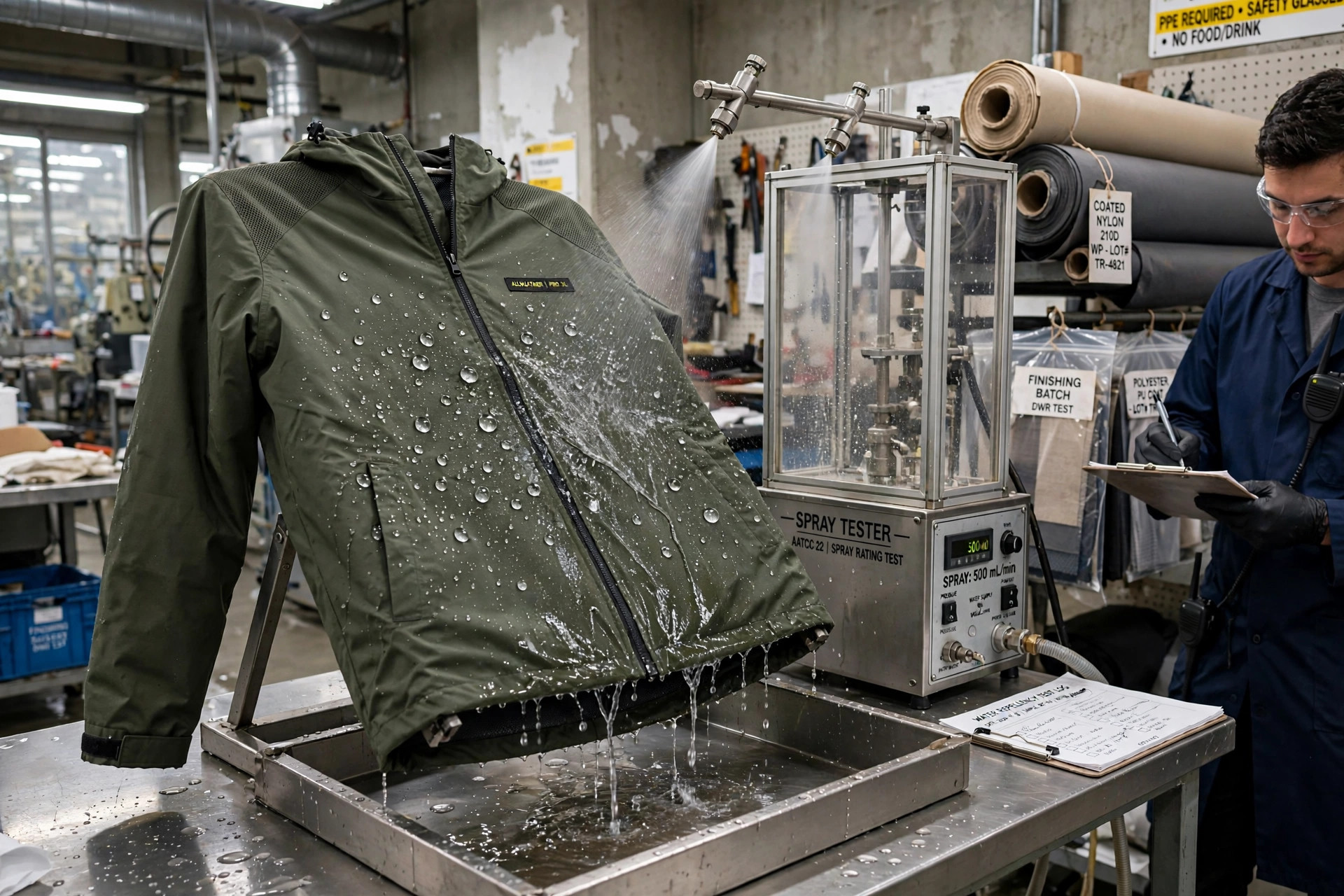
Repellency is measured by spray testing (AATCC TM22 / ISO 4920), in which water is sprayed at the fabric under controlled conditions and the wetting pattern is graded against a photographic scale; demanding specifications also test after a stated number of launderings, since detergents and abrasion gradually strip the finish. A finish that grades at the top of the scale when new and collapses after five washes fails the only test that matters to the wearer.
The encouraging fact is that repellency can often be revived: tumble drying or gentle ironing reactivates many finishes by reorienting the polymer, and wash-in or spray-on re-proofing products restore performance on finished garments — a service garment contractors also offer for workwear and uniform programs. When ordering new finishing work, specify the spray grade required after laundering, the chemistry family, and whether the program includes a re-proofing route for the garment’s working life.
Water Repellant Finishing Contractor Listings
Garment finishing contractors that offer water repellant garment wash and finishing among their services.
Bennett Dye Co
(USA) Bennett Dye Co. has been an established dye house for over 75 years, and has specialized in garment finishing since 1983. They offer many garment enhancements, including direct, reactive and pigment dyeing. In addition they do enzyme wash, garment wash, stone and acid wash (denim or cotton garments) as well as tie-dyeing.
Services: dyeing textiles (direct dyeing, reactive dyeing, pigment dyeing, tie dye), enzyme wash, garment wash, stone wash, acid wash, depilling garment wash, anti-microbial garment washing, water repellant garment wash, stain resist garment finishing.
Address: 2552 N. 3rd St., Philadelphia, PA 19133, USA. Phone: 215-739-0432. Fax: 215-426-3120. E-mail: Bennettdye@aol.com. Contact: Lee Sunderland.
More Manufacturing Resources
Common Questions
What is the difference between water repellant and waterproof?
A water repellant (DWR) finish makes water bead and roll off the fabric surface, shedding light rain while staying breathable. Waterproof means water cannot pass through even under pressure, which requires a membrane or coating and sealed seams — a construction, not just a finish.
How is water repellency tested?
By spray testing (AATCC TM22 / ISO 4920): water is sprayed onto the fabric under controlled conditions and the surface wetting is graded against a standard photographic scale. Good specifications require a passing grade after a stated number of launderings, not only when new.
Can a water repellant finish be renewed?
Often, yes. Heat from a tumble dryer or iron can reactivate a tired finish, and wash-in or spray-on re-proofing products restore repellency on finished garments — a service contractors offer for outerwear, workwear and uniform programs.