Depilling Garment Washing
Contractors that depill garments and fabrics during washing and finishing.
Pilling is the small, stubborn defect that makes a new garment look old: loose fibers work their way out of a yarn, tangle in the friction of wear, and roll into tiny balls anchored to the surface by a few strong fibers. Depilling is the finishing answer — removing pills that have formed and, better, treating the fabric so fewer form. Contractors depill during garment washing, most effectively with cellulase enzymes that digest the loose surface fibers before they can tangle.
This page explains why fabrics pill, the removal and prevention methods a finishing contractor uses, and how pilling resistance is tested and specified. A contractor offering depilling garment wash appears in the listings below, and the linked glossary entry defines fabric pilling itself.
Depilling Resources
Why Fabrics Pill
Pilling starts with fiber migration. In any spun yarn, some short fibers are held loosely; abrasion in wear and washing works them to the surface, where they fuzz, then entangle into pills. Strong synthetic fibers — polyester and acrylic especially — make the problem visible because the anchor fibers do not break, so the pill stays attached instead of falling away. Loosely spun yarns, short staple fibers and brushed or low-twist constructions all pill faster, which is why knitwear and fleece suffer more than tight plain weaves.
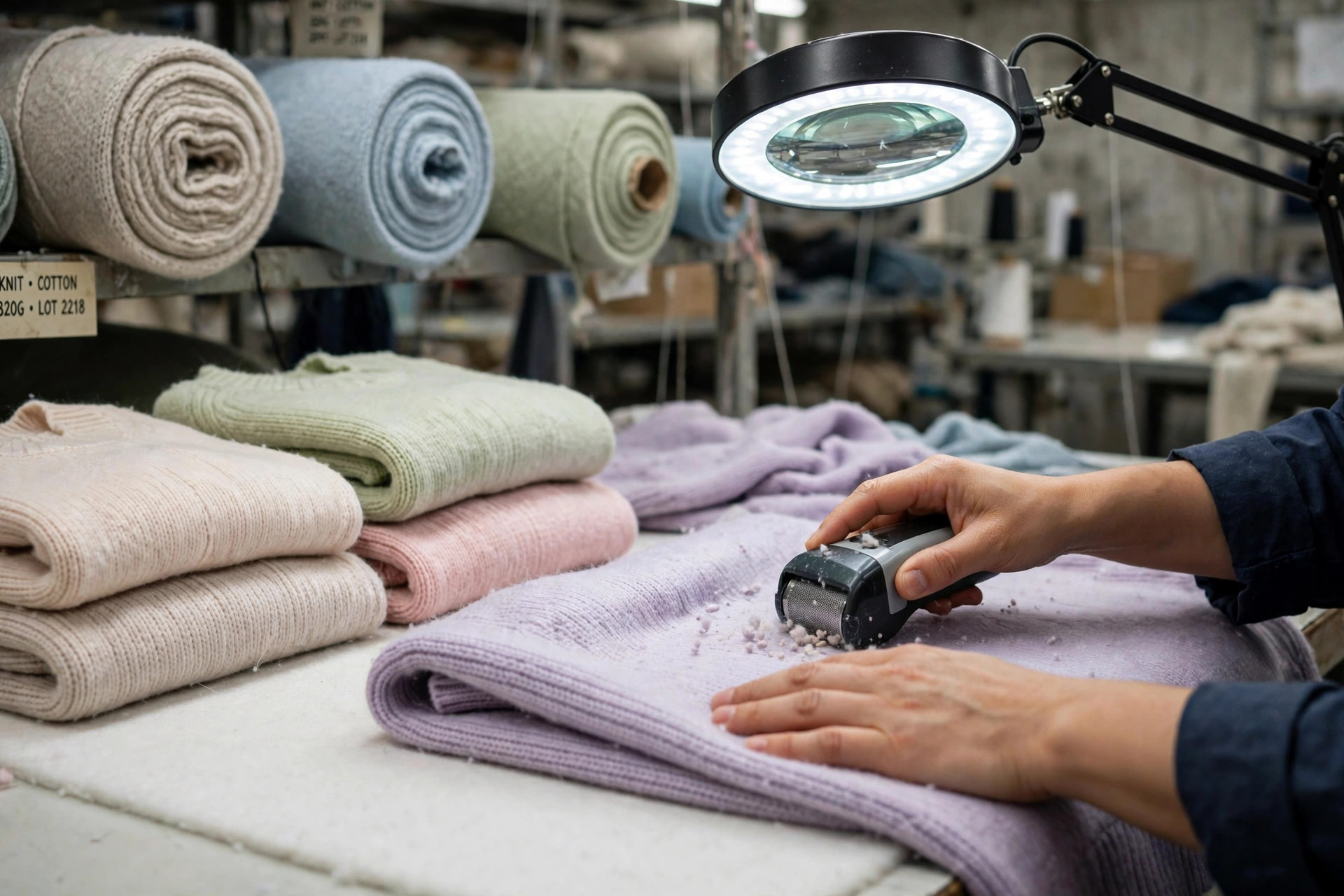
Once pills exist, the home remedies are mechanical: the fabric can be shaved with a fabric shaver or a razor blade, as long as the fabric is not too delicate, and pills can also be removed with a lint brush or a piece of tape. Those fix one garment at a time. Contract finishing exists to stop the problem at production scale, before the garment ever reaches a customer.
How Contractors Depill
The production method is the enzyme depilling wash, often called biopolishing when applied to fabric. Cellulase enzymes in the wash bath attack the protruding micro-fibers on cotton and other cellulosic fabrics, weakening them so agitation breaks them away cleanly. The surface that emerges is smoother, shows color more clearly, resists fuzzing, and — because the loose fibers that would have formed pills are gone — pills far less in wear. The same bath is frequently combined with a softening finish for a cleaner hand feel.
Mechanical depilling complements the chemistry: shearing machines crop fabric surfaces to an even level before garment making, and finished garments can be passed over lint-removal and inspection stations. For fabrics that cannot take enzymes, such as protein fibers, mechanical removal and anti-pill yarn choices at the fabric stage are the contractor’s main tools, which is why depilling is best specified before production rather than after complaints.
Testing and Specifying Depilling
Pilling resistance is graded on standardized abrasion tests — the Martindale method (ISO 12945-2) and the pilling box (ISO 12945-1) are the common ones — with results reported on a 1-to-5 scale against photographic standards. A brand specifying depilling should name the test, the minimum grade after a stated number of cycles, and whether the grade must hold after washing, since a finish that tests well off the line but washes out is a returns problem deferred, not solved.
When briefing a contractor, send the actual production fabric, not a substitute: pill behavior is a property of the exact yarn and construction. Agree whether depilling is a garment wash, a fabric biopolish, or both, and have the contractor report the weight loss from the enzyme bath — a small loss is normal and expected, and a large one signals an over-strong bath that will cost fabric strength.
Depilling Contractor Listings
Garment finishing contractors that offer depilling garment wash among their services.
Bennett Dye Co
(USA) Bennett Dye Co. has been an established dye house for over 75 years, and has specialized in garment finishing since 1983. They offer many garment enhancements, including direct, reactive and pigment dyeing. In addition they do enzyme wash, garment wash, stone and acid wash (denim or cotton garments) as well as tie-dyeing.
Services: dyeing textiles (direct dyeing, reactive dyeing, pigment dyeing, tie dye), enzyme wash, garment wash, stone wash, acid wash, depilling garment wash, anti-microbial garment washing, water repellant garment wash, stain resist garment finishing.
Address: 2552 N. 3rd St., Philadelphia, PA 19133, USA. Phone: 215-739-0432. Fax: 215-426-3120. E-mail: Bennettdye@aol.com. Contact: Lee Sunderland.
More Manufacturing Resources
Common Questions
What causes pilling on clothes?
Loose short fibers migrate out of the yarn under abrasion, fuzz on the surface and tangle into pills. Strong synthetic anchor fibers keep the pills attached, so polyester and acrylic blends pill noticeably; loose, low-twist yarns and brushed surfaces pill fastest.
How does an enzyme depilling wash work?
Cellulase enzymes in the wash weaken the protruding surface micro-fibers on cotton and cellulosic fabrics so agitation removes them cleanly. The result is a smoother surface that shows color better and forms far fewer pills in wear. The process is also called biopolishing.
Can pills be removed from a garment I already own?
Yes — with a fabric shaver or carefully with a razor blade on sturdy fabrics, or with a lint brush or tape for light pilling. Delicate fabrics need a gentler touch. Contract depilling is the production-scale prevention, done before garments are sold.