Acid Washing Contractors
Contractors that acid wash garments and fabrics for the apparel industry.
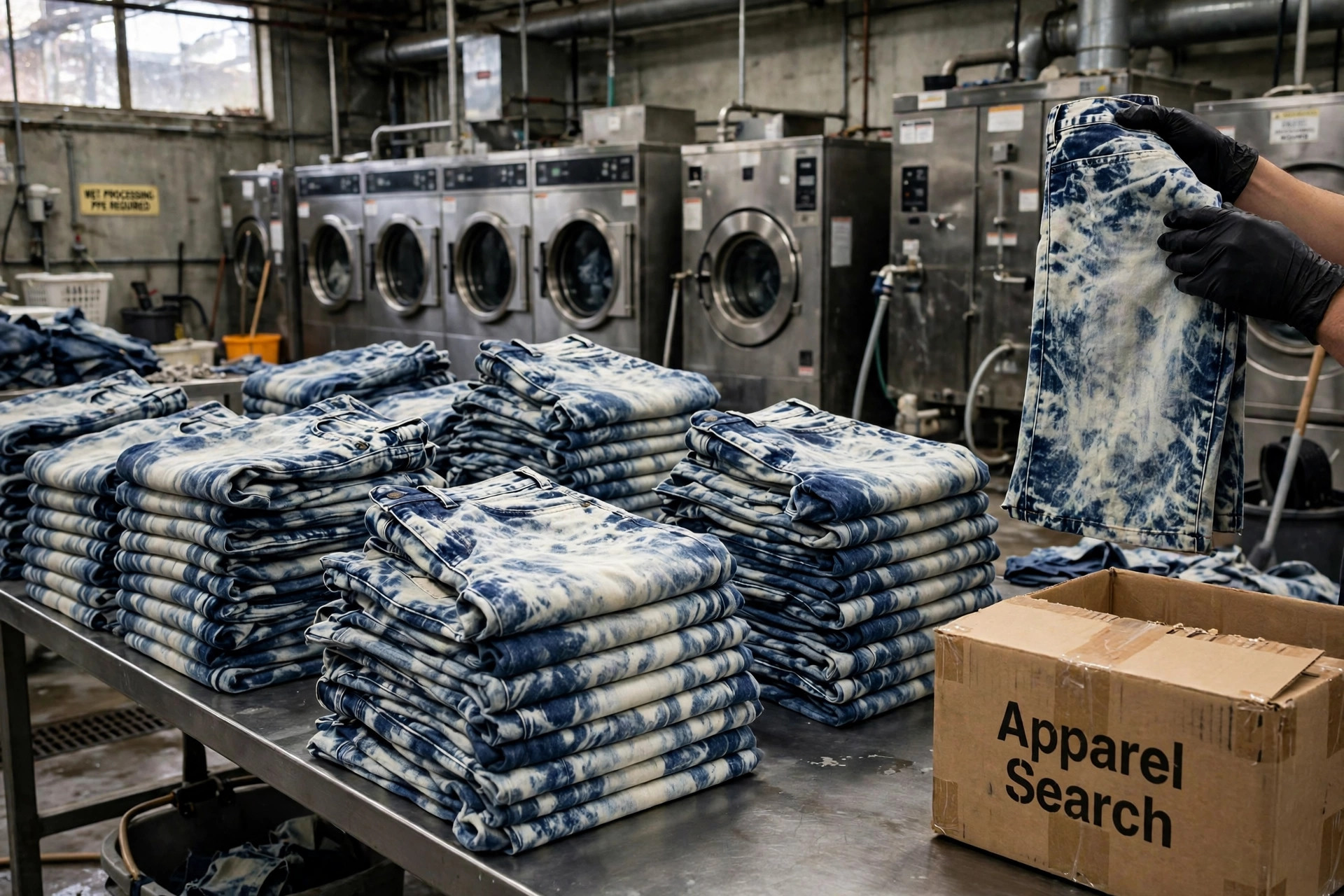
Acid washing is the most theatrical of the denim finishes: a high-contrast, marbled pattern of deep indigo and near-white that no two garments share exactly. Despite the name, the classic process uses no acid at all. Pumice stones are soaked in a chlorine bleach solution, then tumbled with dry or barely damp garments, so the bleach discharges color only where the stones touch the cloth. The result, launched in the 1980s and revived in cycles ever since, reads as part camouflage, part marble, and it remains a staple finish for jeans, denim jackets and cotton casual wear.
This directory page explains how acid washing works, which fabrics and garments it suits, the risks a contractor has to control, and how a brand specifies the finish when ordering it. The contractor listing below offers acid wash as part of a wider garment finishing service.
Acid Wash Resources
How Acid Washing Works
The contractor loads pumice stones into a bath of sodium hypochlorite bleach (some laundries use potassium permanganate) and lets them absorb the solution, then drains them so they are impregnated but not dripping. The stones go into a dry washing drum with the garments and tumble for a controlled time. Wherever a stone presses and rubs against the fabric, the bleach strips the indigo dye locally; the areas the stones barely touch keep their color. Because stone contact is random, every garment emerges with a unique clouded pattern.
After tumbling, the load must be neutralized promptly — usually with an anti-chlor agent such as sodium metabisulfite — then rinsed and softened. Timing is the whole craft: minutes too long and the bleach eats through the cotton, minutes too short and the contrast is muddy. Skilled laundries run test loads and adjust stone load, bleach strength and cycle time for each fabric weight before committing a production batch.
Fabrics, Garments and Effects
Acid wash is almost always applied to indigo denim and other sturdy cotton fabrics, because the effect depends on a dark dyed surface that can be discharged unevenly. It suits jeans, shorts, denim jackets, shirts and overalls, and it is also used on cotton sweatshirts and tees for a snow-washed, vintage surf look. Lighter or more delicate fabrics are poor candidates: the bleach that creates the pattern also weakens fibers, so the garment needs enough substance to survive its own finish.
The pattern itself can be steered, within limits. A heavy stone load with strong bleach gives the bold black-and-white (or blue-and-white) marbling of classic acid wash; a lighter treatment gives a softer, cloudier frost. Brands usually approve a range board of washed samples rather than a single target garment, because exact repetition from piece to piece is impossible — that randomness is the point of the finish.
Risks, Controls and Ordering
The risks are real and a good contractor manages them openly. Chlorine left in the fabric keeps working after washing, yellowing whites and rotting cotton, so complete neutralization and thorough rinsing are verified, often by testing the final rinse water. Over-bleaching weakens seams and pocketing first, so strength checks on finished garments are part of quality control. The process also generates bleach-laden effluent, which the laundry must treat before discharge.
To order acid wash, send the contractor your base garment, a target sample or photo reference, and the contrast level you want, then approve a washed sample lot before bulk production. Agree the acceptable pattern range, the hand feel after softening, and how garments will be sorted, because pattern variation means the contractor should blend pieces from across the load when packing so no single carton gets only the darkest or lightest garments.
Acid Washing Contractor Listings
Garment finishing contractors that offer acid washing among their services.
Bennett Dye Co
(USA) Bennett Dye Co. has been an established dye house for over 75 years, and has specialized in garment finishing since 1983. They offer many garment enhancements, including direct, reactive and pigment dyeing. In addition they do enzyme wash, garment wash, stone and acid wash (denim or cotton garments) as well as tie-dyeing.
Services: dyeing textiles (direct dyeing, reactive dyeing, pigment dyeing, tie dye), enzyme wash, garment wash, stone wash, acid wash, depilling garment wash, anti-microbial garment washing, water repellant garment wash, stain resist garment finishing.
Address: 2552 N. 3rd St., Philadelphia, PA 19133, USA. Phone: 215-739-0432. Fax: 215-426-3120. E-mail: Bennettdye@aol.com. Contact: Lee Sunderland.
More Manufacturing Resources
Common Questions
Does acid washing actually use acid?
No. The name is historical. The classic process uses pumice stones soaked in chlorine bleach, tumbled with the garments so the bleach discharges dye where the stones rub. Some laundries use potassium permanganate instead, but in neither case is an acid the active agent.
Why does every acid wash garment look different?
The pattern is created by random contact between bleach-soaked stones and fabric inside the drum. No two garments touch the stones in exactly the same places, so each piece gets a unique marbled pattern. Brands approve an acceptable range of patterns rather than one exact target.
What garments suit acid washing best?
Sturdy cotton fabrics, above all indigo denim: jeans, jackets, shorts and shirts, plus cotton sweatshirts and tees. The fabric must be strong enough to tolerate localized bleaching, so very light or delicate fabrics are not good candidates.