Apparel Search Workwear Guides
Chef Clothing Buying Guide
What to buy first for kitchen work: the starter kit in order, the employer-issued vs. personal kit question, quality markers in coats, aprons and shoes, and where the stores and factories are.
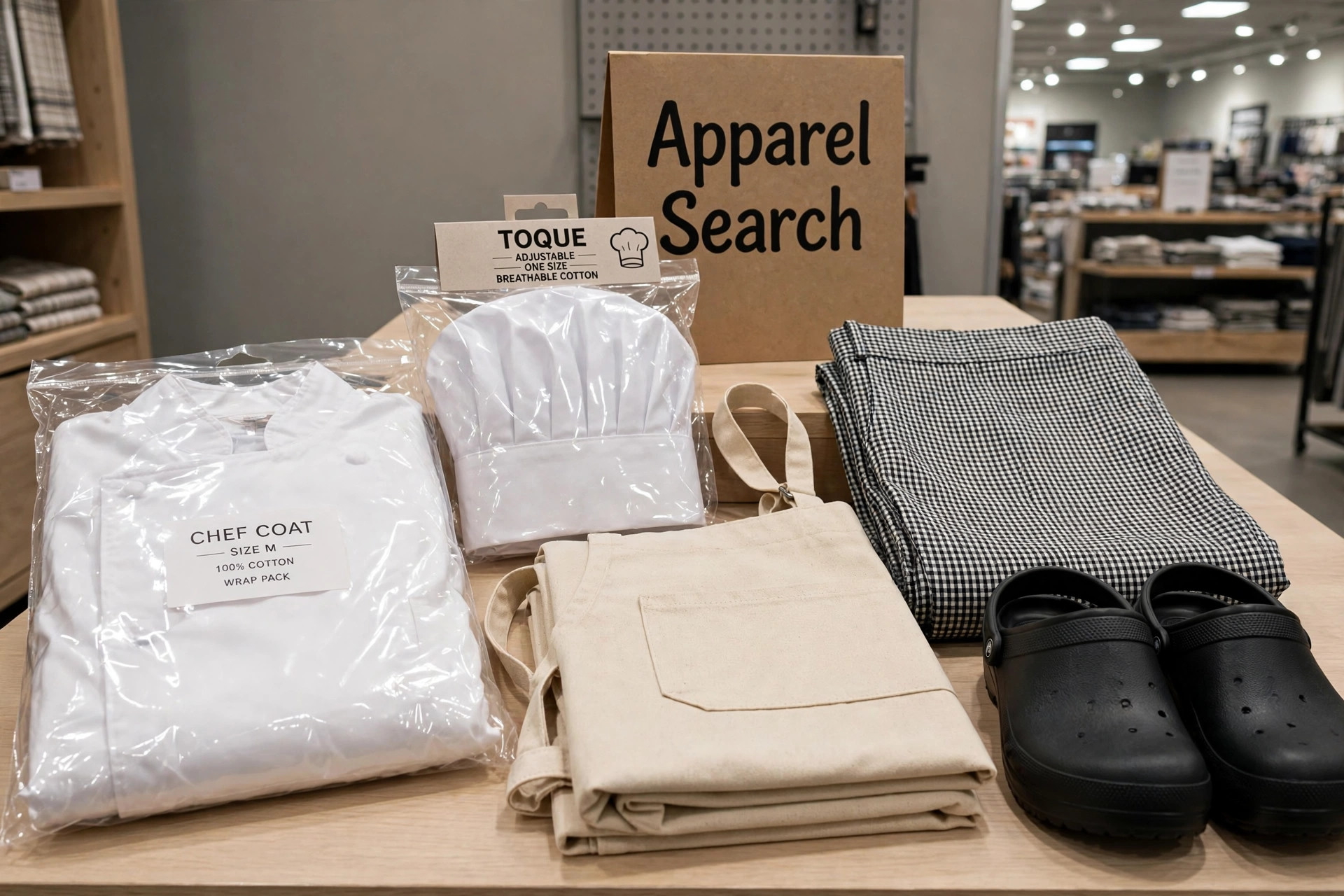
Buying chef clothing has one trap, and it springs on students and new cooks every season: buying a full kit before learning what the kitchen requires. Schools specify hat styles and coat colors; restaurants issue some pieces and expect others; a surprising amount of good money goes to uniforms that never get worn. This guide orders the decisions properly — dress code first, then the kit in wear order, then the quality markers that separate clothing that lasts from clothing that frays — and it finishes at the directories where the trade actually sells. It is part of our Chef Clothing Guide; the pieces themselves are explained in the uniform anatomy guide.
Step One: Learn the Dress Code Before Spending
Three questions decide everything else. What is issued? Many hotels, chains and larger restaurants supply coats and pants, sometimes through a rental service that also launders them. What is specified? Where the kit is personal, the house still usually sets the coat color, the hat style, and whether aprons are house-branded. What is genuinely yours to choose? Most often the shoes, and frequently the aprons and hats. Culinary students should expect the strictest version of all three — full uniform, checked daily, bought at once — and should buy exactly the school's list before adding anything of their own.
The Starter Kit, In Order
- Kitchen shoes. The piece you will feel most. Closed, slip-resistant, built for standing; buy for the tread and the fit, and break them in before the first full shift. The construction details are in the work shoes guide.
- Coats — two or three. Enough to rotate between washes, in the house color and style. Traditional knot-button cotton or a poly-cotton with a vented back, sized by the chest measurement and the maker's chart, not the letter alone.
- Pants — two or three. Check or black to the house code, drawstring or elastic waist, loose and tapered. Rotation matters here as much as with coats.
- Aprons — several. Bib aprons for the line, in the house style; they soil fastest and cost least, so this is where spares belong. Students: buy the school's specified apron first.
- Hat. Toque where tradition or school rules call for it; skull cap or kitchen cap where they do not. Buy two — hats absorb sweat and wash with the whites.
- Side towels and the small kit. A bundle of side towels, a thermometer for the sleeve pocket, pens. Small money, daily use.
Quality Markers: What Lasting Kit Looks Like
Coats
Dense, even cloth that does not show light through it; cloth knot buttons firmly attached, or clean, heavy snaps on modern styles; stitching that stays parallel and unbroken at the placket, cuffs and pocket mouths; a thermometer pocket that actually holds a probe upright. In hot kitchens, a mesh back panel is a quality marker of a different kind — the coat was designed for the work, not just the look.
Aprons
Bar-tacked or otherwise reinforced tie attachments — apron straps fail at the stitching long before the cloth wears — and ties long enough to wrap and front-knot on your body, not the model's. Split fronts on long bib aprons, divided pockets that are stitched through, and cloth heavy enough to take a hot drip without telegraphing it.
Pants and shoes
Pants: a drawstring that is sewn in or bar-tacked so it cannot retreat into the waistband, and tapered legs that clear the shoe. Shoes: a tread pattern with real channels — hold the shoe and look at the sole, because the sole is the product — and uppers without mesh panels over the toes, which is where kitchen spills land.
Personal Kit vs. Employer-Issued
The split varies, but the common pattern is consistent enough to plan around. Usually issued: coats and pants in uniform programs, branded aprons, and anything the house launders centrally. Usually personal: shoes almost everywhere; hats and aprons in small kitchens; the entire kit for students, freelancers, private chefs and food-truck cooks. Rental and laundry programs sit between the two — the kitchen contracts a service that supplies and washes sets on rotation, a system the men's uniforms and women's uniforms guides compare with purchased programs. If a program is offered, the buying list shrinks to shoes and spares — another reason the dress-code questions come first.
Shop Chef Clothing on Amazon
Ready to shop? Product links are kept in one place on the Apparel Search shopping guide:
Shop Chef Clothing on AmazonChef coats, checkered and black chef pants, aprons, toques and slip-resistant kitchen shoes are all standard Amazon categories.
Where the Trade Buys: The Directories
For individual and restaurant buying, the chef and cooking clothing retailers directory lists stores that outfit cooks from line to executive chef, inside the wider uniform retailers section. Businesses buying at volume work through the uniform wholesalers, and buyers sourcing production itself — private-label programs, restaurant-group contracts — start at the chef clothing factories directory and the wider uniform factories list. Aprons have their own supply chain on both sides: apron stores for buying, apron factories for making.
Volume uniform buying has a sporting branch with the same economics — setup costs, quantity breaks, deposits before production. Our team uniform costs and timelines guide works through the team and club version for coaches and organizers outfitting a whole roster.
Common Questions
What should a culinary student or new cook buy first?
First, the program or employer dress code — it decides colors, hat style and whether the coat is issued to you. Then buy in wear order: kitchen shoes you will stand in all day, the required coats and pants if they are not issued, aprons, a hat, and side towels. The starter-kit list in this guide puts each piece in order.
Do employers provide chef uniforms?
It varies by kitchen. Hotels, chains and larger restaurants often issue coats and pants, and many use a rental or laundry service that delivers clean sets. Small restaurants, cafés and food trucks more often set a dress code and expect cooks to own their kit — shoes and aprons are the most commonly personal pieces either way. Ask before you spend.
Are expensive chef coats worth it?
The gains are in fabric and construction: denser cloth that resists stains and holds its white, cloth knot buttons, reinforced stitching, and modern touches like mesh back panels for heat. A cook working daily in one kitchen gets the value back in durability and comfort; a short course or occasional cooking may not need more than a sound mid-range coat.
What sizes do chef coats come in?
Most chef coats are unisex and sized by chest measurement or in S–3XL letter sizes, sometimes both on the same label — a coat sold as "medium" from one maker can measure differently from another. Measure your chest, check the maker size chart rather than the letter, and leave room to reach and move: the fit guide explains the working fit a coat needs.
The Chef Clothing Guide
The whole kitchen wardrobe — the pieces, the brigade that wears them, and the standards behind the uniform.
Related Guides
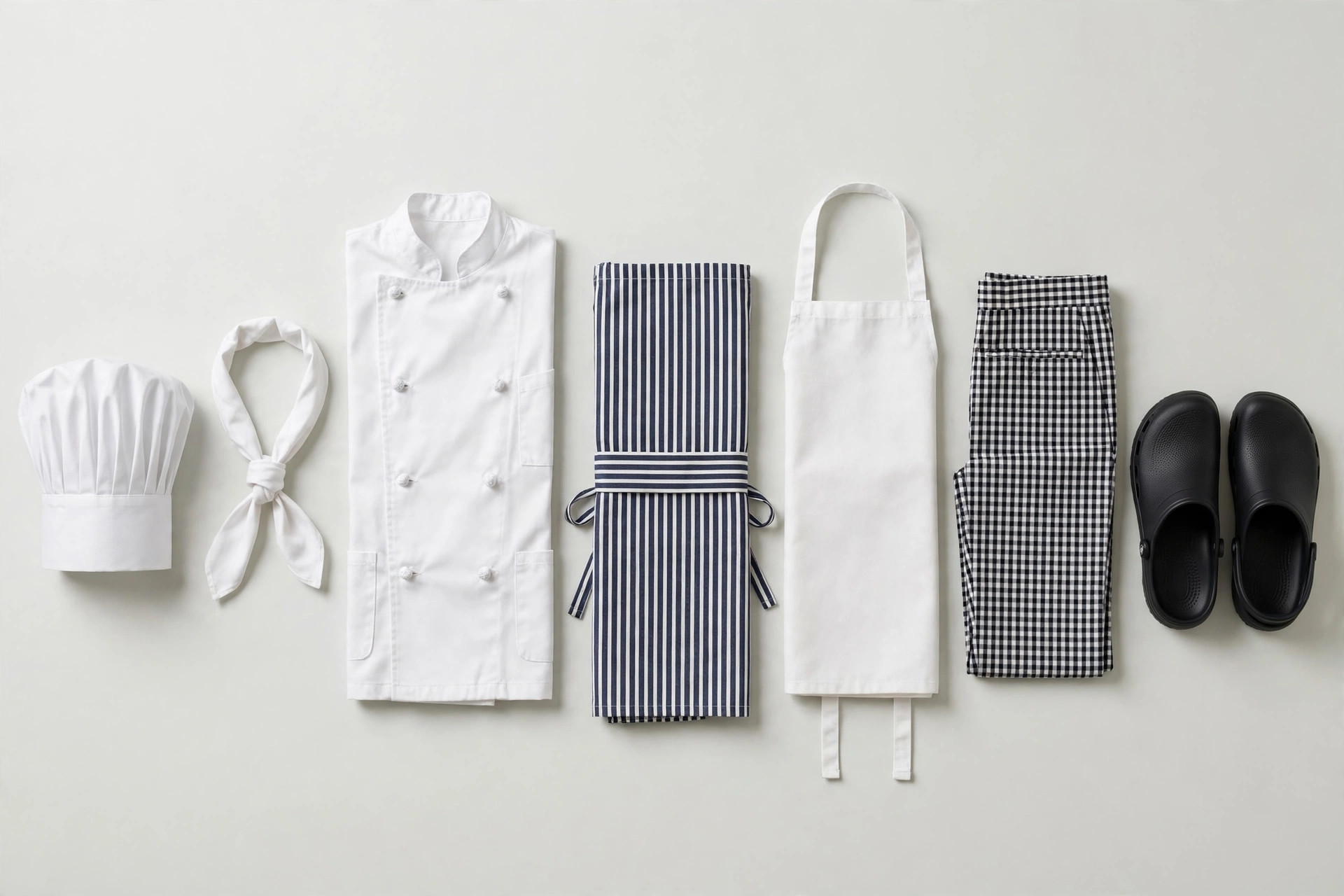 The Chef Uniform, ExplainedWhy each piece of the uniform is built the way it is.
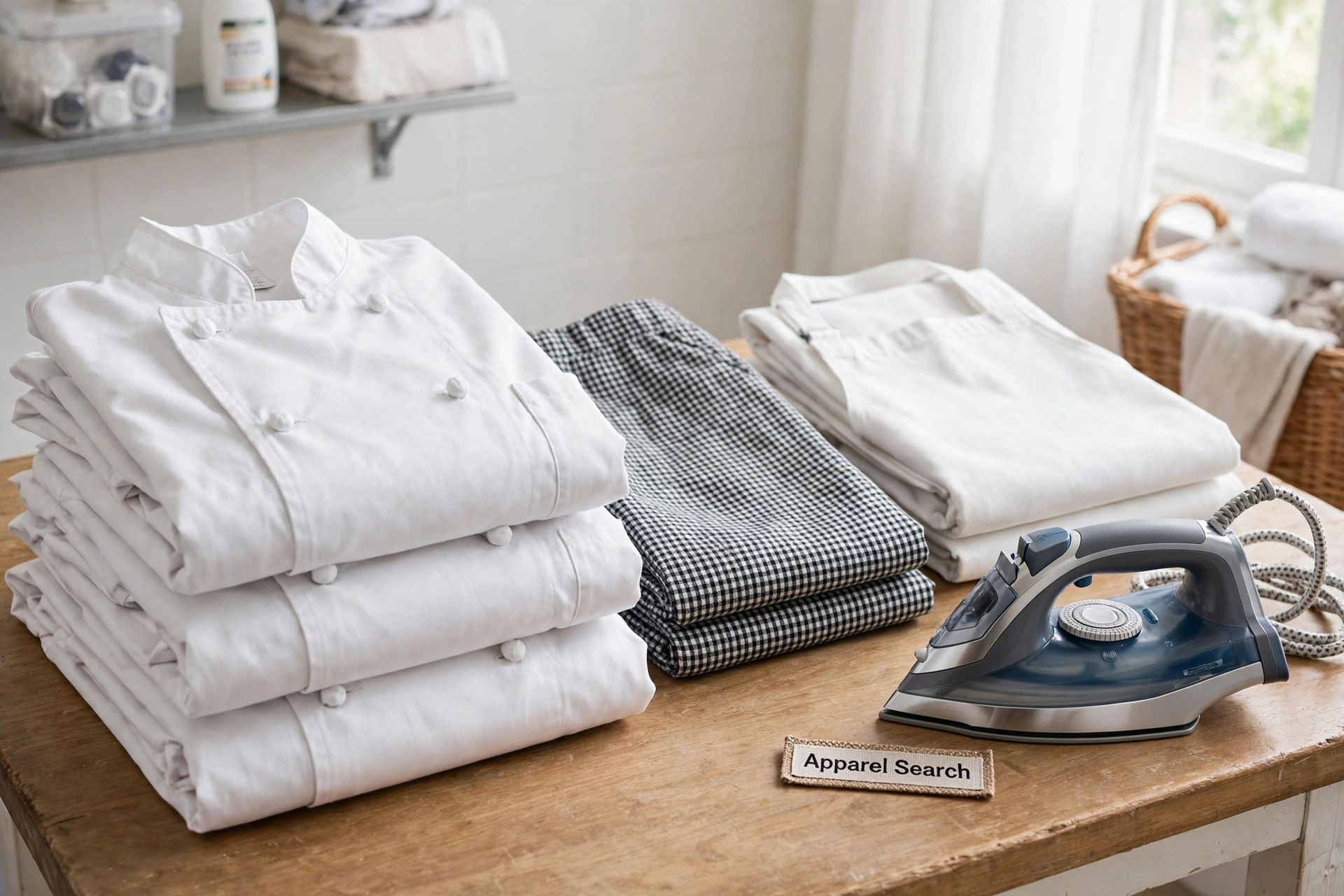 Chef Clothing Fit & CareThe fit the work needs, and the laundry system that keeps the kit white and rotating.