Women's Uniforms Guide
A women's uniform is a standardised work outfit supplied or specified by an employer: scrubs, service and hospitality sets, work shirts and trousers, and career uniform separates built for daily wear and industrial laundering.
Shop Women's Uniforms Now
Shop Women's Uniforms on Amazon Shop Women's Uniforms on eBayThe Amazon and eBay links on this page are affiliate links. If you make a purchase through them, Apparel Search may earn a commission.
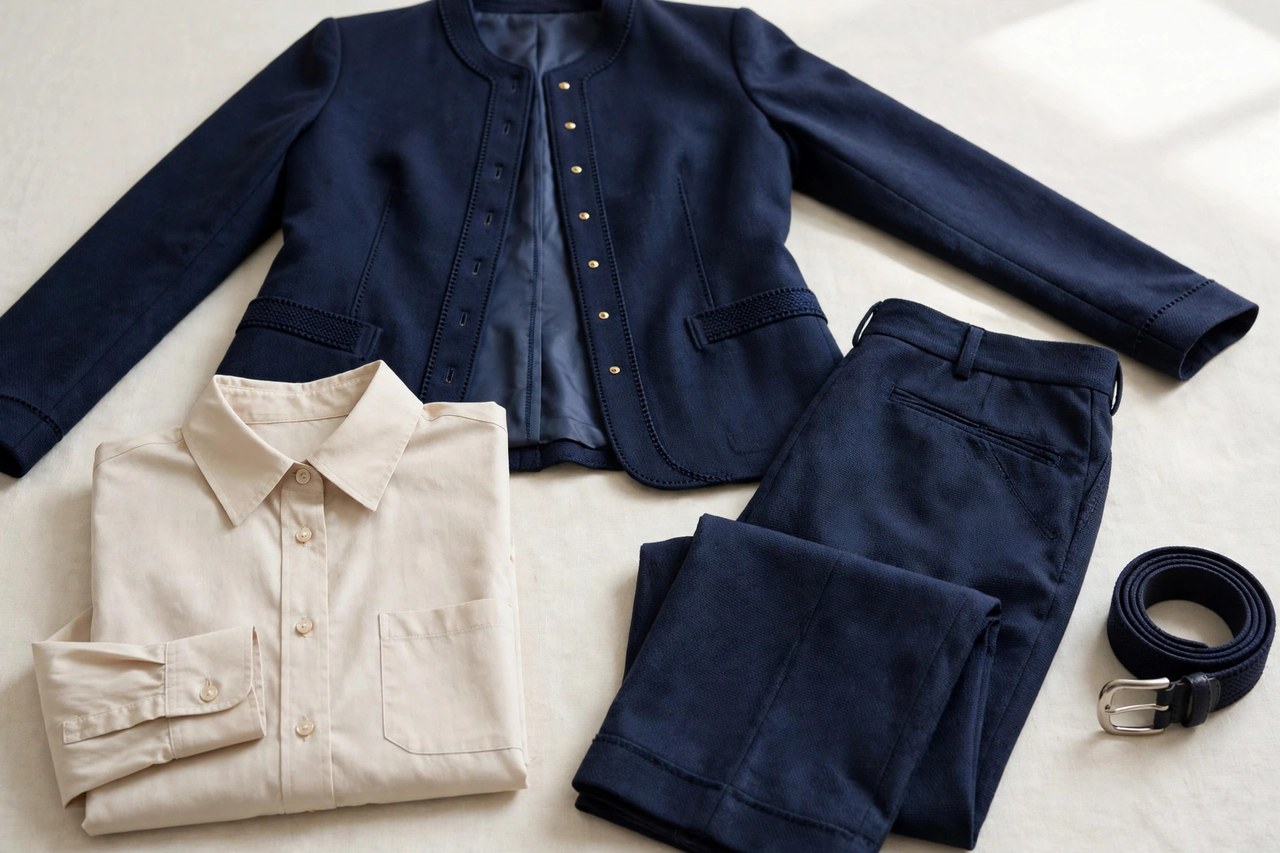
A women's uniform is a standardised work outfit supplied or specified by an employer: scrubs, service and hospitality sets, work shirts and trousers, and career uniform separates built for daily wear and industrial laundering. Uniform buying is specification buying, and this guide covers it that way: sizing a workforce across a size run, fabric weights that survive commercial washing, colourfastness, reorder continuity and the alterations that make a standard issue fit individuals.
This guide covers uniforms in the order a careful buyer needs it: what the product is made from, how it is constructed, how it should fit, how to choose it for real use, and how to care for it so it lasts. Apparel Search has published guides to women's clothing for decades, and this rebuilt page keeps the subject focused — measurable details, named materials and checks you can perform in a shop or on a parcel's arrival, rather than general fashion language.
Fabrics and Build for Daily Wear
Uniform fabrics are industrial textiles: polyester-cotton blends dominate because they launder hot, resist fading, release stains and hold creases, in weights chosen by job — light poplins for hospitality shirts, heavier twills for work trousers, fluid-resistant finishes and four-way stretch knits in modern scrubs. Pure cotton appears where heat comfort outweighs easy care, and wool blends in career and front-of-house suiting.
Construction is specified for repetition: bar-tacked stress points, double-needle seams, reinforced pockets, colour-matched sturdy buttons or snaps, and hems with alteration allowance. The real cost of a uniform programme is per wear, not per garment: a heavier fabric that survives two hundred industrial washes is cheaper than a light one replaced every season. Name-badge placement, pen pockets and action backs are functional pattern features, not styling, and a uniform range is judged on whether they are present where the job needs them.
Sizing a Workforce
Uniform sizing works best by measurement across the whole size run: chest, waist, hip and inside leg for each wearer, matched to the supplier's own chart, with tall, petite and maternity options specified rather than improvised. Fit must allow the job's full movement — reaching, bending, lifting — so ease allowances in a uniform are larger than in fashion clothing of the same labelled size.
Continuity is the hidden sizing requirement: a programme must be able to reorder the same garment in the same colour and cut for new starters years later, so established ranges with published continuity commitments are safer than fashionable short runs. Keep a size set for fitting new staff, and record each wearer's sizes so replacements are ordered correctly the first time.
Specifying and Buying
Specify uniforms by measurable criteria in a fixed order: fabric weight and composition for the laundering it will meet, colourfastness ratings, the size run and fits offered, reorder continuity, and only then styling details. Cost the programme per wear across its expected wash life, including replacements for damage and staff turnover, rather than comparing garment prices alone. In practice, rank these checks in the order your own use demands — frequency of wear first, then weather, washing facilities and budget — because that order differs by wardrobe, and it is the real reason two careful buyers can correctly choose differently from the same rail.
Order a wearer trial before committing a workforce: a small set washed repeatedly and worn on real shifts exposes shrinkage, fading, seam failure and comfort problems that no specification sheet fully predicts. Agree alteration arrangements at the same time — hemming and name application are routine uniform costs, and local alteration is usually faster than supplier alteration.
Laundering and Rotation
Uniforms are laundered as a system: follow the fabric's temperature and chemical limits, wash colours separately until fastness is proven, and never use chlorine bleach on polyester blends or coloured ranges unless the care label explicitly allows it. Industrial laundries should be given the supplier's wash specification, because most premature uniform failure is laundering damage, not wear.
Issue enough sets for rotation — typically enough for the wash cycle plus spares — so no garment is washed daily, and retire pieces when colour drift makes one set visibly different from the rest, since a mismatched uniform defeats its own purpose. Store spares flat or hung in size order so issuing a replacement takes minutes, not a stock search.
Related Women's Guides
More to Explore on Apparel Search
- Women's Softball Uniforms
- Women's Camo Uniforms
- Women's Soccer Shirts
- Fashion
- Clothing Retail Stores
- Fashion News
- Fashion Designers
- Popular Brands
- Apparel
- Women's Clothing Stores
- Women's Clothing Wholesalers
- Women's Fashion
- Uniform Definition
- Uniform Factories
- Fashion Videos
- Fashion Calendar
- Celebrity Fashion
- costume
- Fashion Designer Directory
- Women's Camouflage Uniforms
Women’s Clothes Guide by Letter: Women's Clothing Directory G · Women's Clothing Directory H · Women's Fashion Directory I · Women's Apparel Directory J · Women's Fashion Directory K · Women's Fashion Directory L · Women's Fashion Directory M · N · O · P · Q · R · S · T · V · W · X · Y · Z
Looking for Women's Clothing Stores?
This guide helps you choose women's uniforms. To browse where to buy, visit our women's clothing store directory, where you can find retailers that carry them.