Women's Camo Uniforms Guide
Work-ready tops, trousers, and sets built for long shifts — durability, compliant basics, and a fit that lets you do the job.
Shop Women's Camo Uniforms Now
Shop Women's Camo Uniforms on Amazon Shop Women's Camo Uniforms on eBayThe Amazon and eBay links on this page are affiliate links. If you make a purchase through them, Apparel Search may earn a commission.
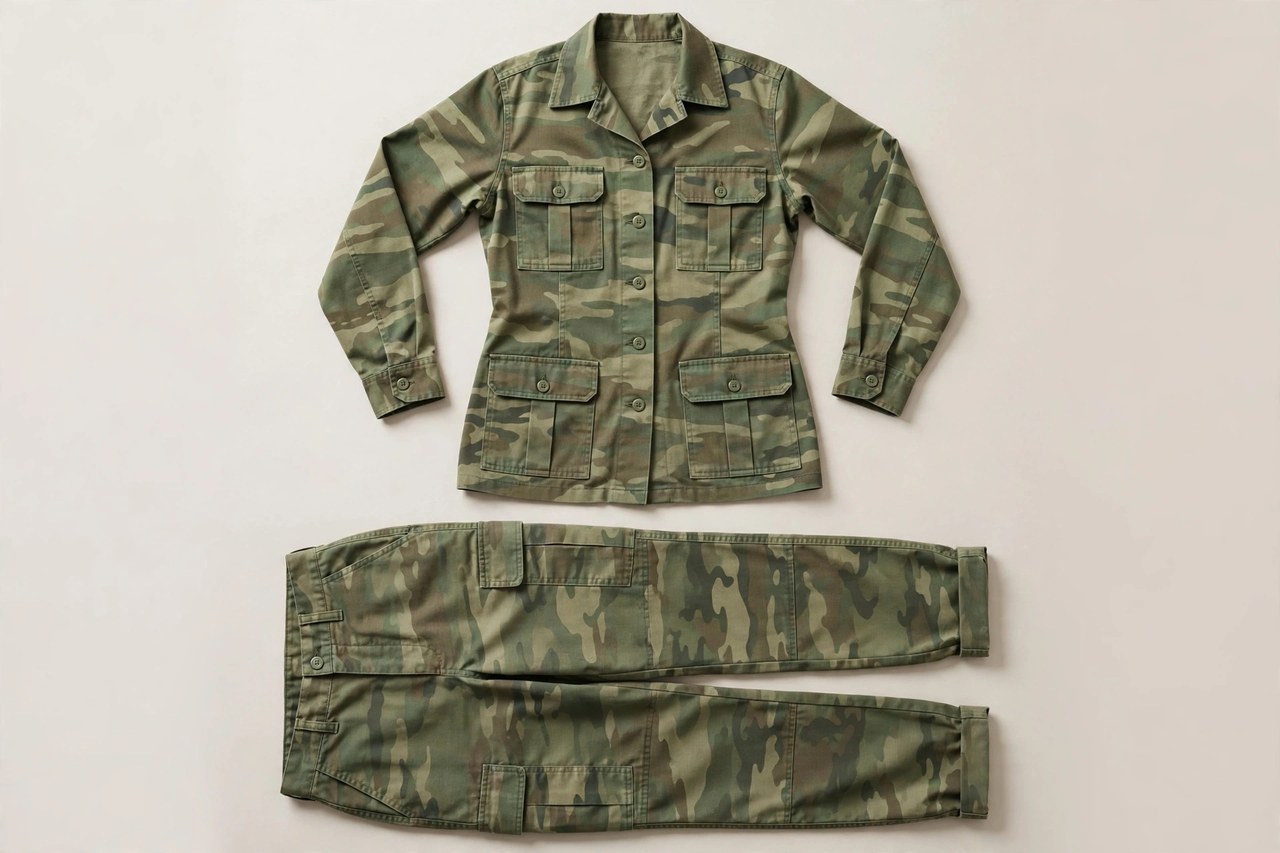
A camo uniform is working clothing: a coordinated top and trousers, sometimes with a jacket or cap, made to be worn hard, washed often, and replaced as a set when it wears out. Women wear camo uniforms in a wide range of settings, from outdoor and land-based work, wildlife and conservation roles, and hunting and shooting instruction to security support, team events, themed hospitality, and training environments. In every case the priorities are the same and they are practical, not decorative: fabric that resists tears and fading, a cut that allows bending, lifting, kneeling, and long hours on your feet, pockets where you actually need them, and construction that survives industrial-strength laundry routines. This guide covers how to judge those qualities before you buy, how to think about fit for a full shift rather than a fitting-room minute, and why checking your own employer or organization dress code always comes before choosing a pattern or colorway.
Types of Uniforms and Matching Sets
The standard camo uniform is a two-piece set: a button-front or pullover shirt, often with shoulder details, chest pockets, and a straight hem that can be worn tucked or untucked, paired with cargo or straight-leg trousers with reinforced knees and multiple pockets. Jacket-and-trouser combinations add a layer for outdoor work in cooler weather. Some roles use a simpler polo or T-shirt top with uniform trousers, trading formality for comfort in active jobs. Coverall-style uniforms exist for messy or protective work where a one-piece garment keeps everything covered. When buying a set, confirm the top and bottom are sold in compatible sizing, since many uniform ranges size the pieces separately and a set that fits perfectly on top can be wrong below the waist. Buying the shirt and trousers from the same range also keeps the fabric weight, color, and print scale consistent, which is part of what makes a uniform read as a uniform rather than as two similar garments worn together.
Durability: Fabrics and Construction That Last
Ripstop is the classic uniform fabric for a reason: its grid weave stops small tears from spreading, and in cotton or cotton-polyester blends it balances toughness with breathability for active outdoor work. Cotton-polyester twill is the other workhorse, resisting wrinkles and fading better than pure cotton while still feeling substantial. Heavier canvas-style fabrics suit the most physical roles but need breaking in. Judge construction as carefully as fabric. Look for double or triple stitching at stress points, bar-tacked pocket corners, reinforced knees, a gusset or generous cut through the seat and thigh for kneeling and climbing, and buttons or closures that are firmly attached with spares supplied. Zips should be sturdy and smooth-running. Fade resistance matters more for uniforms than for casual camo, because a top washed fifty times beside trousers washed thirty will visibly mismatch. Buying both pieces together, washing them together, and keeping a spare set in rotation are simple habits that keep a uniform looking matched and professional for far longer.
Fit for a Full Shift, and Dress-Code Basics
Uniform fit is functional fit. The shirt should let you raise both arms overhead, reach forward, and bend without the hem pulling free or the buttons straining. Trousers should allow a full knee bend, a lunge, and sitting on a low step without binding at the knee or waist. Many women's uniform ranges now offer a genuinely shaped cut rather than a scaled-down men's garment, with room at the hip and thigh and a waist that does not gape; that shaped fit is worth seeking out, because a uniform worn eight or more hours a day should not need constant adjustment. On regulations, be careful and specific: requirements vary completely by employer, service, site, and country, covering everything from approved colors and patterns to insignia, name tapes, headwear, and footwear. Always check the written dress code or uniform policy for your own role before buying, and never assume a commercially sold camo uniform meets a particular military or agency standard. This guide covers general buying basics only, and your organization's rules are the final authority.
Care, Rotation, and Replacement
Uniforms earn their keep in the wash. Follow the maker's instructions, but the durable routine for most twill and ripstop sets is a warm wash with similar colors, closures fastened, and pockets emptied and checked, a step that protects both the garment and everything else in the load. Tumble dry on a moderate setting or line dry where possible; line drying slows fading and extends fabric life, which matters when top and trousers must stay matched. Iron or press shirts if your role expects a crisp finish, paying attention to collars and pocket flaps. Keep at least two, and ideally three, sets in rotation so no single set is washed daily, and inspect high-wear areas weekly: knees, seat, inner thighs, elbows, and pocket corners. Mend small damage early, since a stitched tear in ripstop stays small while a neglected one spreads. Retire a set when fading makes the pieces mismatch noticeably, when repairs cluster in the same area, or when the fit has permanently distorted; a tidy, matched uniform signals professionalism before you say a word.
Related Women's Camo Guides
Photos

More to Explore on Apparel Search
Looking for Women's Clothing Stores?
This guide helps you choose women's camo uniforms by role, fabric and fit. To browse where to buy, visit our women's clothing store directory, where you can find retailers that carry them.