Women's Costume Guide
For one night or a full production run — a great costume is character, comfort, and construction in the right proportions.
Shop Women's Costumes Now
Shop Women's Costumes on Amazon Shop Women's Costumes on eBayThe Amazon and eBay links on this page are affiliate links. If you make a purchase through them, Apparel Search may earn a commission.
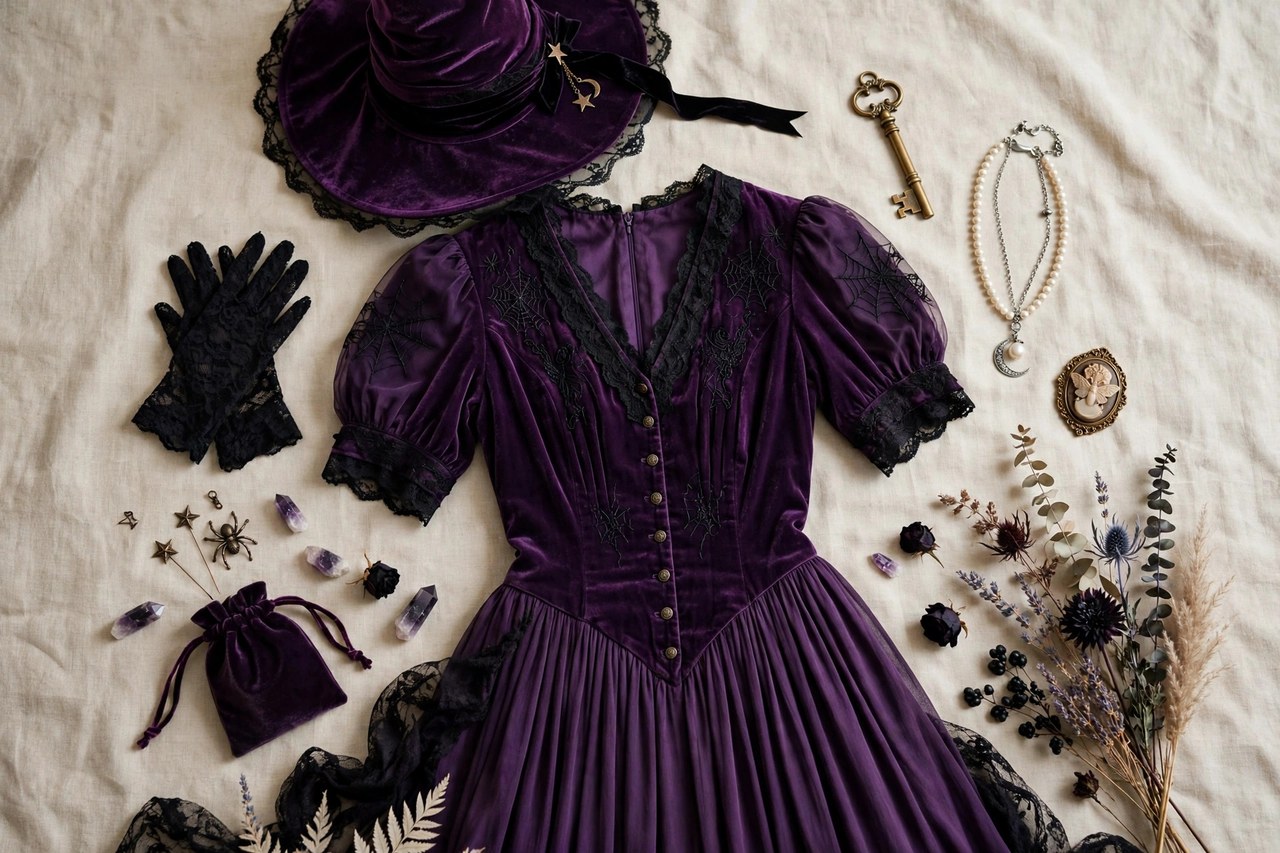
A costume is clothing with a job beyond dressing: it has to communicate a character, an era, or an idea at a glance, and hold together through a party, a parade, a performance, or a long Halloween night. Women’s costumes cover a wide field — historical gowns, witches, superheroes, storybook figures, decade looks, and original cosplay builds — but all are judged against the same questions. How clearly does it read? How long must it be worn, and doing what? How much movement, sitting, eating, and weather must it survive? Answering those honestly before you shop prevents the classic disappointments: the stunning costume that cannot be sat in, the clever idea nobody recognizes, and the bargain that falls apart by nine o’clock. This guide works through buying, making, fitting, and keeping costumes so the fun part is the wearing.
Occasions: Halloween, Theatre, Parties and Cosplay
Each occasion asks something different of a costume. Halloween rewards instant recognition and durability for walking, weather, and crowds; layers underneath for warmth and shoes you can cover distance in matter more than delicate detail. Theatre costumes work at a distance under stage light, must survive quick changes, repeated performances, and vigorous movement, and are often built bolder and sturdier than they appear from the seats; if you perform, prioritize closures you can manage fast and fabrics that tolerate sweat and frequent cleaning. Themed parties and historical events invite accuracy and detail, since fellow guests look closely and photographs linger. Cosplay sits at the craft end of the spectrum, where resemblance to a specific character is the standard and construction is part of the hobby itself. Knowing which game you are playing keeps your budget pointed at what the occasion actually rewards.
Buying Versus Making: An Honest Comparison
Buying is the right answer for most wearers most of the time: packaged and specialty costumes deliver a complete, recognizable look for a known price, in time for the event, with no skills required. Their limits are fit, which follows generic sizing, and materials, which at lower prices can be thin, shiny, and fragile at the seams. Making your own, or assembling one from thrifted and altered clothing, inverts the trade: the fit and character can be far better and the piece unique, but time, skill, and materials add up quickly, and a first sewing project finished the night before rarely looks like the picture that inspired it. The middle path suits many people — buy the base garment and upgrade it with better accessories, a wig styled properly, a hemmed edge, or replaced plastic details. Whichever route you take, decide early; costume stock thins as October approaches, and good bargains reward the unhurried.
Fit, Comfort and Surviving the Whole Event
Costumes are worn longer and more actively than their sellers’ photographs suggest, so fit for movement, not for a mirror. Sit down, climb a step, raise your arms, and mimic eating and drinking in anything you try: masks and headpieces should let you see your feet and your plate, trains and long hems need a plan for stairs and crowds, and anything strapless or boned should be tested for an evening, not a minute. Costume sizing runs notoriously small and inconsistent between brands, so measure yourself and read each maker’s chart, and consider sizing up to allow layers beneath — in cold climates a costume that fits over a thermal base and still closes is worth more than a perfect fit worn shivering. Check closures honestly: tiny hooks and thin zippers are the first things to fail, and a safety-pin repair kit, fashion tape, and spare batteries for lit elements belong in your bag. Comfort is not the enemy of effect; the costume you can forget you are wearing is the one people remember.
Details and Accessories That Sell the Character
Audiences read costumes from the silhouette inward, so spend first on the big signals: the right overall shape, the signature color, and the one or two props or features the character is known by. After that, accessories do disproportionate work — a well-chosen wig transforms more cheaply than almost any garment upgrade, and hats, gloves, jewelry, and footwear in the correct period or style quietly convince the eye that everything else is right too. Makeup extends the costume to the one part no garment covers, and even simple choices like era-appropriate lip color or theatrical shading lift a look from dressed-up to in-character. Watch the reverse details too: modern zippers on a medieval gown or everyday trainers under a period hem break the spell in photographs. Check the whole outfit once, head to toe, before you leave.
Storage and Keeping Costumes for Next Time
A costume stored well is next year’s head start, so the work after the event matters. Clean each piece according to its fabric before storing — sweat, makeup, and party spills set and attract damage in storage — and let everything dry fully. Repair loose seams, missing buttons, and tired elastic while you remember how they failed. Store the complete costume together in one breathable bag or box with its accessories, wig, and any instructions or photos of how it was worn, since orphaned pieces separated in a closet rarely reunite. Keep boxes in a cool, dry place away from light, pad structured pieces and hats so they hold their shape, and avoid compressing foam, tulle, and faux fur under heavy items. Note the size and any alterations on a card inside the box. Treated this way, a good costume becomes a small wardrobe of characters, ready to enjoy again.
Related Women's Guides
Photos

Looking for Women's Clothing Stores?
This guide helps you choose women's costumes by style, fabric and fit. To browse where to buy, visit our women's clothing store directory, where you can find retailers that carry them.