Women's Pirate Clothing Guide
Pirate clothing for women is costume with a history problem — part real seafarer's dress, part storybook invention — and the fun is in combining the two convincingly.
Shop Women's Pirate Clothing Now
Shop Women's Pirate Clothing on Amazon Shop Women's Pirate Clothing on eBayThe Amazon and eBay links on this page are affiliate links. If you make a purchase through them, Apparel Search may earn a commission.
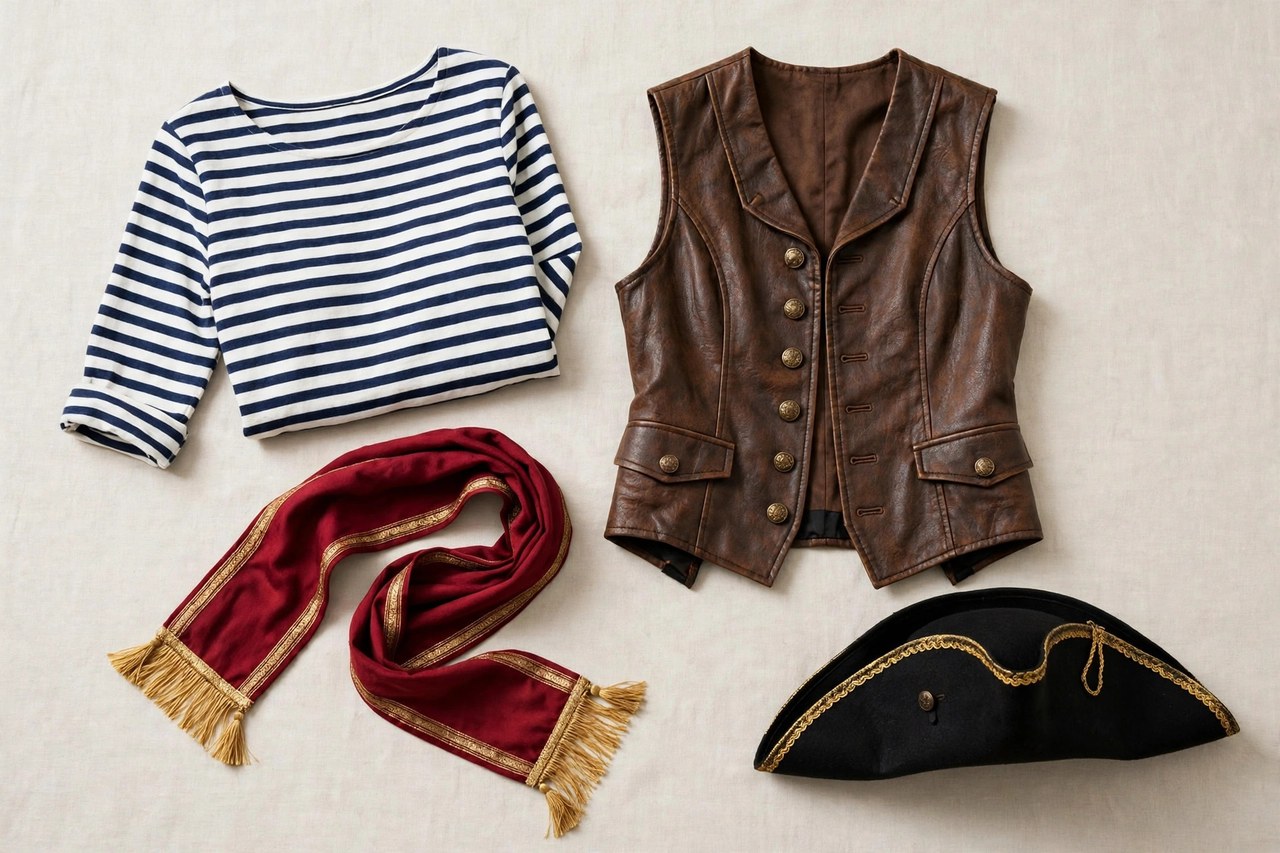
Pirate clothing is a costume category, and it helps to say so at the start. Nobody dresses as a pirate for everyday wear; women build pirate outfits for Halloween, Talk Like a Pirate Day on September 19, Renaissance fairs, school and community theatre, themed parties and cruise and pub events. That freedom is the category's charm: a pirate costume can be assembled from a thrift-store haul in an afternoon or sewn to near-museum standard, and both versions read instantly as pirate across a crowded room.
The recognizable silhouette is remarkably stable: a loose blouse or striped top, a sash or wide belt at the waist, a bandana or tricorn hat on the head, dark breeches or a full skirt below, and tall boots. This guide breaks that silhouette into its pieces, explains which parts descend from real seventeenth and eighteenth-century seafarers and which parts are pure Hollywood, and shows how to choose pieces that survive a whole evening of wear rather than one photograph.
The Core Pieces
Start at the top. The classic pirate blouse is an off-white or cream peasant-style shirt with billowing sleeves, a drawstring or elastic neckline and enough fullness to blouse out over a belt. The alternative is the striped top — horizontal stripes in navy, red or black on white — borrowed from sailors' dress and endlessly reused by costume designers because stripes photograph as nautical at fifty paces.
Below the waist, the choices divide by rank. Crew looks use cropped breeches, leggings or torn-hem trousers, often with one leg or cuff deliberately ragged. Captain looks use a full, swirling skirt — sometimes layered or handkerchief-hemmed — or fitted breeches with a long frock coat over everything. The coat is the single most transformative piece: a long, flared, brass-buttoned coat in burgundy, navy or black turns a blouse-and-trousers outfit into a captain at a glance.
Hats, Sashes and Accessories
Headwear does half the identifying work. The bandana or head scarf, tied at the side or back, is the deckhand's choice and the most comfortable for a long party. The tricorn hat — a brim pinned up on three sides, the standard civilian and naval hat of the 1700s — is the captain's choice and the most formal. Between them sits the wide head wrap with coin or bead trim sold in costume shops.
Accessories should be few and bold. A sash worn over the belt adds color and gives the classic place to tuck a costume cutlass or pistol. Chunky gold-tone hoops, a pendant on a cord, and a pouch or small bag at the belt all read at a distance. Eye patches, hooks and parrots are the joke-shop end of the spectrum — fun for a party, usually cut from theatre costumes aiming at drama.
Real Privateers vs. Costume Fantasy
Historical privateers and pirates of the 1650s to 1720s dressed mostly like other sailors of their day, because they were sailors: linen or wool shirts, short jackets, loose canvas trousers or breeches, knitted caps, and shoes or bare feet on deck. Plunder changed the wardrobe rather than creating one — successful captains famously wore captured finery, silk sashes, fine coats and plumed hats, precisely to advertise success. The sash, incidentally, was genuinely practical, bracing the back for heavy work and holding tools and weapons close.
The fantasy layer came later, layered on by nineteenth-century novels such as Treasure Island, by stage productions, and by twentieth-century films, which standardized the striped shirt, the giant boot cuffs, the parrot and the all-black captain's rig. Women pirates are historical too — Anne Bonny and Mary Read sailed in the Caribbean in the 1710s, reportedly dressing in men's working clothes at sea. A costume can lean either way: historically minded wearers build from linen, wool and muted colors, while fantasy builds add corsetry, lace and saturated color.
Choosing, Sizing and Reuse
Buy or build for the event's demands. For Halloween parties and Talk Like a Pirate Day, a mid-range costume set with a real blouse (rather than a printed one-piece) gives the best look per dollar and separates that can be re-worn. For theatre, prioritize pieces that read from the back row: the coat, the hat silhouette and bold sash color matter more than fine trim, and everything must allow movement, quick changes and repeated washing across a run.
For comfort across an evening, mind the details that cheap costumes skip: breathable blouse fabric, boots or shoes you can actually stand in for hours, and a sash or belt that can be loosened after dinner. Store the outfit complete in one garment bag, hat stuffed with tissue to hold its three corners, and it becomes a permanent asset — the pirate costume is one of the most re-wearable in the costume wardrobe, returning for school events, charity fun runs and every September 19th, needing only a fresh bandana to look new again.
Related Women's Guides
Photos


More to Explore on Apparel Search
Looking for Women's Clothing Stores?
This guide helps you choose women's pirate clothing. To browse where to buy, visit our women's clothing store directory, where you can find retailers that carry them.