Apparel Search Consumer Guides
Laundry Guide: Start to Finish
One load followed all the way through — sorting, treating, washing, drying, ironing or steaming and putting away — with the decisions that matter at each stage.
Most laundry advice arrives as fragments — a tip about stains here, a warning about hot water there — and wash day is left to assemble itself. This guide is the whole process in order, from the moment clothes come off to the moment they go back in the wardrobe. It is the companion to our garment care guide: that section covers the wider craft of keeping clothes in service — mending, alterations, fabric care and storage — while this one stays with the wash itself and the decisions inside it.
One rule outranks everything in this guide: the care label sewn into the garment is the manufacturer's own instruction sheet, and its symbols set the limits for washing, drying and ironing. When general advice and a label disagree, the label wins. What follows teaches you how to work well inside those limits — which separations matter, which temperatures earn their cost, and where the honest shortcuts are.
Search Apparel Search
The Guides in This Section
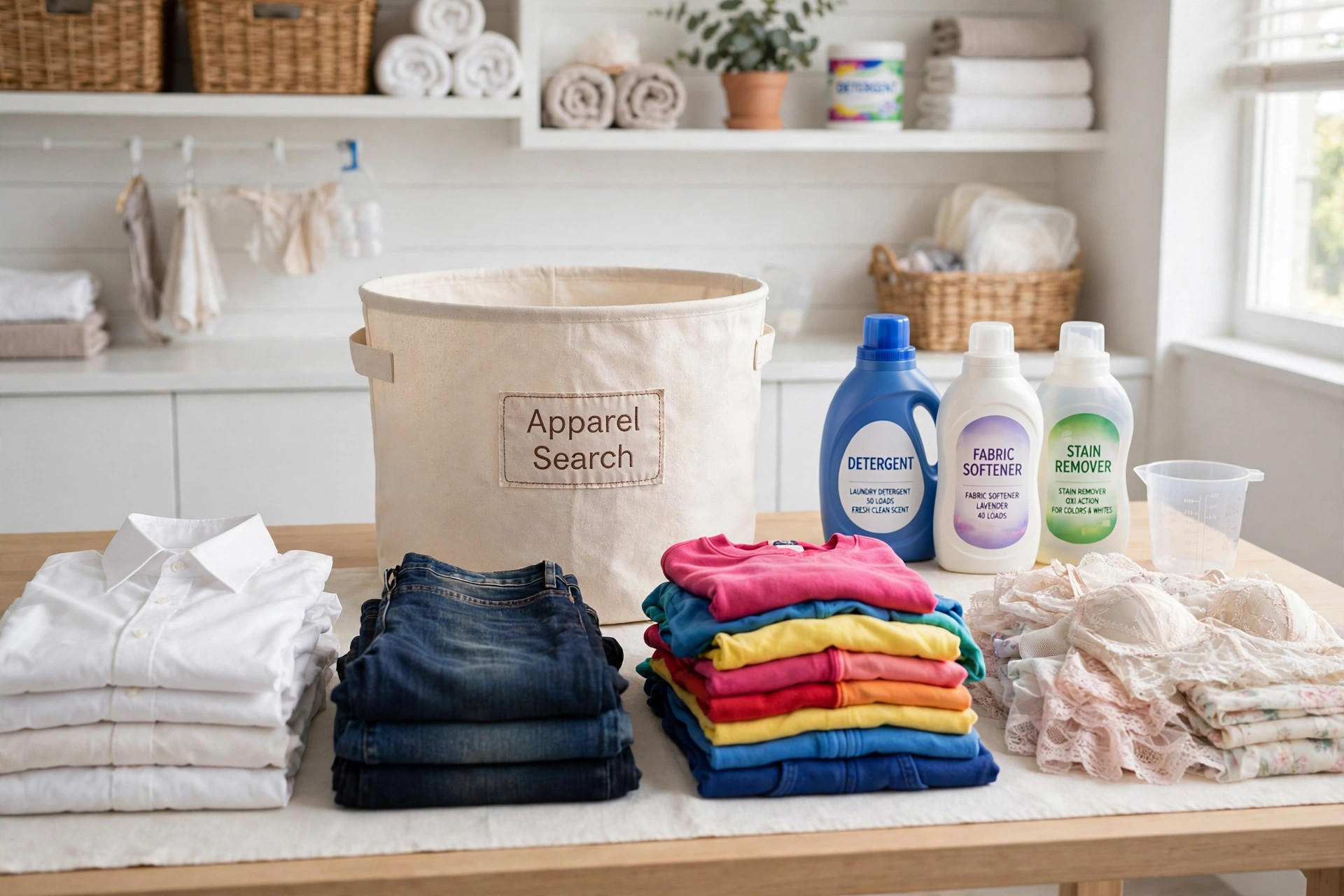 How to Sort and Wash ClothesThe separations that actually matter, water temperature by fabric, choosing a cycle, and detergent types and dosing — including why too much detergent is the commonest laundry mistake of all.
 How to Iron ClothesIron temperatures by fiber and the label dots that set them, pressing versus ironing, the order for pressing a shirt, steam or dry — and the garments that should never meet a hot soleplate.
 Garment Steamers ExplainedHow steam relaxes wrinkles in a hanging garment, an honest steamer-versus-iron comparison garment by garment, handheld versus standing models, and what steam cannot do.
Wash Day in Six Stages
- Sort. Separate by color risk, by fiber and weight, and by soil — three quick decisions that decide everything downstream, set out honestly in our guide to sorting and washing: which separations protect clothes, and which are just habit.
- Treat. Stains are handled before the wash, not after it — a stain that goes through a wash, and especially through dryer heat, may set for good. Match the treatment to the stain using the stain removal guide, then let the wash finish the job.
- Wash. Choose the water temperature the load actually needs, the gentlest cycle that fits the fabric and soil, and a measured dose of detergent. The full reasoning — temperatures by fabric, cycles, dosing — is in the sorting and washing guide.
- Dry. Air drying is the default: it costs nothing and wears nothing out. The dryer is for sturdy cottons, towels and bedding, and for households where line space or weather says so — at the lowest effective heat, and out while faintly damp.
- Finish. Iron or steam while the garment is receptive — straight off the line or out of the dryer — rather than letting wrinkles set in a basket. Crisp pieces go to the iron; hanging, draped and delicate pieces usually go to the steamer.
- Put away. Only completely dry clothing goes back into drawers and wardrobes. Fold knitwear so hangers cannot stretch its shoulders, hang woven shirts and dresses, and give everything a little air space — crowded, damp storage undoes a careful wash.
The Three Judgment Calls
What genuinely needs hot water
Less than habit suggests. Hot water has a real job — laundry that needs sanitizing, such as bedding and towels from a sickroom, cloth diapers, heavily soiled work clothes, and greasy kitchen cloths — and it does that job well. For ordinary clothing it buys little extra cleaning over a modern detergent in cold water, and it charges full price: colors fade faster, cotton shrinks, elastic ages, and protein stains such as blood set instead of lifting. Treat hot as a setting you reach for on purpose, not a stronger version of clean.
What never goes in the dryer
Wool first of all — heat and tumbling felt it and shrink it. Silk, bras and elastic-rich garments follow, because dryer heat is what ages elastane and takes the spring out of straps, waistbands and swimwear. Printed and rubberized designs crack in the heat. And anything whose label forbids tumble drying has a manufacturer's reason. Everything else is a judgment call, and the mild version of it — low heat, out while faintly damp — costs the garment very little.
How often is often enough
Most clothing is washed far more often than soil requires, and every wash is a small withdrawal from the garment's life. Next-to-skin clothing and workout gear earn a wash each wearing. Shirts and tees usually go one or two. Jeans, trousers, skirts and outer layers go several, and knitwear longer still — aired on a hanger between wearings, most day clothes revive without water at all. Washing less is not a lapse in standards; it is the single easiest longevity habit there is, and the rest of our garment care section is built on the same arithmetic.
Set Up Once, Decide Less
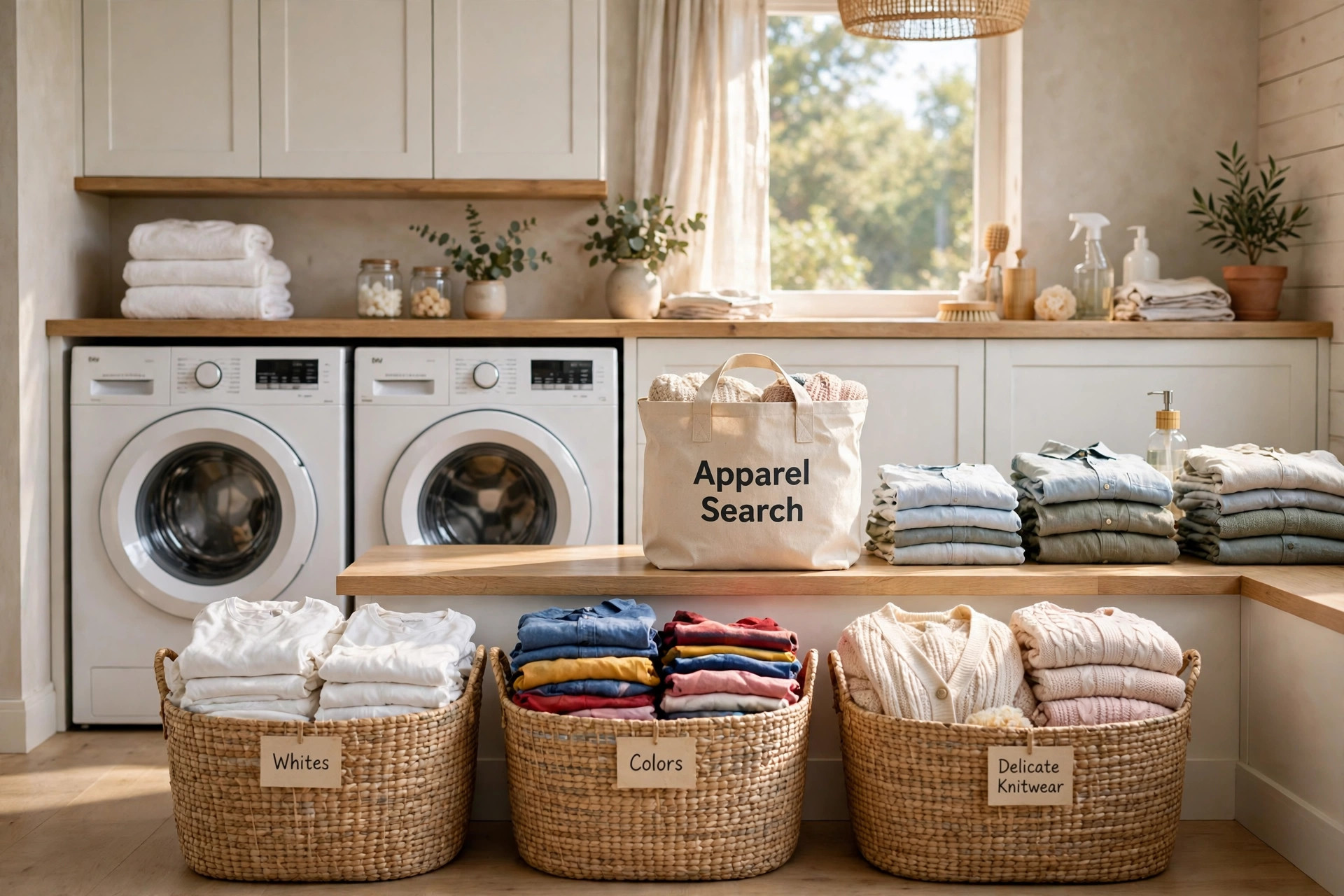
The stages above run almost automatically with a simple setup: a three-way hamper (whites, colors, delicates) so sorting happens when clothes come off, mesh laundry bags living beside the machine for anything fragile, and detergent measured with its own cap or a marked scoop rather than poured by eye. Good laundry is mostly a room arranged so the easy choice is the right one.
One more wardrobe reads this guide closely: clothing chosen for eczema and sensitive skin, where what the wash leaves behind is part of the garment. The fabrics for sensitive skin guide covers the fibers that arrive at the machine, and eczema-friendly clothing for kids applies the dosing and extra-rinse routine to children’s pajamas and underwear.
One wardrobe runs this whole system on a fixed weekly loop: the school uniform, washed to a timetable and back in the drawer by Sunday night. Making school uniforms last applies the staging in this guide to that loop — rotation, same-day stain habits and the small repairs that keep a set going all year.
One wardrobe tests laundry like no other: chef whites, washed after every shift against grease, turmeric and tomato. Our chef clothing fit and care guide applies the system in this guide to the hardest-working load in the building — sorting whites on their own, matching bleach to fabric, and rotating a working kit.
Common Questions
What temperature should most laundry be washed at?
Cold, for most everyday loads. Modern detergents are formulated to clean in cold water, and cold is the setting that protects color, print and fit. Warm water earns its place for whites and sturdy cottons that need extra help. Hot water is a tool with a specific job — laundry from a sickroom, cloth diapers, heavily soiled work clothes — and it charges for the service in fading, shrinkage and energy. The temperature on a care label is a maximum, not a target.
What should never go in a tumble dryer?
Wool, which can felt and shrink; silk; bras and anything rich in elastic, because dryer heat ages elastane and the garment loses its spring; printed and rubberized designs, which crack and peel; and anything whose care label forbids tumble drying. Air drying is the default that costs nothing. When the dryer is necessary, use the lowest effective heat and take clothes out while they are faintly damp.
How often should clothes actually be washed?
By contact and soil, not by the calendar. Underwear, socks and workout clothes go in after one wear. Shirts and tees usually manage one or two wears; jeans, trousers and other outer layers manage several; knitwear and overshirts longer still, especially when aired between wearings. Every wash is a small amount of wear, so a garment that is aired and worn again is not unwashed — it is unworn-out.
Iron or steamer — which do I actually need?
An iron, if you must choose one and you wear anything that needs a crisp edge: dress shirts, cotton and linen, trousers with a crease. A steamer is faster and gentler on hanging, draped and delicate garments, but it cannot set a collar or a crease. Many wardrobes end up using the iron for the structured pieces and the steamer for everything that hangs.
The Laundry Room Is Where Slow Fashion Happens
Buying fewer, better clothes is only half of the slow fashion idea — the other half is washing them gently enough, and seldom enough, that they stay worth wearing. Cold water, air drying and a wash skipped where airing would do are not sacrifices; they are how a wardrobe lasts years instead of seasons. The thinking is set out in our slow fashion guide; the practice is this page.