Garment Care, Repair & Alterations
Fabric Care Guides
Wool felts, silk spots, knits stretch and leather should never meet a washing machine. Care by fabric family, with specialist deep dives where a fabric demands them.
Ask what a garment is made of before asking how to wash it. Fiber decides everything: the temperature water it tolerates, whether it can be twisted, how it dries, even whether it should be washed often at all. This page of the Garment Care, Repair & Alterations Guide covers the two fabric families that suffer most from generic laundry habits — wool and knits, and silk and delicates — and then points you to the specialist guides for leather, denim and technical fabrics, where care becomes a subject of its own. Whatever the fiber, start with the garment's own instructions: decode them with our care label symbols page.
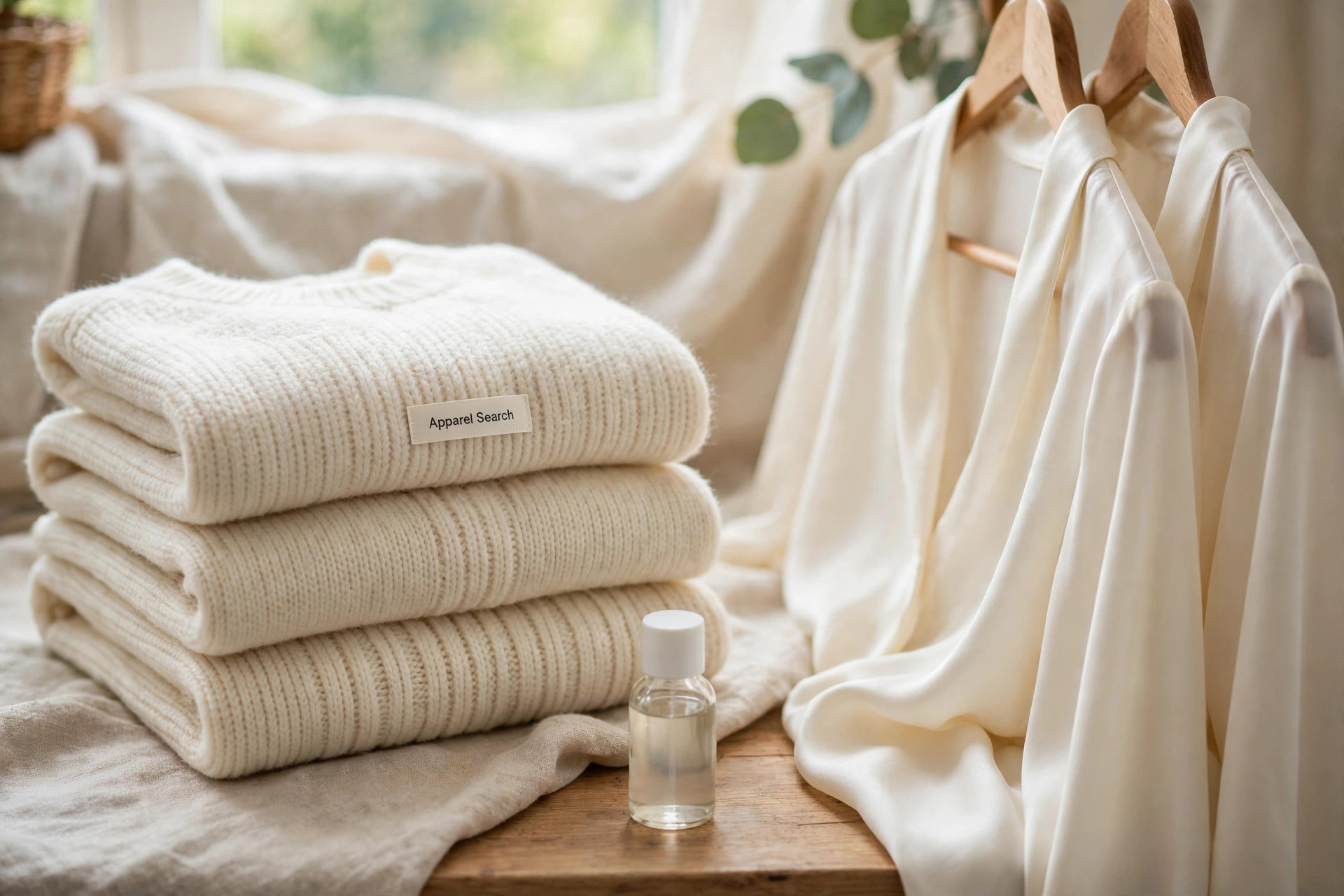
Wool & Knitwear
Wool's virtues — warmth, elasticity, natural odor resistance — come from a scaled fiber surface, and those same scales are its vulnerability. Under heat, moisture and agitation the scales ratchet together and lock: felting, which shrinks a sweater into a stiff shadow of itself and cannot be undone. So wool care is defined by gentleness. Wash less often than instinct suggests; wool genuinely needs fewer washes because it resists odor and releases dirt from its fiber surface, and airing a knit overnight freshens it remarkably. When washing is due, use cool to lukewarm water, a detergent made for wool (ordinary detergents are too alkaline), and as little agitation as possible — a machine's wool cycle or a basin and patient hands. Never wring: press water out, roll the garment in a clean towel, then reshape it to its original dimensions and dry it flat on a towel or mesh rack, away from radiators and direct sun.
Knitwear of any fiber shares the second rule: knits stretch. A sweater's own wet weight will drag it longer and narrower if it dries on a hanger or a line, and even dry storage on hangers slowly pulls shoulders out of shape — those little peaks at the shoulder seams are hanger damage. Fold knits, dry them flat, and give cashmere and fine knits a rest day between wearings so the fibers recover. Pilling is normal on new knitwear; remove pills with a fabric shaver or comb once fibers have settled, as described in making clothes last longer.
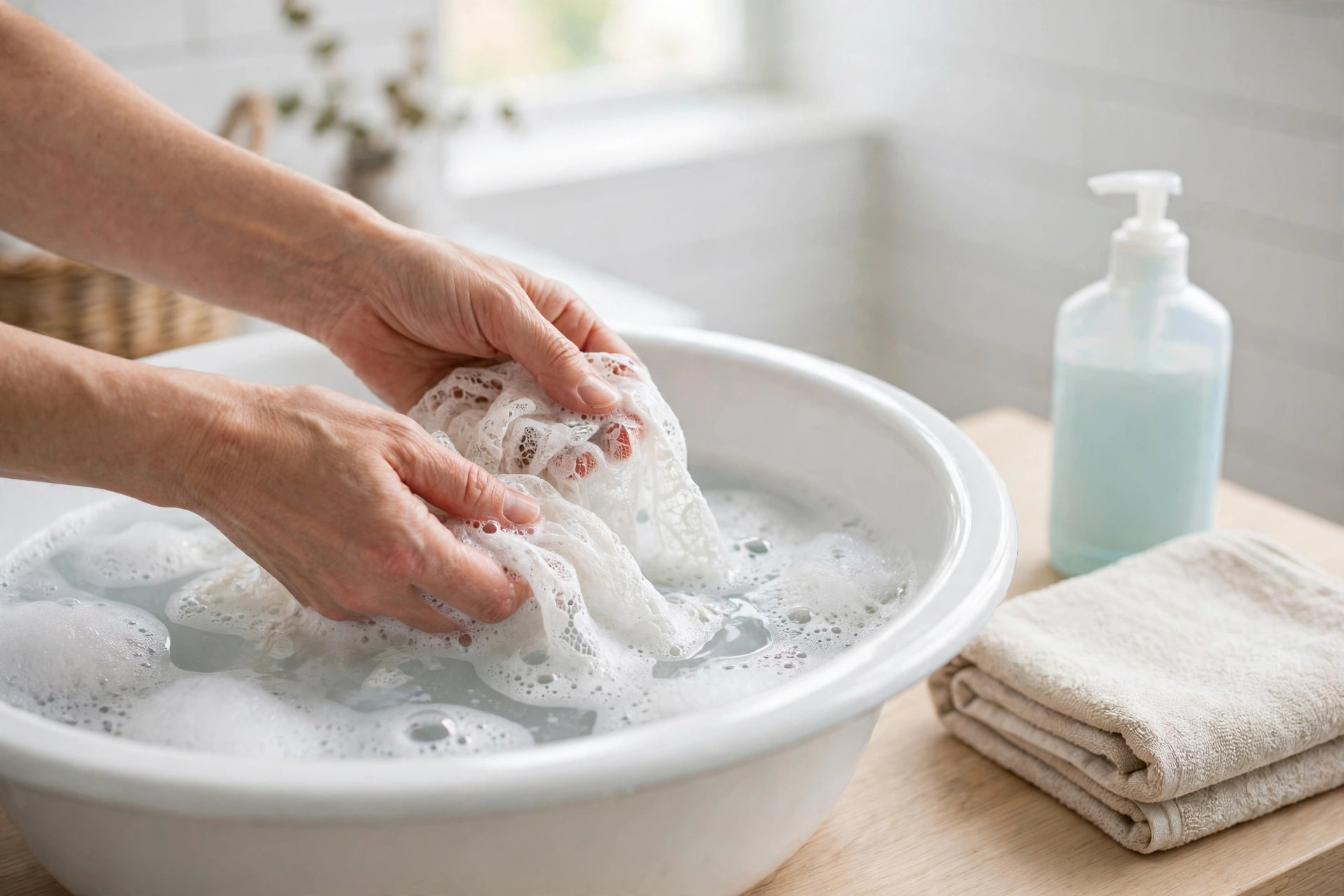
Silk & Delicates
Silk is strong for its weight but dislikes rough handling, high heat, chlorine bleach and prolonged sunlight, all of which weaken or yellow it. Many silk garments are labeled dry clean because water can disturb their finish or dyes — obey the label on anything precious. For washable silk, hand-wash in cool water with a gentle detergent, after testing an inside seam for colorfastness; some silk dyes bleed freely. Support the whole garment when lifting it wet, never wring or twist, roll it in a towel to remove water, and dry it away from heat and sun. Iron on the silk setting while slightly damp, on the reverse side. Delicate construction needs the same approach regardless of fiber: lace, beading, sequins, glued or bonded trims, and anything with internal structure goes into a mesh bag on a gentle cycle at most, and into professional hands at the first doubt. Perfume, deodorant and hairspray should go on before dressing — alcohol and propellants spot silk and damage some finishes.
The Specialist Fabrics: Leather, Denim & Technical
Three fabric families get their own guides because their care runs against ordinary laundry logic. Leather is not washed at all; it is cleaned, conditioned and protected, and the full routine is in the leather care guide in our Leather Guide. Denim care is a negotiation between cleanliness, fade and fit — how often you wash and how you dry decides how jeans age — and it is covered in depth in denim care & shrinkage. Performance fabrics carry engineering you can wash away: fabric softener coats the fibers that wick moisture, heat degrades membranes and elastic, and water-repellent finishes need the right wash to keep working; the Performance Fabrics Guide explains how those fabrics work and how to keep them working.
The Wash-Less Principle
Across every fabric family, the gentlest wash is the one not given. Most garments are washed from habit long before they are dirty. Air garments after wearing, spot-treat the actual soil (see the stain removal guide), and launder when the garment needs it — your fabrics, colors and elastic will all last noticeably longer.
Common Questions
Why did my wool sweater shrink and felt in the wash?
Wool fibers have surface scales that lock together under heat, moisture and agitation — that is felting, and it is irreversible. Wash wool cool and gently, with minimal agitation, in a detergent made for wool, and dry it flat away from heat.
Can silk be washed at home?
Many silks can be hand-washed in cool water with a gentle detergent, after testing a hidden area for colorfastness. Some silks bleed dye, lose their finish in water, or water-spot, which is why many silk garments are labeled dry clean — when in doubt, follow the label.
How should knitwear be dried and stored?
Reshape knits while damp and dry them flat on a towel or mesh rack, supporting their full weight. Store them folded, never on hangers: a wet or even dry heavy knit hung by its shoulders will slowly stretch out of shape.
Why should fabric softener be kept away from athletic clothing?
Fabric softeners coat fibers with a waxy film that blocks moisture-wicking channels and degrades water-repellent finishes and elastic. Technical garments wash best in plain detergent, turned inside out, and air-dried.
More in This Guide
Back to the Garment Care, Repair & Alterations Guide
Washing, mending, alterations, fabric care and storage — the full guide in one place.