Garment Care, Repair & Alterations
Stain Removal Guide for Clothing
Identify the stain, respect the fabric, and treat in the right order — most stains come out, and most ruined garments were treated wrong, not stained badly.
Stain removal is a matching exercise. Every stain belongs to a family, and each family surrenders to a different treatment — which is why the universal dab of hot water so often makes things worse. This page of our Garment Care, Repair & Alterations Guide walks through the four stain families, the order to treat them in, and the fabric checks that decide whether a home treatment is safe at all. Work patiently: a stain treated twice, gently, beats a stain attacked once with everything in the cupboard.
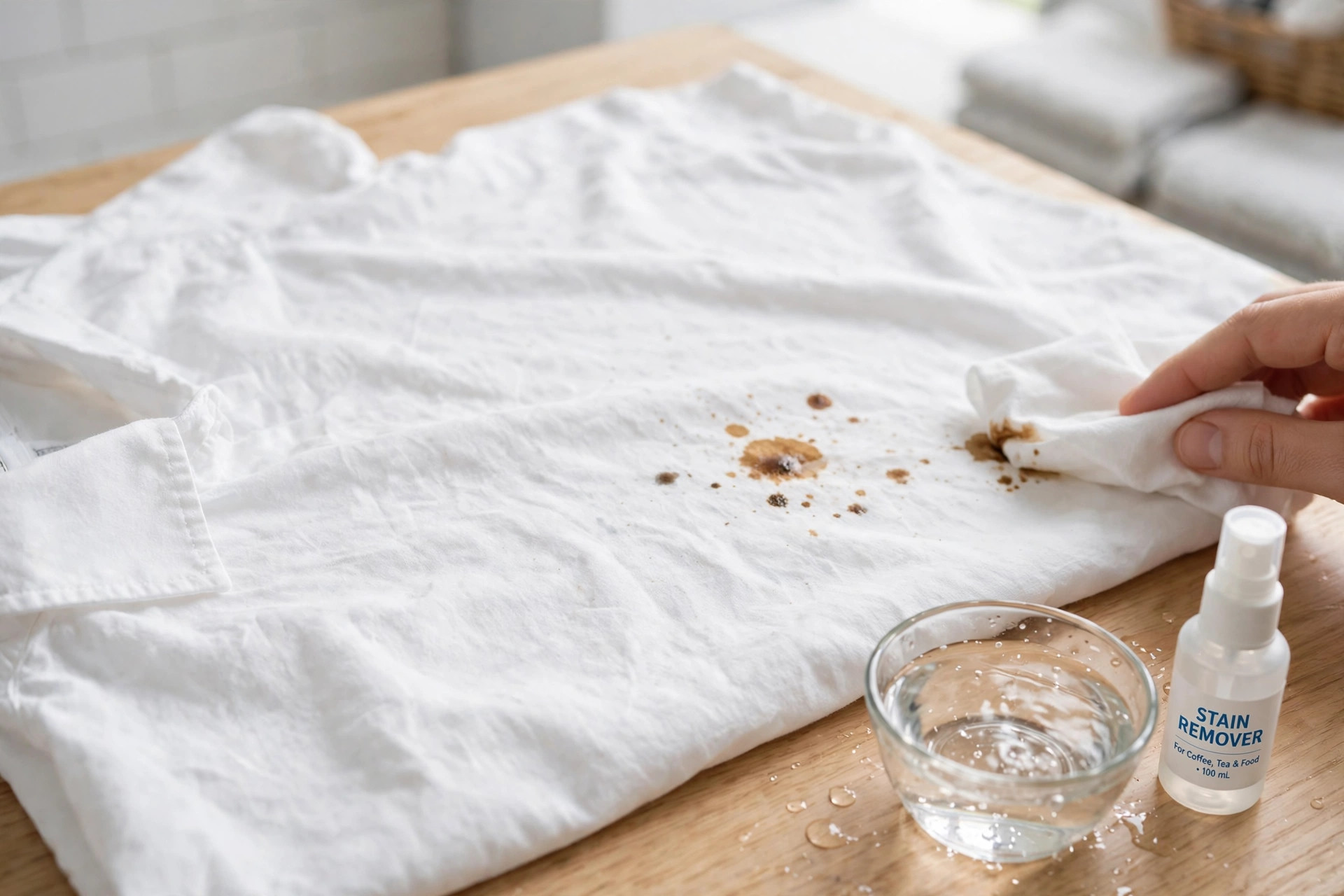
First, Identify the Stain Family
Protein stains — blood, egg, milk, sweat, grass and most food spills — respond to cool water and enzyme detergents, which digest the protein. Heat is the enemy: hot water or a dryer cooks protein into the fiber permanently. Grease and oil stains — butter, cooking oil, salad dressing, lipstick, machine grease — need a solvent action first: a drop of dishwashing liquid or a pre-treatment worked into the spot breaks the oil so water can carry it away. Tannin stains — coffee, tea, wine, fruit juice — are plant dyes; they respond to cool water, detergent and time, and to oxygen-based bleach on white or colorfast fabrics, but soap alone can be slow because tannin binds to fiber. Dye and particulate stains — ink, mustard, mud, transferred color from another garment — are the specialists: mud should dry fully and be brushed off before washing, ink needs solvent treatment and patience, and dye transfer may need a commercial color-run remover. When a spill is a combination — coffee with cream is tannin plus protein plus fat — treat the components in order: cool water and enzyme first, then grease treatment, then tannin.
The Treatment Sequence
- Act fast, blot, never rub. Lift solids off with a dull knife edge. Blot liquids with a clean white cloth or paper towel, working from the edge of the stain inward so it does not spread. Rubbing pushes the stain deeper and roughs up the fabric surface.
- Check the label and the fabric. Read the garment's care label symbols. If the garment is dry-clean-only, silk, wool, leather or a structured tailored piece, blot gently and stop — take it to a cleaner and say what the stain is. Our fabric care guides explain why those fibers are special cases.
- Test for colorfastness. Put a drop of your treatment on a hidden area — an inside seam or hem — wait a few minutes and blot with a white cloth. If color transfers to the cloth, the garment is not colorfast to that product; switch to plain cool water and detergent, or go professional.
- Pre-treat from the back. Place the stain face-down on a clean white towel and apply treatment from the reverse side, so the stain is pushed out of the fabric instead of through it. Work the product in gently with fingers or a soft brush.
- Soak, then wash as the label directs. Stubborn stains benefit from a soak — thirty minutes to a few hours in cool water with enzyme detergent for protein, or oxygen bleach solution for washable whites and colorfast colors. Then wash at the warmest temperature the label allows for that fabric.
- Check before any heat. Inspect the area while the garment air-dries. If a shadow remains, repeat treatment. Never machine-dry or iron a garment with a stain still in it — heat sets most stains for good.
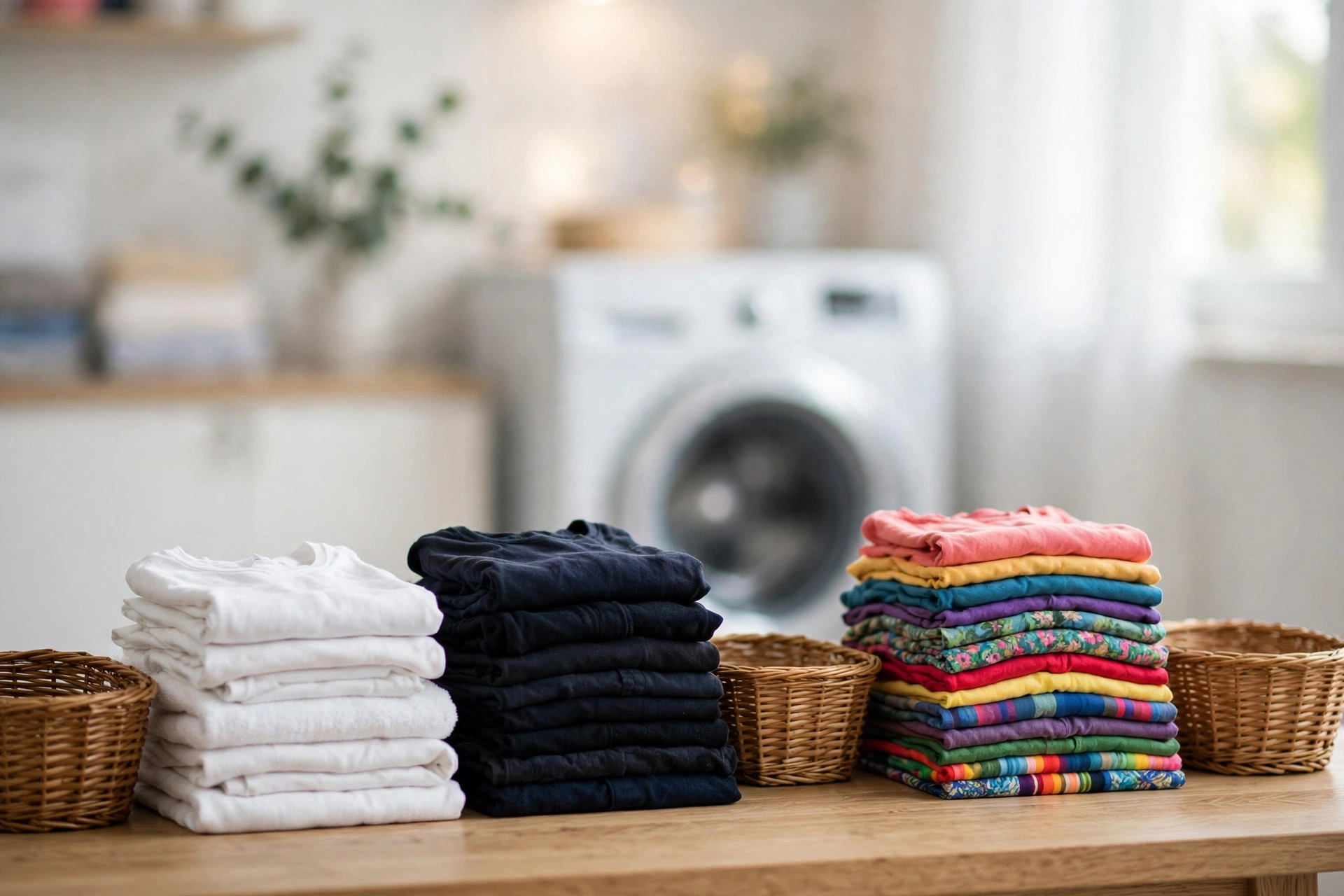
Fabric Changes the Rules
Cotton and polyester workhorses tolerate the full sequence above. Wool and silk are protein fibers themselves, so harsh alkalis, chlorine bleach and vigorous agitation damage them while you treat the stain — use products made for delicates, keep water lukewarm, and support the garment's weight while wet. Linen is sturdy but shows water spotting when spot-treated unevenly, so treat generously over a wider area and rinse thoroughly. Anything bonded, coated, sequined or trimmed with a contrasting color deserves caution: test every product, and remember the trim may bleed even when the body fabric does not. When in doubt, the cost of one professional cleaning is small next to the cost of a favorite garment.
Supplies Worth Keeping
A small kit covers nearly everything: enzyme laundry detergent, oxygen-based bleach for washable fabrics, clear dishwashing liquid, white vinegar, rubbing alcohol for ink, clean white cloths, and a soft brush. Avoid reaching for chlorine bleach except on plain white cotton — it weakens fibers and yellows protein fabrics like wool and silk.
Common Questions
What should I do first when something spills on clothing?
Act quickly but gently: lift off solids with a dull edge, blot liquids with a clean white cloth — never rub — and keep the stain wet if you cannot treat it right away. Heat and friction are what turn a fresh spill into a permanent stain.
Why should stain treatment water be cool for blood and egg?
Blood, egg, milk and other protein stains cook into fabric with heat, the same way egg sets in a hot pan. Cool or lukewarm water and an enzyme detergent dissolve protein stains; hot water sets them permanently.
Can I treat a stain on a dry-clean-only garment?
Blot gently and take it to the cleaner promptly, pointing out the stain and what caused it. Home solvents and water can leave rings, remove finishes or damage fibers in dry-clean-only garments, so leave treatment to the professional.
How do I know a stain is really gone before drying?
Inspect the area wet and again as it air-dries in good light. Never put a stained garment in the dryer or iron it: heat sets most stains. If a shadow remains, repeat treatment before any heat touches the fabric.
References & Further Reading
The classic extension-service guidance in our education library goes deeper on specific stains and safety — a useful reference shelf alongside this guide:
More in This Guide
Back to the Garment Care, Repair & Alterations Guide
Washing, mending, alterations, fabric care and storage — the full guide in one place.