Leather Guide · Care
Leather Care Guide
Leather asks very little — a few minutes a few times a year — and repays it with decades of service. Here is the routine, the suede rules, the water-damage rescue and the storage habits that make it last.
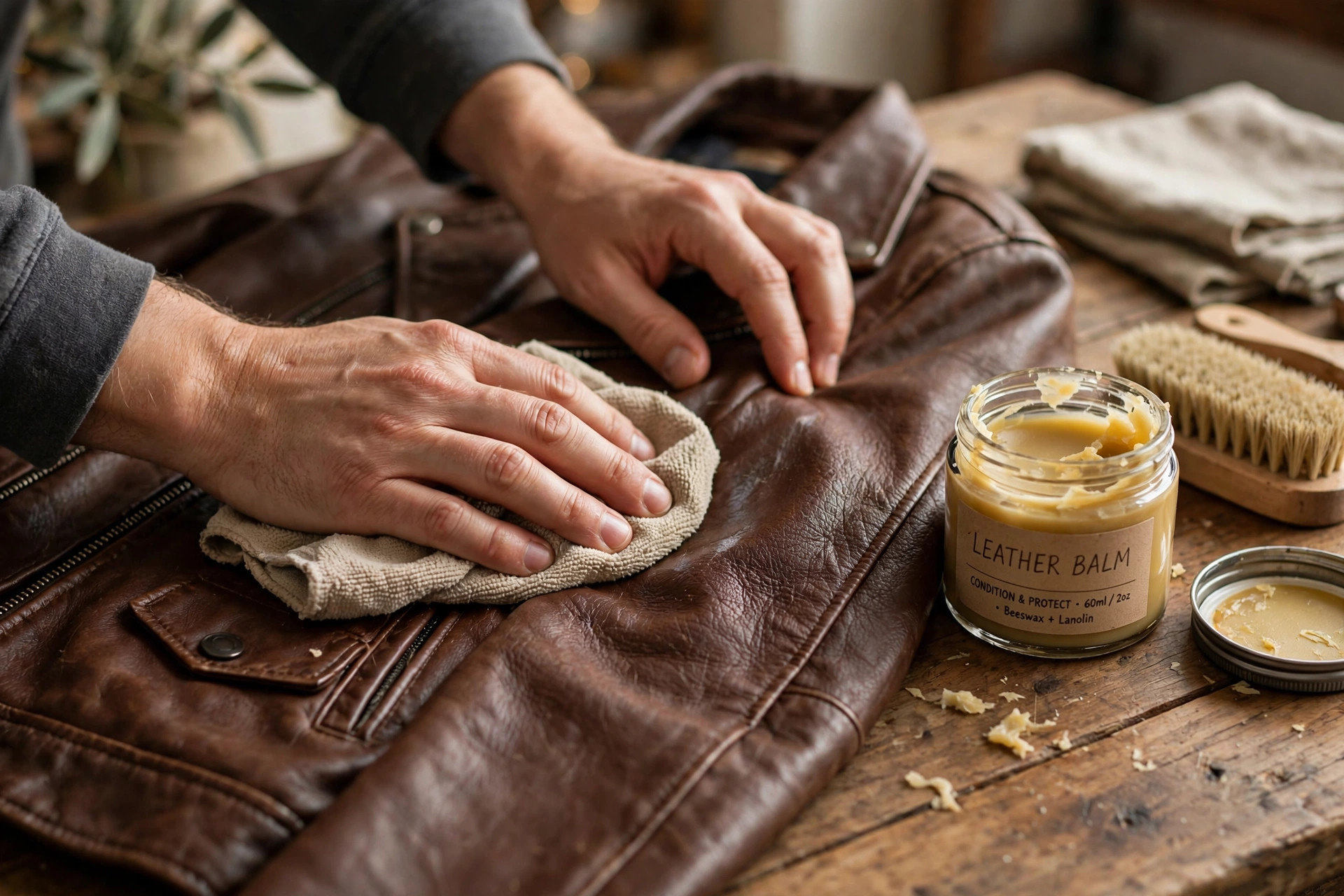
Leather care has one goal: keep the fibers inside the hide lubricated and the surface clean, so the material flexes instead of cracking. Almost everything else is detail. This page of the Leather Guide covers care for leather specifically; for the wider wardrobe — washing, mending, storing clothes of every fiber — see the companion Garment Care Guide. One warning before the routine: care differs by finish. Aniline and other absorbent leathers drink conditioner in; pigmented leathers mostly need surface care; suede needs neither cream nor water baths. The tanning and finishes guide explains which is which if you are unsure what you own.
The Basic Routine for Smooth Leather
Dust and Wipe Down
Most leather damage starts as gritty dust ground into the surface. Wipe pieces down with a dry or barely damp soft cloth after wear and before any deeper care. For shoes and boots, a horsehair brush does the same job in seconds.
Clean Gently When Needed
When a wipe is not enough, use a cloth dampened with water and a drop of mild soap or a dedicated leather cleaner, working in small circles and wiping residue away. Never soak leather, never use household detergents or solvents, and let it dry at room temperature — never with a hair dryer or on a radiator, which cooks the fibers you are trying to protect.
Condition — The Step That Matters Most
Conditioner replaces the oils that evaporation and wear remove. Apply a thin coat with a soft cloth, let it absorb for 15–30 minutes, then buff off the excess. Thin coats more often beat one heavy coat, which can leave leather greasy and dark. Expect conditioner to deepen the color of aniline and light leathers; test on a hidden area first if that matters.
Protect Where It Counts
A light wax or protective cream adds scuff and water resistance to shoes, boots and bags that face weather. Spray protectors suit suede and nubuck. Protection is a sacrificial layer — renew it as it wears, especially before wet seasons.
Rest and Rotate
Leather needs recovery time like any natural material. Shoes benefit from a day off between wears (cedar shoe trees absorb moisture and hold shape), and bags keep their structure when rested unloaded. Rotation is the cheapest longevity upgrade there is.
Suede and Nubuck: A Different Rulebook
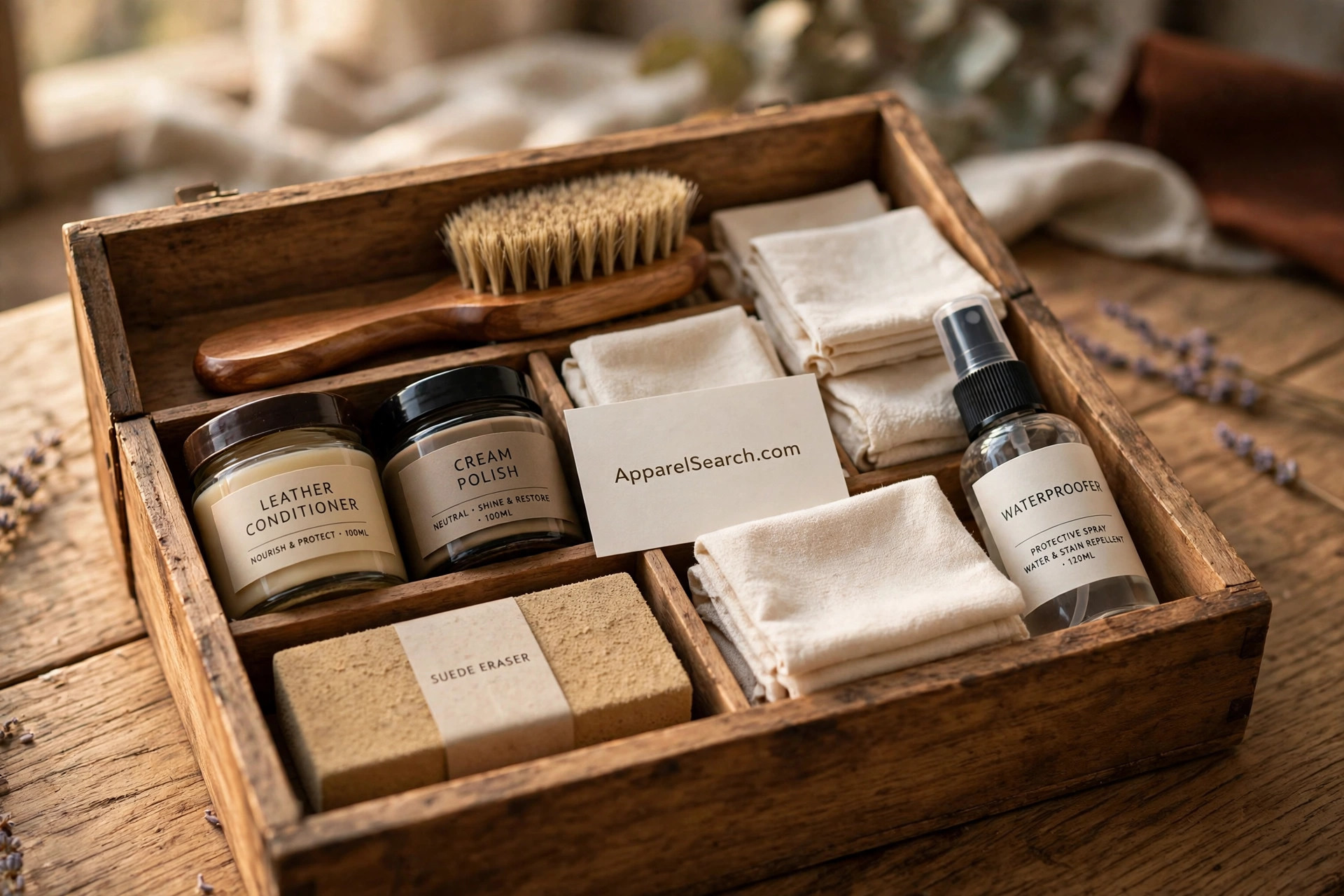
Suede's open nap traps dust and shows water spots, but its care is simpler than its reputation: brush, erase, spray. Brush regularly with a suede brush to lift the nap and remove surface dirt; rub out marks and shiny patches with a suede eraser; and keep a protector spray renewed so liquids bead instead of sinking. Never apply creams, conditioners or waxes to suede — they flatten the nap permanently. The Apparel Search suede care guide goes deeper, including salt lines and dye transfer, and the boot care guide applies the same rules to footwear.
Rescuing Water Damage
Leather that gets soaked is rarely ruined — leather that gets soaked and then force-dried often is. If a piece is drenched: blot, never wring; stuff shoes and bags loosely with plain paper to hold shape and draw moisture; and dry slowly in moving room-temperature air, away from radiators and sun. When fully dry the leather will feel stiff, because water has carried some natural oils away — that is the moment to condition, gently, in thin coats. Water stains on finished leather usually fade as the piece dries completely and is conditioned evenly; dark rings on aniline may need the whole panel conditioned so the color evens out.
Storage: Where Leather Lives Between Wears
Store leather clean, conditioned and able to breathe. Use cloth garment bags or cotton dust bags — never plastic, which traps moisture and invites mildew. Stuff bags and boots to hold their shape, hang jackets on wide, padded hangers that support the shoulders, and keep everything away from direct sunlight, heat vents and damp basements. Cedar helps against moths and mustiness. Check stored leather a few times a year; a quick wipe and a breath of air prevent most storage surprises. When damage goes beyond home care — torn linings, broken zips, deep cracks — a specialist can help: Apparel Search lists leather repair services for exactly those jobs.
Five Things Never to Do
- Never dry wet leather with direct heat — it cracks the fiber structure.
- Never store leather in sealed plastic bags or boxes.
- Never use household cleaners, bleach, or solvent sprays on leather.
- Never apply cream conditioner or polish to suede or nubuck.
- Never leave leather in direct sun for long periods — UV fades and dries it.
More in the Leather Guide
Common Questions
How often should I condition leather?
For items in regular use, every 3–6 months is a sensible rhythm; pieces in dry, heated or air-conditioned environments dry out faster and may need conditioning every 2–3 months. Condition when the surface looks dull or feels papery, and always test a new product on a hidden spot first — conditioners darken light and aniline leathers.
Can I use olive oil or coconut oil on leather?
It is best avoided. Food oils can over-soften fibers, darken leather unevenly and eventually turn rancid inside the material, and they attract dust and can stain clothing. Purpose-made leather conditioners use stable oils, waxes and emulsions balanced for hide; they cost little per application and are the safer choice for anything you value.
How do I get scratches out of leather?
Light surface scratches on smooth leather often disappear with warmth and oil from your fingertip — rub gently and the displaced finish settles back. Deeper scratches respond to a small amount of matching cream polish or conditioner worked in with a cloth. On aniline leather, scratches lighten as the surrounding area is conditioned. Suede scratches are usually just crushed nap: brush them back up.
What should I do if leather grows mold?
Take the item outdoors, brush off surface mold with a dry brush, then wipe with a cloth lightly dampened with a mix of water and rubbing alcohol (or a dedicated leather cleaner), and let it dry fully in moving air away from direct heat. Then condition smooth leather. Prevent recurrence by storing leather in a dry, ventilated place — mold is a storage problem, not a leather defect.
Back to the Leather Guide
The Leather Guide hub covers the whole material — grades, hides, tanning, alternatives, care and authenticity — with a map of every guide in this cluster.