Leather Guide · Alternatives
Faux Leather & Leather Alternatives
Pleather, PU, PVC, microfiber and the plant-based newcomers — what each alternative is actually made of, how it is built, and an honest account of where synthetics beat real leather and where they don't.
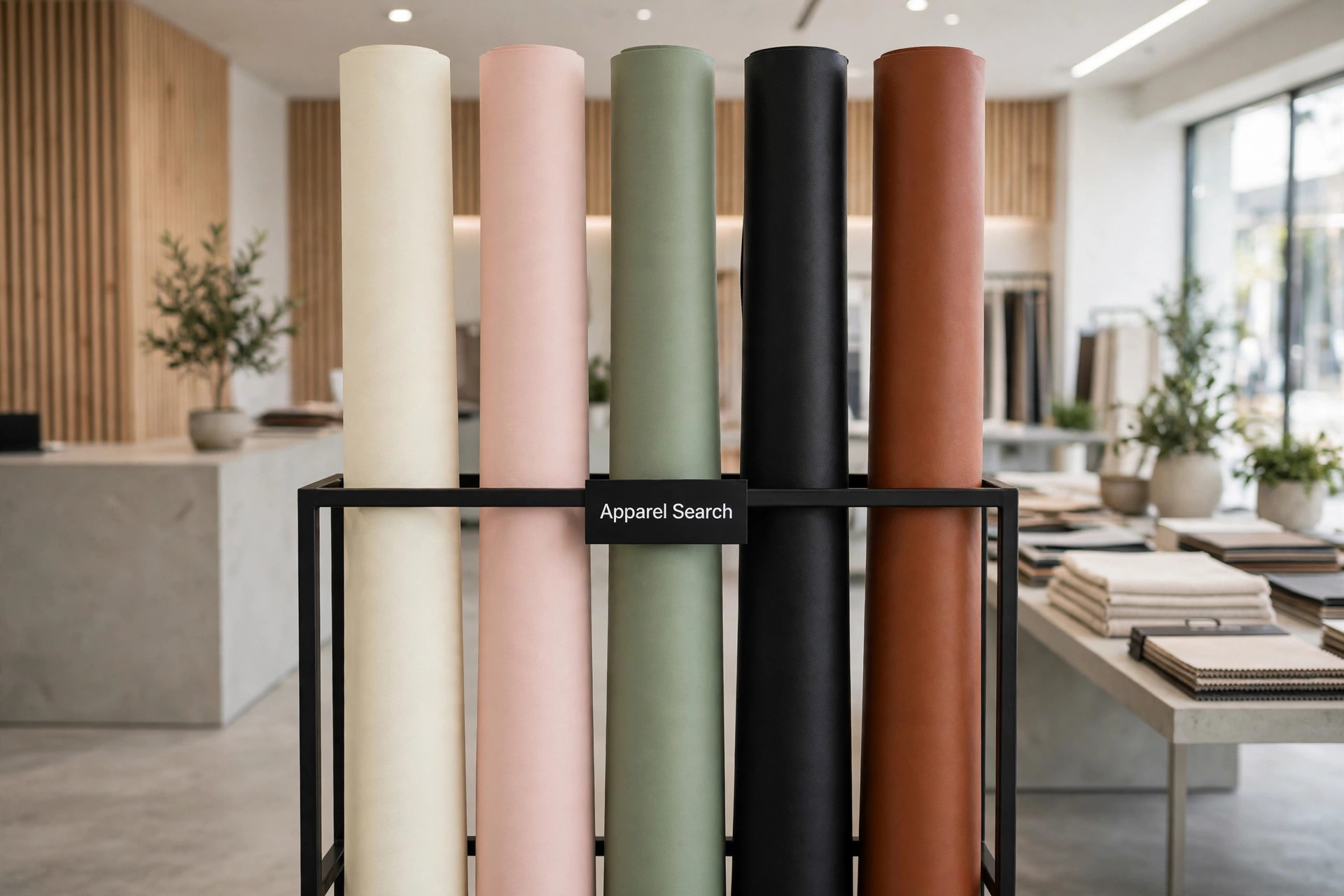
Real leather is grown; faux leather is built. Nearly every synthetic version follows the same recipe — a polymer coating (the “skin”) bonded to a backing fabric (the “body”), embossed with a grain pattern and dyed. The differences between products come from which polymer, which backing, and how carefully the two are married. This page of the Leather Guide sorts the alternatives from commodity pleather to engineered microfiber and the new bio-based materials, and the Apparel Search comparison page Leather vs Faux Leather puts the two families head-to-head for buyers.
The Two Classic Synthetics
PU Leather (Polyurethane)
The mainstream fashion faux. A polyurethane coating on a split-leather or fabric backing (when it is coated split leather, it is also called bicast or bycast). PU is softer, lighter and more breathable than PVC, takes embossing well and reads convincingly as leather at a glance. Its weakness is chemistry: over years, moisture and flexing break the coating down (hydrolysis), and the surface begins to flake and peel — the familiar death of the budget faux jacket. Typical service life in regular use is a few years.
PVC Leather (Vinyl)
The older, tougher synthetic. PVC coatings are harder-wearing and more water-resistant than PU, but stiffer, less breathable and less leather-like in hand. PVC's plasticizers can also migrate over time, leaving the surface sticky or brittle. It survives mostly where its toughness is the point — commercial upholstery, restaurant seating, industrial covers — rather than in apparel that must drape and flex against the body.
The casual word for all of it is pleather — plastic leather — a term the Apparel Search glossary traces through fashion's love-hate relationship with the material. Note that marketing names multiply faster than materials: “vegan leather,” “eco leather” and “leatherette” usually describe ordinary PU unless a maker specifies otherwise, which is one reason the labeling guidance in the real versus fake guide matters.
Microfiber Leather: The Engineered Middle Ground
Microfiber leather skips the painted-on approach. Its base is a nonwoven mat of ultra-fine synthetic fibers, impregnated with polyurethane resin so the finished material has something like hide's internal fiber structure — the same design idea as the material behind the Ultrasuede family of suede-like fabrics. The result is noticeably more leather-like in flex, tear strength and breathability than commodity PU, wears evenly instead of peeling in sheets, and keeps a perfectly consistent surface from roll to roll. It costs more than basic faux and less than good hide, and it has become the default synthetic in better footwear, automotive interiors and premium tech accessories.
Bio-Based Alternatives: Cactus, Mushroom, Pineapple and More
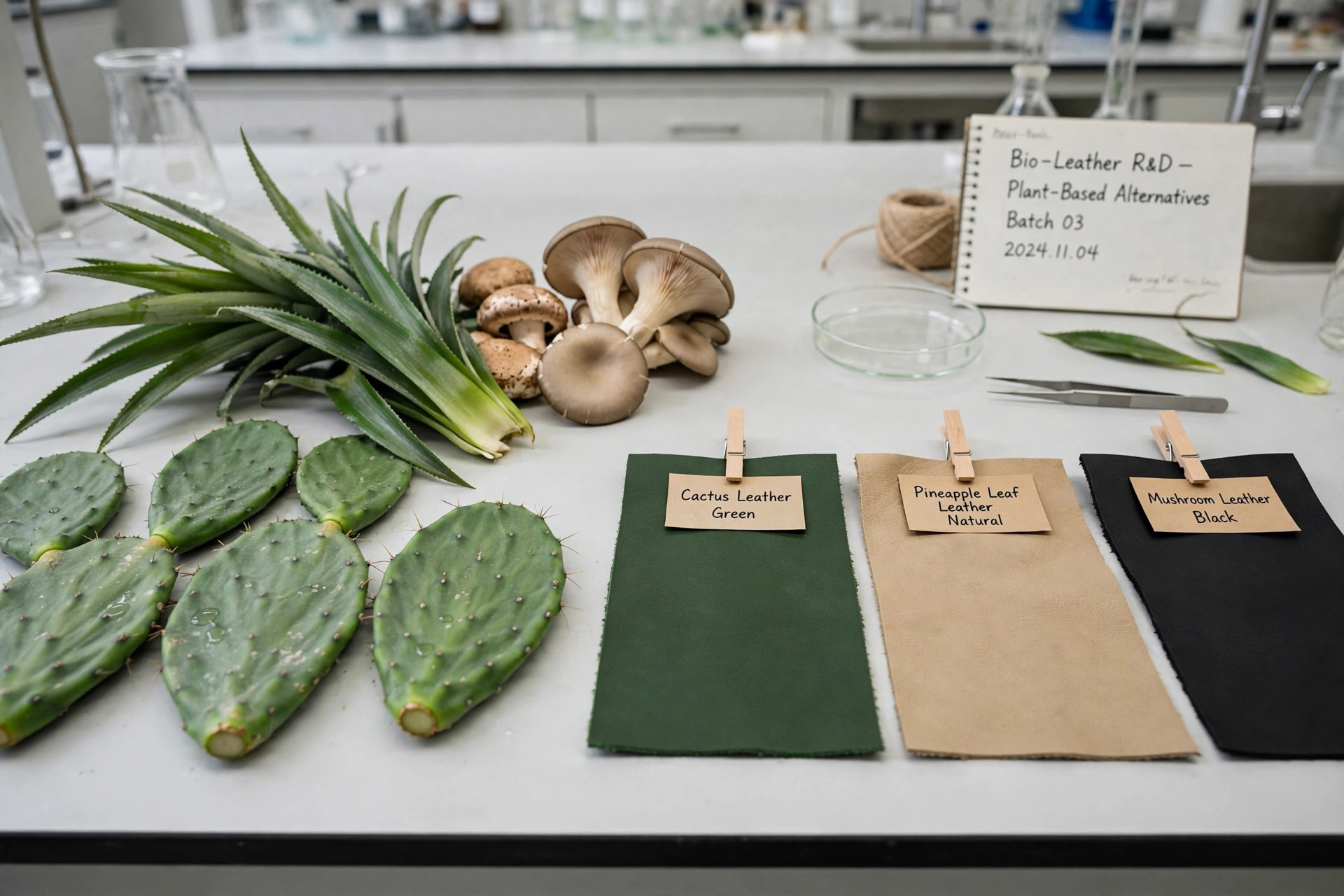
The newest generation builds its fiber structure from plants and fungi instead of petroleum. Cactus leather (from nopal/prickly pear) offers a soft, durable sheet with a partially bio-based composition. Pineapple leaf fiber material (widely known as Piñatex) turns agricultural waste leaves into a fibrous, suede-to-grain textile. Mycelium materials grow mushroom root networks into leather-like sheets, and apple, grape and corn-waste composites press food-industry leftovers into coatings and fillers. Apparel Search tracks this fast-moving field on its bio-based leather alternatives page. Two honest cautions apply to all of them today: most still contain some synthetic binder or finish, so “plant-based” percentages matter; and none yet has decades of field wear proving how it ages.
An Honest Scorecard
Where Alternatives Win
- Lower and more predictable prices
- Perfectly uniform color and grain — no scars, no panel-matching waste
- No animal products, which for many buyers is the deciding factor
- Water-resistant surfaces that wipe clean
- Any color, print or finish, made to order
- Consistent roll goods — easier manufacturing than variable hides
Where Real Leather Still Wins
- Longevity: years or decades versus a few seasons for most synthetics
- Aging: leather gains patina; coatings crack and peel
- Repairability: leather can be stitched, patched and reconditioned
- Breathability and body-molding comfort in shoes and gloves
- End of life: hide is biodegradable; most coatings are not
- Resale and heritage value in quality goods
Choosing between them is a genuine decision, not a trap — the right answer depends on the product's expected life, the wearer's values and the budget. What is never right is paying real-leather prices for a coating, or believing a coating will age like hide. Whichever family you buy, the Leather Care Guide covers the (different) care each one needs.
More in the Leather Guide
Common Questions
Is vegan leather just plastic?
Most mainstream vegan leather is, at its core, plastic: a polyurethane (PU) or PVC coating on a fabric backing. Newer bio-based materials replace part of that plastic with plant content — cactus, pineapple leaf fiber, mushroom mycelium, apple waste — but most still use some synthetic binder or coating, so 'plant-based' rarely means plastic-free. The honest answer varies by brand, and labels should say what proportion is bio-based.
How long does faux leather last compared with real leather?
Typical PU faux leather in daily use lasts roughly 2–5 years before the coating begins to crack or peel, especially at flex points; PVC can last longer but feels stiffer. Quality microfiber leather performs better and can approach a decade. A well-kept real leather product commonly lasts 10–30 years or more, and can be repaired, which faux leather generally cannot.
What is microfiber leather?
Microfiber leather (sometimes sold as microfiber or high-grade synthetic leather) uses an ultrafine microfiber nonwoven base impregnated with polyurethane resin, engineered to imitate the fiber structure of real hide rather than simply painting a grain on cloth. It is more uniform, breathable and durable than ordinary PU leather, and it is the synthetic most often used in better shoes, car interiors and bags.
Does faux leather need conditioning like real leather?
No — faux leather has no pores or fibers to feed, and oils in leather conditioners can stain or degrade some coatings. Clean it with a damp cloth and mild soap, keep it away from prolonged heat and direct sun (both accelerate cracking), and store it where air circulates. Specific care routines are in the Leather Care Guide.
Back to the Leather Guide
The Leather Guide hub covers the whole material — grades, hides, tanning, alternatives, care and authenticity — with a map of every guide in this cluster.