Leather Guide · Tanning
How Leather Is Made: The Tanning Process
A raw hide rots in weeks. Tanning is the chemistry that stops the clock — here is the full journey from beamhouse to finished leather, and the honest difference between chrome and vegetable tanning.
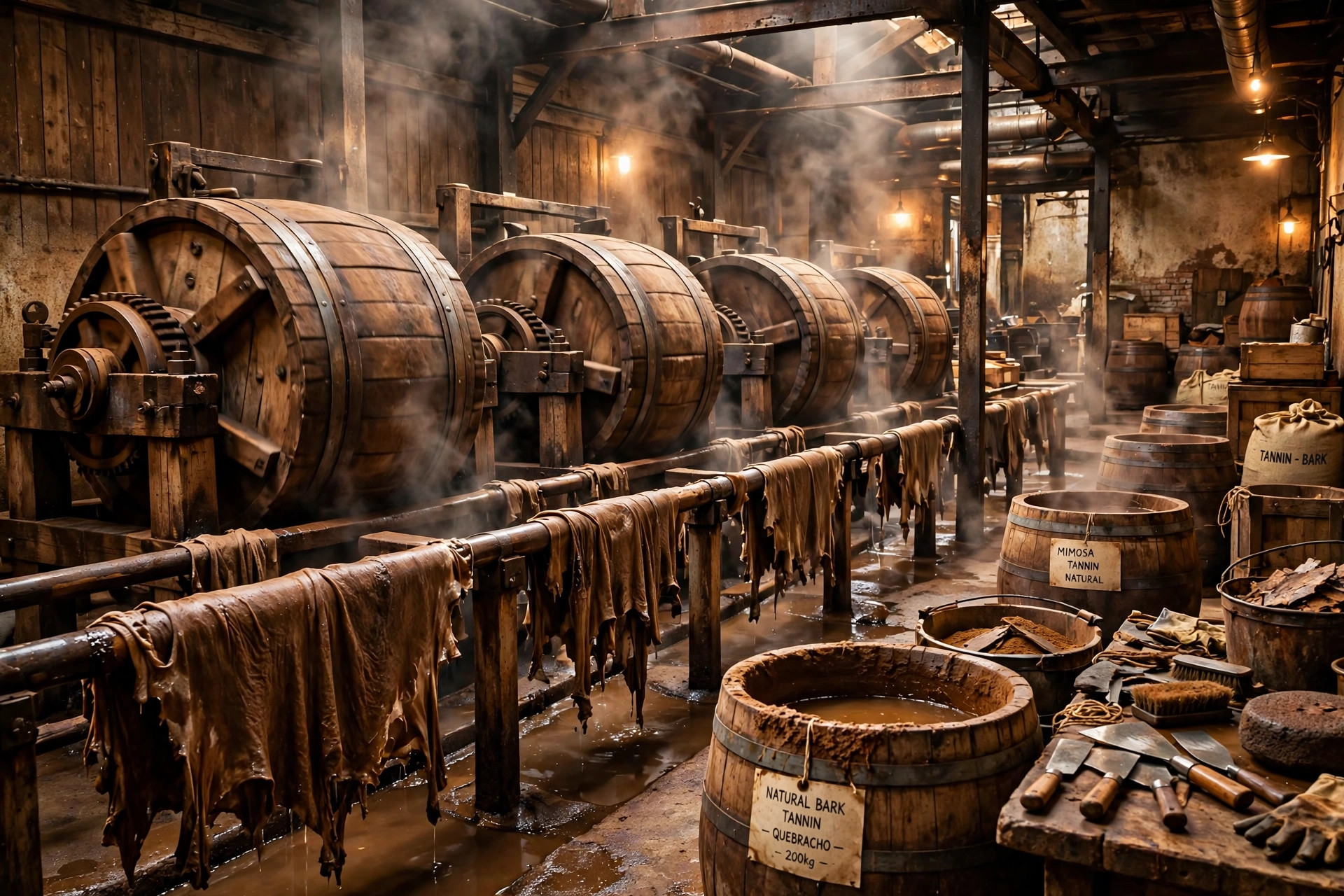
A hide is mostly collagen, a protein that bacteria find delicious. Left alone, it putrefies when wet and turns brittle when dry. Tanning cross-links and stabilizes those collagen fibers so the material resists decay, heat and water while staying flexible — permanently. Everything else in leather making is preparation for that moment or refinement after it. This page of the Leather Guide follows the whole sequence, which typically takes days for chrome-tanned leather and weeks for vegetable-tanned.
The Process, Step by Step
Preparation: Curing and the Beamhouse
Hides arrive at the tannery salted or chilled to stop decay. They are soaked to rehydrate and wash out salt and dirt, then limed — treated with lime and sulfides that loosen the hair and open the fiber structure. Hair is removed, the flesh layer is scraped away (fleshing), and thick hides are split into the grain layer and split layers whose destinies the grades guide describes. A final deliming and enzymatic bating softens the hide and brings its pH down for tanning.
Tanning: Stabilizing the Hide
The prepared pelt — now a pale, floppy skin — goes into drums with the tanning agent. Chromium salts penetrate and cross-link the collagen within hours, turning the pelt into pale blue-gray “wet blue.” Vegetable tannins work far more slowly, binding through hydrogen bonds as hides move through pits or drums of bark and plant extracts, emerging in warm brown tones. Either way, the hide is now leather: it will not rot, and it can be handled, dried and worked without damage.
Retanning, Dyeing and Fatliquoring
Tanned leather is graded, shaved to an even thickness, and often retanned to adjust its character — firmer or softer, fuller or more elastic. Dyes penetrate the fiber to set the base color, and fatliquoring works oils and fats back between the fibers. That last step is what makes leather supple rather than cardboard-like: the lubricated fibers slide over each other instead of locking and cracking as the leather dries.
Drying and Softening
Leather is dried by hanging, pasting to plates, vacuum drying or toggling (stretching on frames), each method trading speed against area yield and flatness. Dry leather is still stiff, so it is conditioned with moisture and mechanically softened — staked (worked over a blade) or milled (tumbled in drums) — until it reaches the hand feel its product needs, from boardy belt leather to glove-soft garment leather.
Finishing: The Surface Is Decided
Finishing applies the final look and protection: light dye sprays, waxes, resins or pigment coats, embossing, ironing or plating for shine, and milling for a pebbled texture. How much finish a leather carries is the last major quality fork — explained in the finishes section below — and it determines whether you see the hide's own grain or the tannery's artwork.
Chrome Tanning vs. Vegetable Tanning
Chrome Tanning · ~75–85% of World Output
Fast, Soft, Versatile
Introduced commercially in the late 19th century, chrome tanning uses chromium(III) salts in rotating drums and can tan a hide in less than a day. The result is soft, thin, elastic leather with high heat resistance and excellent light and color stability — it can be dyed any color, including pastels and white. Most garment, glove, shoe-upper and upholstery leather is chrome-tanned because fashion needs exactly that softness and color range. Its weaknesses: it starts life with less body and structure, and poor wastewater control at a tannery — not the chrome in the finished leather — is the legitimate environmental concern.
Vegetable Tanning · The Ancient Method
Slow, Firm, Ages Beautifully
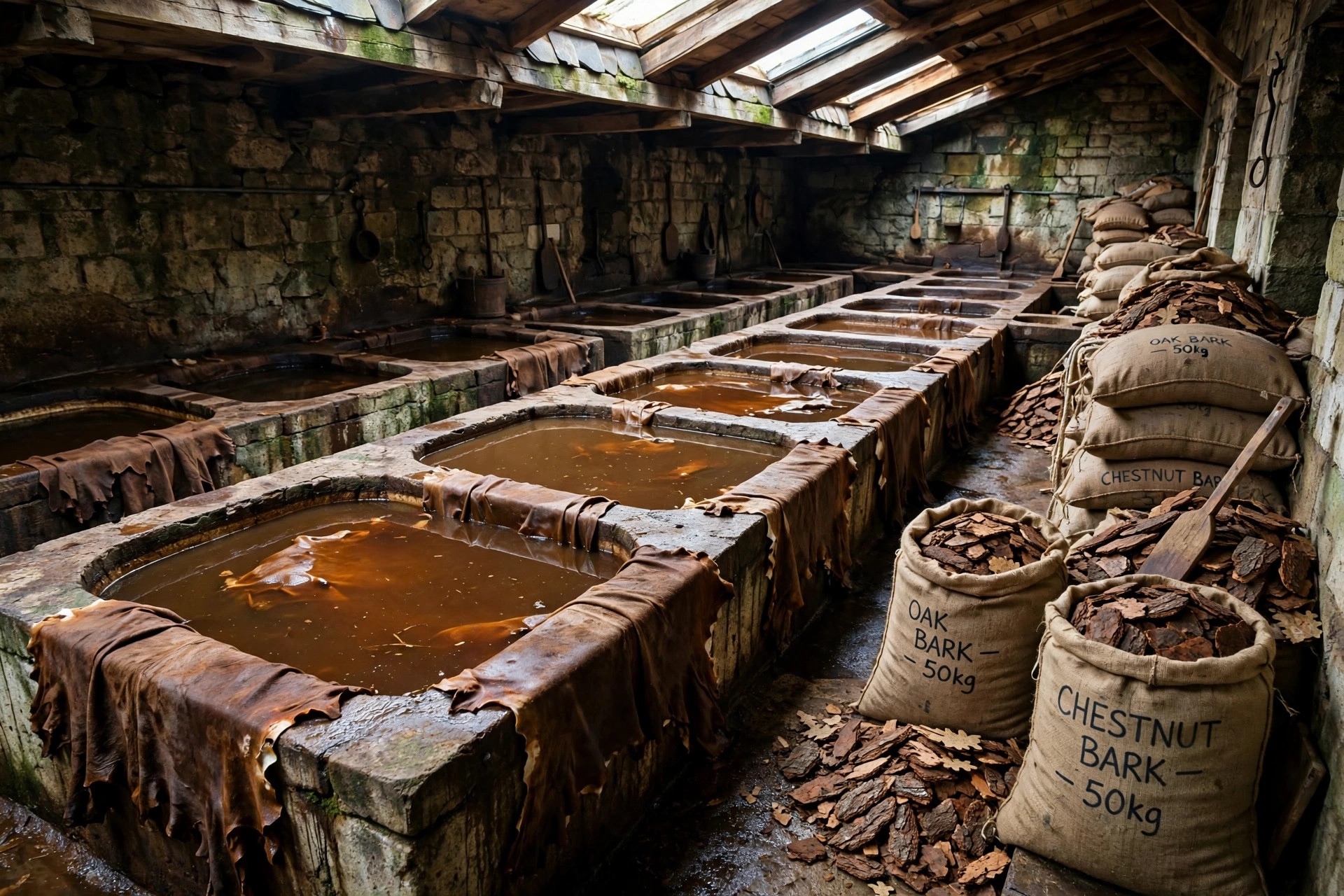
Vegetable tanning uses tannins from oak, chestnut, quebracho, mimosa and other plants — the method of ancient Egypt and medieval guilds alike. In traditional pit tanning the process runs for weeks. The leather produced is firmer and denser than chrome leather, molds to shape when wet (which is why saddlers and case-makers love it), takes tooling and embossing crisply, and darkens into a deep, personal patina with sun and handling. It costs more because time and skilled labor cost more, and its natural palette runs from pale tan to rich brown.
Finishes: Aniline, Semi-Aniline and Pigmented
After tanning, the finish decides what you actually see and touch. Aniline leather is dyed through with transparent dyes and left nearly bare: every pore and scar shows, the feel is silky, and so is the vulnerability to stains and sunlight. It is made only from the best hides. Semi-aniline adds a whisper-thin protective coat with a little pigment, keeping most of the natural look with notably better resistance — the premium compromise in most quality furniture and bags. Pigmented leather carries an opaque polymer-and-pigment surface, often embossed with a uniform grain: the natural surface disappears, but color is even, spills wipe off, and lower-grade hides can be used. At the glossy extreme sits patent leather, sealed under a hard, mirror-shine coating. None of these is a fraud — they are different tools — but aniline character at a pigmented price, or the reverse, is where buyers go wrong. The types by hide guide shows which hides typically receive which finish.
More in the Leather Guide
Common Questions
Is chrome tanning harmful?
Modern chrome tanning uses chromium(III), a stable, low-toxicity compound that bonds permanently into the hide. The hazardous form, chromium(VI), is not used in tanning; it can form only under poor process conditions, which is why reputable tanneries test for it and why regulations restrict it in consumer goods. Well-run chrome tanneries also recover and recycle much of their chrome. The bigger environmental question for any tannery is wastewater management, whatever the tanning agent.
How long does vegetable tanning take?
Traditional pit vegetable tanning is slow: hides may spend weeks to over a month moving through a series of pits with gradually stronger tannin liquors, and drum-assisted methods still take days. Chrome tanning, by contrast, can tan a hide in under a day. That time difference is a major reason vegetable-tanned leather costs more.
Which tanning is better, chrome or vegetable?
Neither is universally better — they suit different products. Chrome tanning produces soft, thin, light-stable leather in any color, ideal for garments, gloves and most shoes. Vegetable tanning produces firmer, denser leather that molds well, darkens beautifully with age and suits belts, saddlery, structured bags and quality shoe soles. Choose by product, not by fashion.
What does aniline leather mean?
Aniline leather is dyed through with transparent aniline dyes and given little or no opaque surface coating, so the natural grain, pores and markings remain fully visible. It is the most natural-looking and usually most expensive finish, but it stains and fades more easily than coated leathers. Semi-aniline adds a light protective coat; pigmented leather is fully coated and the most resistant to wear and spills.
Back to the Leather Guide
The Leather Guide hub covers the whole material — grades, hides, tanning, alternatives, care and authenticity — with a map of every guide in this cluster.