Leather Guide · Hides
Types of Leather by Hide
Cowhide, calfskin, lambskin, goatskin and pigskin each bring a different grain, weight and temperament to leather goods — plus suede and nubuck, the two buffed finishes buyers constantly confuse.
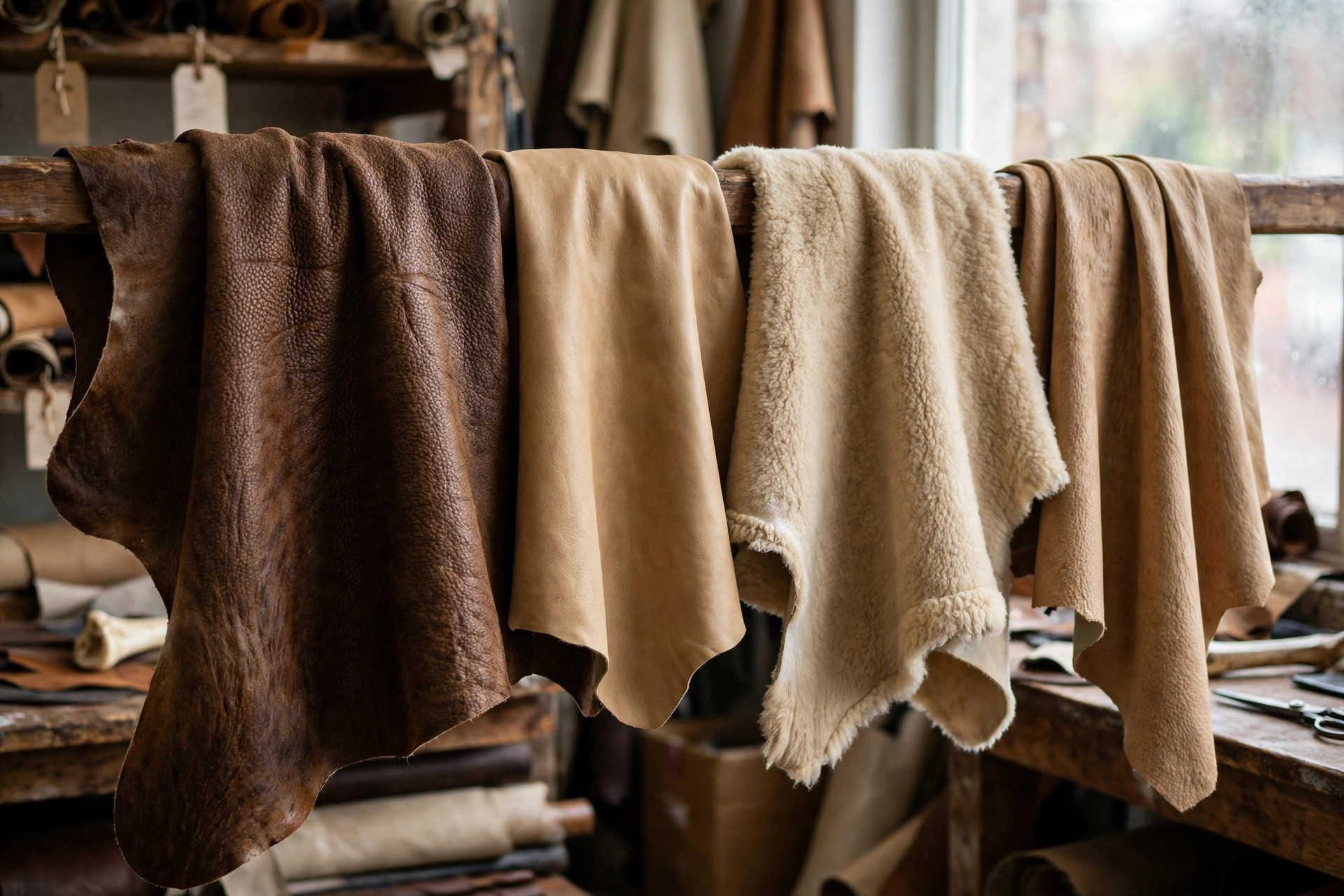
Ask a tannery what a leather is made from and you will learn more than any grade name can tell you. The animal behind the hide decides the size of the skin, the pattern of its grain, its natural thickness and how it drapes, flexes and wears. This page of the Leather Guide compares the hides fashion actually uses. Grade still matters — a full-grain lambskin and a split lambskin are very different materials, as the grades guide explains — but the hide sets the boundaries that no tannery can cross.
Cowhide — The Workhorse
Cattle hides are large, thick and widely available, which is why cowhide accounts for the majority of the world's leather. Its grain is relatively coarse, its fiber structure strong, and a single hide can run to 40 square feet or more, giving cutters room to place large panels. Cowhide is the default for shoes and boots, structured bags, belts, jackets and upholstery. Within cattle, the trade distinguishes steer, cow and bull hides by fiber tightness, and kip — the skin of a young animal between calf and full-grown — for a finer, mid-weight grade.
Best for: boots and shoes, belts, structured handbags, motorcycle and work jackets, furniture.
Calfskin — The Refined Cattle Leather
Calfskin comes from young cattle, typically under a year old, and the youth of the animal shows in the leather: a much finer, tighter grain, fewer scars, and a smooth surface that takes a high polish. It is thinner and more supple than mature cowhide while keeping good strength, which is why it has been the prestige material for dress shoes, fine gloves and luxury handbags for centuries. Because each skin is small and the supply limited, calfskin costs significantly more than cowhide of the same grade.
Best for: dress shoes, luxury handbags and wallets, gloves, fine bookbinding.
Lambskin — The Softest Fashion Leather
Lambskin (young sheepskin) is the drape champion of the leather world: thin, fine-grained and naturally supple, with a buttery surface that feels closer to a luxury fabric than to hide. It stretches and molds readily, making it ideal for garments that must move with the body. The trade-offs are real — lambskin is less abrasion-resistant than cattle leather, tears more easily, and shows wear faster, so it suits fashion pieces rather than heavy-duty gear. Adult sheepskin, with a coarser grain, goes more often into linings, slippers and shearling, where the wool side may be worn out.
Best for: fashion jackets and skirts, dress gloves, soft handbags, linings.
Goatskin — The Flexible Specialist
Goatskin is recognizable by its pebbly, raised grain pattern — the follicle structure of the goat gives the surface a distinct texture that also hides scuffs well. For its weight it is remarkably strong and elastic, with natural water resistance from the lanolin in the skin. Goatskin stays flexible in thin cuts, which is why it has long been a glove leather (the classic “kid” leather is young goat), a bookbinding leather, and the material of choice for soft, unstructured bags and moccasin-style shoes.
Best for: gloves, soft bags, moccasins and casual shoes, jackets that need drape with resilience.
Pigskin — The Underrated Performer
Pigskin is easy to identify once you know the tell: its bristles grow straight through the hide, leaving a pattern of visible pores in groups of three across the surface. Behind that unglamorous look is an excellent technical leather — breathable, naturally water-resistant, soft enough to need little breaking in, and more abrasion-resistant than cowhide at the same weight. Pigskin turns up in work boots, athletic shoes, gloves, garments and as a durable lining leather, and its low price makes it common in honest workwear.
Best for: work and hiking boots, sports shoes, gloves, garment leather, linings.
Suede and Nubuck: Not Animals, Finishes
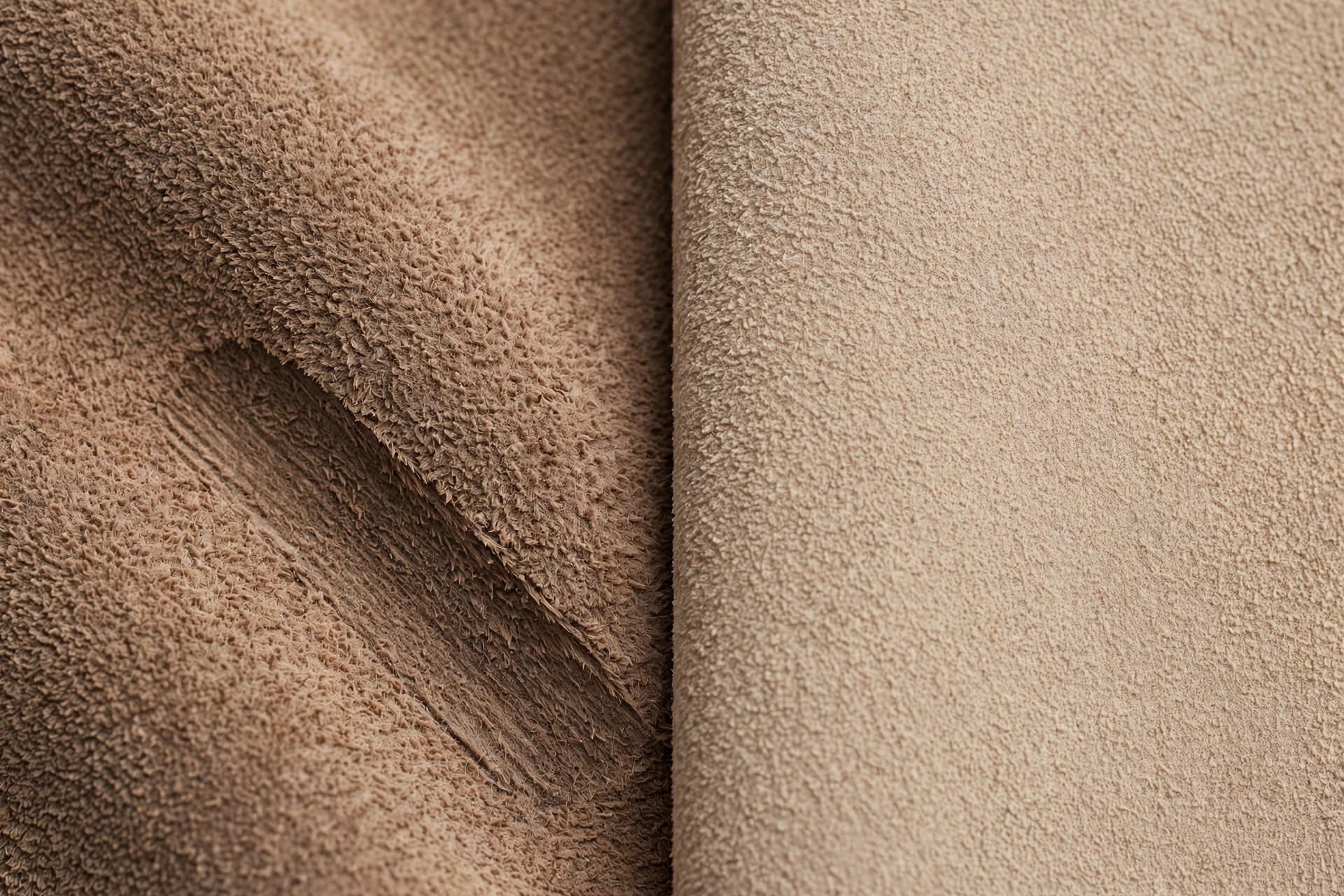
Suede and nubuck are not types of hide but types of surface — which is why they appear on everything from calfskin shoes to goatskin gloves. Both are buffed to raise a velvety nap; they come from opposite sides of the skin.
Suede
Suede is made from the flesh side of a hide, or from a split layer, buffed until the loose fibers stand up as a soft, fuzzy nap. It is pliable and matte, molds beautifully, and stains readily because the open fiber surface drinks liquids. The full definition is in the Apparel Search glossary entry for suede, and its upkeep — brushing, erasing marks, spray protection — is covered by the suede care guide and the Leather Care Guide.
Nubuck
Nubuck starts from the grain side of top-grain leather, very lightly buffed so the surface becomes a fine, dense nap over the hide's strongest layer. It looks like suede's more elegant sibling — shorter pile, more even appearance — and it wears considerably better, at a higher price. Nubuck is common in quality boots and shoes; the leather boot care guide covers keeping both nubuck and suede footwear in shape.
Beyond the Big Five
Deerskin offers exceptional softness and washability for gloves and moccasins; kangaroo leather is the strength-to-weight champion of athletic shoes; and the exotic trade works in alligator, ostrich — see the Apparel Search page on ostrich leather — lizard and snakeskin, mostly for luxury accessories. Whatever the species, remember the two-layer rule of leather buying: the hide sets the character, and the grade (full-grain down to bonded) sets the quality within that character. The tanning guide covers the next step — how any of these raw skins becomes a finished material at all.
More in the Leather Guide
Common Questions
What is the softest type of leather?
Lambskin is generally the softest leather used in fashion: its fine grain, thin structure and natural oils give it a supple, almost fabric-like drape, which is why it dominates luxury gloves and soft jackets. High-quality calfskin is the next softest common option, with more strength than lambskin.
What is the difference between suede and nubuck?
Both are buffed leathers with a velvety nap, but they come from opposite sides of the hide. Suede is made from the flesh side or from a split layer, with loose fibers raised into a soft nap. Nubuck is made from the grain (outer) side of top-grain leather, lightly buffed, so it keeps the strength of the grain layer under a finer, more durable nap. Nubuck is generally the more expensive and hard-wearing of the two.
Which leather is best for gloves?
Traditionally, the finest gloves are lambskin or deerskin for dress wear and goatskin or peccary where grip and durability matter. Gloves need leather that is thin, elastic and fine-grained so fingers can move and feel; cowhide is usually too thick and stiff except for work gloves.
Is pigskin leather any good?
Yes — pigskin is an underrated leather. Its bristle follicles pass all the way through the hide, giving it a distinctive pore pattern of holes in groups of three, and making it breathable, water-resistant and very resistant to abrasion for its weight. It is widely used in work boots, gloves, sports shoes and linings.
Back to the Leather Guide
The Leather Guide hub covers the whole material — grades, hides, tanning, alternatives, care and authenticity — with a map of every guide in this cluster.