Leather Guide · Grades
Leather Grades Explained
Full-grain, top-grain, corrected-grain, split and bonded — what each grade is, how it is made, and what it means for price, durability and the way a product ages.
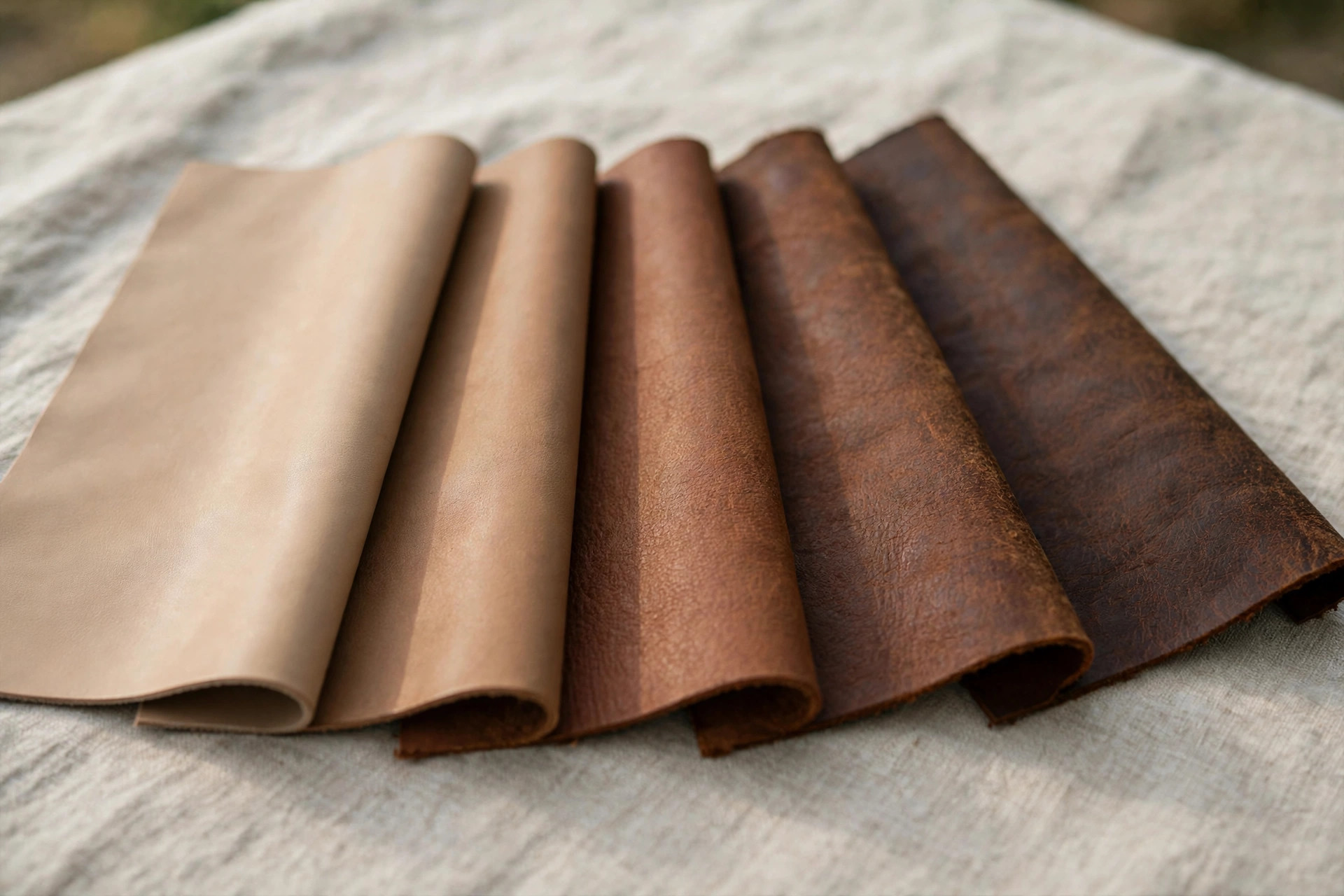
Every leather grade starts with the same object: a hide. As the Leather Guide hub explains, a hide is not uniform — its outer surface is a dense, tight mat of fibers called the grain, and the fibers grow looser toward the flesh side. Thick hides, especially cattle hides, are usually split horizontally into two or more layers so each layer can be used. Which layer a product is cut from, and what is done to its surface afterward, determines its grade. That single decision drives most of the difference in price and lifespan between leather goods.
Here are the five grades you will meet on labels and product pages, ranked from the top of the hide down.
Full-Grain Leather
Full-grain leather comes from the very top layer of the hide, and its surface is left exactly as nature made it — no sanding, no buffing, no embossing. Because the tight grain fibers are fully intact, it is the strongest and most durable grade, and it breathes better than any other. It shows natural markings such as small scars and wrinkles, which the industry treats as character rather than defects. Over years of use it develops a patina, a deepening sheen that most leather lovers consider the finest look leather can achieve. Only the best hides — those with few surface flaws — can be sold as full-grain, which is one reason supply is limited.
Used for: premium shoes and boots, heritage bags, high-end jackets, saddlery and the best briefcases.
Top-Grain Leather
Top-grain also comes from the top layer, but the surface is lightly sanded or buffed to remove imperfections, then given a finish coat. The result is a smoother, more uniform material that resists stains better than full-grain and looks consistent across a whole product — valuable when a manufacturer cuts hundreds of handbags and cannot have each panel look different. The trade-off is that sanding breaks some of the tight surface fibers, so top-grain is slightly less durable and develops less patina. It is the workhorse grade of quality fashion leather, and a genuine step above everything below it on this list.
Used for: most quality handbags, jackets, shoes, gloves and upholstery.
Corrected-Grain Leather
Corrected-grain starts with a top-layer or split hide whose surface has too many flaws to sell as-is. The surface is heavily buffed, embossed with an artificial grain pattern and sealed under a pigmented coating, so the finished material looks even and clean — because its “grain” is a printed pattern. Pebble-grain leather is usually corrected-grain. It is honest, serviceable material and dominates mid-market goods, but the coating hides the natural surface, so it neither breathes nor ages like full-grain, and the finish can wear through to a different color at stress points.
Used for: mid-priced bags and shoes, pebbled leather goods, many car interiors and fashion items in bold colors.
Split Leather
Split leather is made from the lower layers of the hide after the top grain has been split away. Without the tight grain layer it is weaker and less durable, so it is usually finished with a coating, embossed, or left with its fibrous surface brushed — that brushed form is one source of suede (the other is the flesh side of a grain hide). Split leather has legitimate uses, especially in suede shoes and gloves and in workwear, but smooth split leather sold to look like top-grain is where buyers most often overpay for what they get.
Used for: suede products, work gloves, budget shoes and bags, and the hidden panels of larger goods.
Bonded Leather
Bonded leather is the particleboard of the leather world: leftover scraps and fibers are shredded, mixed with a bonding agent — often polyurethane — and rolled into sheets on a fabric or paper backing, then embossed and dyed to imitate grain leather. It contains real leather only in the sense that wood chips are in particleboard. It is weak, tends to crack, flake and peel within a few years, and cannot be conditioned or repaired. Its low price makes it tempting in fast-fashion accessories and budget furniture, but it should be judged as a coated fiber material, not as leather in any practical sense.
Used for: very low-cost bags, belts and accessories, bookbinding and budget upholstery.
The Truth About “Genuine Leather”
Many shoppers read the stamp “genuine leather” as a promise of quality. Traditionally, it means nearly the opposite. The term comes from an older trade grading shorthand in which the main commercial categories ran, from best to worst, roughly: full-grain, top-grain, and then “genuine leather” — the bucket for corrected and split leathers that are genuinely made from hide but are not the premium cuts. A “genuine leather” stamp tells you the product contains real hide; it tells you nothing good about which part. When a label wants to brag, it says full-grain. The labeling rules behind these terms are covered in the real versus fake leather guide.
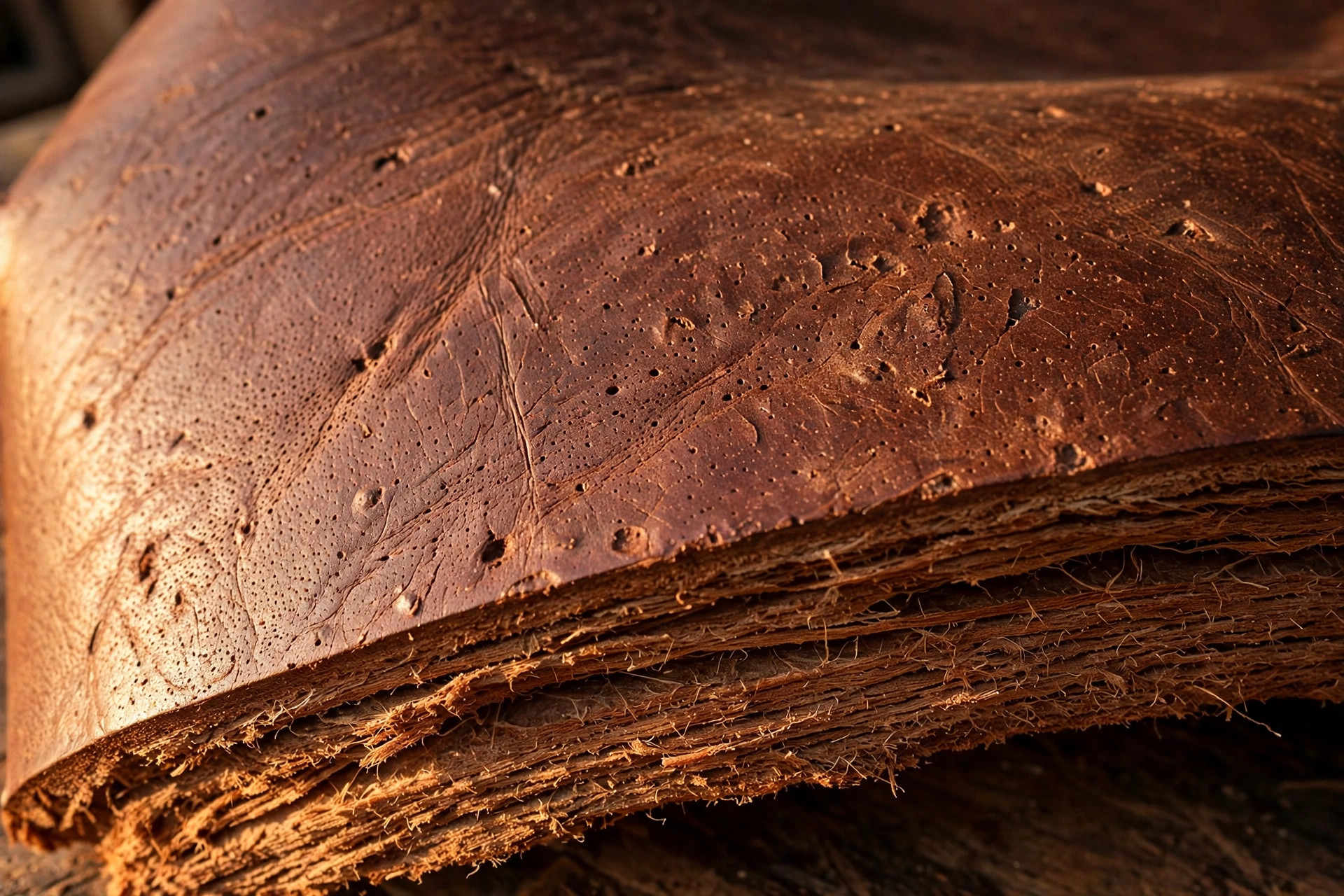
How Grades Are Tested, Not Just Named
Because grade names are marketing language as much as technical language, serious buyers back them up with physical testing: tear and tensile strength, flex endurance, abrasion resistance and colorfastness to rubbing and light. A leather that claims to be top-grain but fails flex testing will crack at the vamp of a shoe within a season. The methods behind those checks — and the standards organizations that publish them — are laid out in the Apparel Search Textile Testing & Quality Standards Guide. Grade tells you where a leather came from in the hide; testing tells you how it will actually behave in a product.
Matching the Grade to the Job
The best grade is not always the right grade. Full-grain is wasted on a product that will be coated, painted or discarded in two seasons, and corrected-grain's uniform surface is genuinely better for brightly colored fashion items where natural markings would look like flaws. Suede — a split or flesh-side material — is the correct choice for gloves precisely because it is soft and flexible. The mistake to avoid is paying full-grain prices for bonded or split leather, or expecting bonded leather to behave like hide. Read the label with the ladder above in mind, run the hands-on checks in the real versus fake guide, and you will rarely be fooled. Care differs by grade too: the Leather Care Guide explains what each grade can and cannot absorb.
More in the Leather Guide
Common Questions
Is top-grain leather better than full-grain?
No. Full-grain is the higher grade because the natural grain surface is left untouched, keeping the hide's tightest, strongest fiber layer. Top-grain has that surface lightly sanded to remove imperfections, which makes it more uniform and stain-resistant but slightly less durable and less able to develop a rich patina.
Is bonded leather real leather?
Bonded leather contains real leather, but only as shredded fiber: tannery scraps are ground up, mixed with a bonding agent and rolled onto a backing, then embossed and finished to look like grain leather. It is the lowest grade, wears out quickly, and in many contexts must be labeled as bonded or reconstituted leather rather than simply leather.
What grade of leather are most shoes and bags made from?
Most mid-priced shoes, bags and jackets are top-grain or corrected-grain leather, because those grades are widely available, consistent in appearance and easier to keep clean. Full-grain dominates premium and heritage products, while split and bonded leather appear mostly in budget goods, bookbinding and the backs of belts.
Does the grade of leather change how I should care for it?
Yes. Full-grain and top-grain leathers absorb conditioner and benefit from regular feeding. Corrected and pigmented leathers have a surface coating, so they need gentler surface cleaning and absorb less. Split suede needs brushing and spray protection instead of creams, and bonded leather cannot really be conditioned at all — its surface is mostly coating.
Back to the Leather Guide
The Leather Guide hub covers the whole material — grades, hides, tanning, alternatives, care and authenticity — with a map of every guide in this cluster.