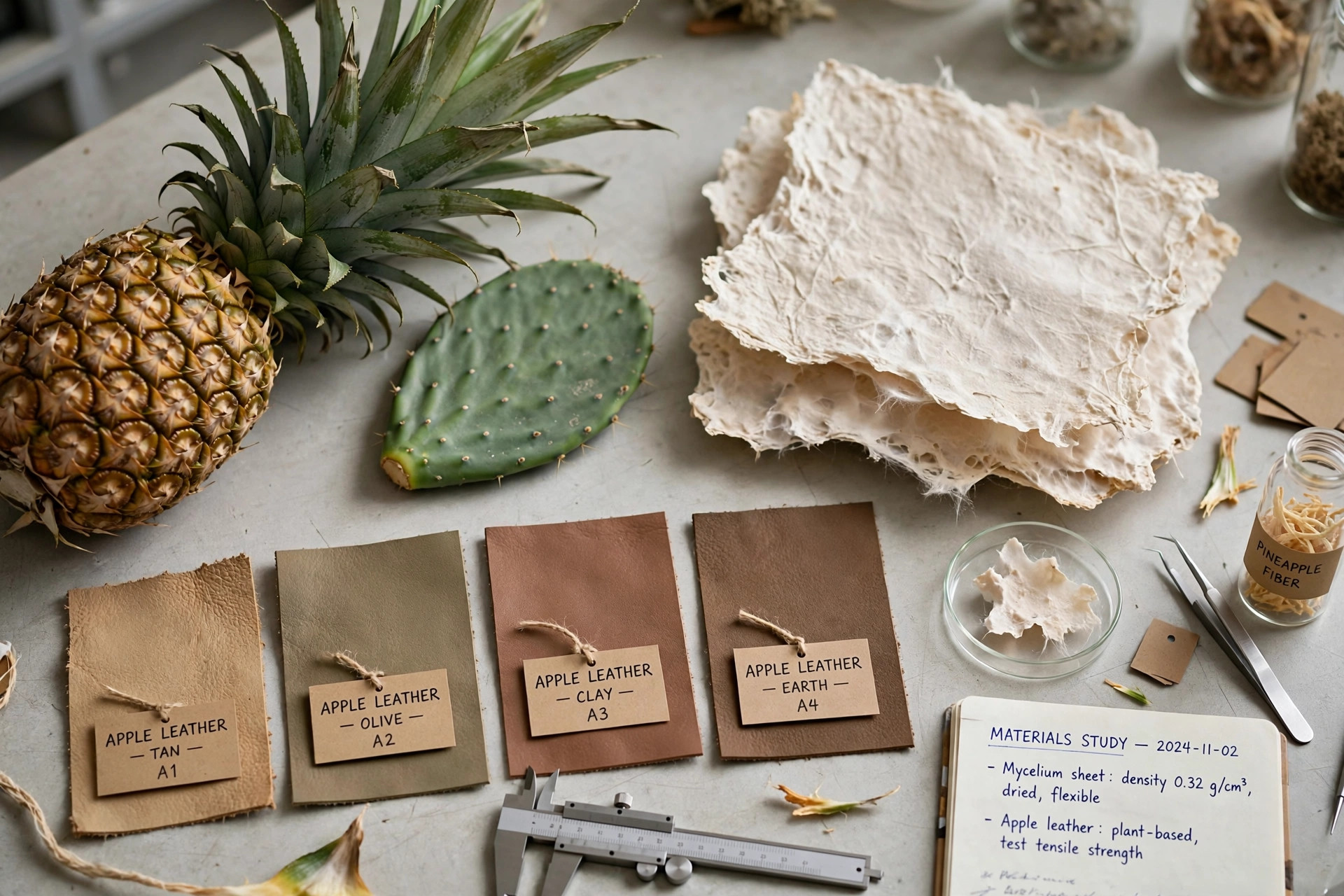
Bio-based leather alternatives are sheet materials designed to look and perform like leather while drawing most of their substance from biological feedstocks instead of animal hides or conventional plastics. The best-known families are pineapple-leaf fiber material (Piñatex), mycelium materials grown from fungal roots, cactus-based material made from prickly pear, and apple-based material made from juice-industry waste. They are materials, not a single standard — each maker’s product differs in composition and performance.
The Main Material Families
Pineapple leaf fiber (Piñatex) uses fibers extracted from pineapple leaves — an agricultural residue from pineapple farming — formed into a nonwoven mesh that is finished into a leather-like sheet. Mycelium materials are grown: fungal mycelium is cultivated into a mat, then processed and finished; several biotechnology companies work in this space with different organisms and methods. Cactus-based material uses mature prickly pear pads, dried and processed into a sheet. Apple-based material incorporates waste from juice and cider production — skins, cores, and pulp — into its structure.
The honest caveat is that ‘bio-based’ rarely means 100% biological. Most commercial materials combine their biological content with binders, backings, or surface coatings, some of which are synthetic, to achieve the strength, flexibility, and abrasion resistance footwear and bags demand. The bio-based share varies widely by product and generation, which is why serious buyers ask makers for the actual composition rather than the marketing name.
Performance and Uses
These materials are used in footwear uppers, bags, small accessories, watch straps, and upholstery, and they appear in both dedicated vegan brands and capsule collections from mainstream labels. Their strengths are a leather-like appearance without animal input, distinctive textures, and raw materials drawn from waste streams or fast-growing plants. Their open questions are equally practical: long-term durability and aging compared with good leather, repairability, price at scale, and end-of-life — a coated, multi-layer sheet does not automatically biodegrade because its feedstock grew in a field.
Designers should sample and wear-test in the real application, as with any new material, and should compare results against the conventional baseline honestly. A traditional LWG-audited tannery leather and a bio-based sheet solve different problems; the right choice depends on the product, the customer, and the claim the brand wants to make.
Claims Buyers Should Verify
Because there is no single certification behind this category, claim discipline matters. Ask each producer: what percentage of the material is bio-based, and measured how? What are the binders and coatings? What durability testing exists — flexing, abrasion, colorfastness — and who performed it? What is the recommended end-of-life route? Reputable makers publish technical data sheets and third-party test results, and their answers distinguish a material company from a marketing story.
Vocabulary also matters at retail. Terms such as ‘pineapple leather’ or ‘ mushroom leather’ are descriptive shorthand, not legal definitions, and some jurisdictions restrict how the word leather itself may be used for non-animal materials. Brands should check labeling rules in each market they sell into and describe composition accurately on the product page — the approach regulators increasingly expect across all sustainability claims.
FAQs
- Are bio-based leather alternatives plastic-free?
- Usually not entirely. Most combine biological content with binders, backings, or coatings, some synthetic, to reach usable strength and durability. The bio-based percentage varies by maker and product — ask for the actual composition.
- Which is the most established alternative?
- Pineapple-leaf material (Piñatex) has been on the market longest among the well-known names, while mycelium, cactus, and apple materials are newer and still scaling. All remain small beside conventional leather and synthetics.
- Do these materials biodegrade?
- Not automatically. A material built from plant waste but finished with synthetic coatings and backings may not biodegrade in practice. Check the producer’s end-of-life guidance for the specific product.
Sustainability Certifications & Standards
This guide is part of the Apparel Search sustainability certifications series. Browse the full series below, or start from the manufacturing guides hub.
- Global Recycled Standard (GRS) Certification
- Recycled Claim Standard (RCS) Certification
- Organic Content Standard (OCS) Certification
- Responsible Wool Standard (RWS) Certification
- Responsible Down Standard (RDS) Certification
- Responsible Mohair Standard (RMS) Certification
- OEKO-TEX Made in Green
- OEKO-TEX STeP Certification
- OEKO-TEX Eco Passport
- Digital Product Passport for Textiles
- Extended Producer Responsibility for Textiles
- France’s Repair Bonus for Clothing and Shoes
- Cradle to Cradle Certified® Products
- B Corp Certification
- Leather Working Group Auditing
Apparel Search: explore the manufacturing guides hub and production & sourcing resources for the fashion industry.
Please note: Bio-based leather alternatives are not governed by a single standard or issuing body, and the composition, bio-based content, and performance claims for these materials vary by maker and by product. This page is a general overview provided for information only — it is not legal or compliance advice, and it may not reflect the most current information from any individual producer. Always confirm current composition and claims directly with the material producer before making sourcing or marketing decisions, rather than relying on this website.