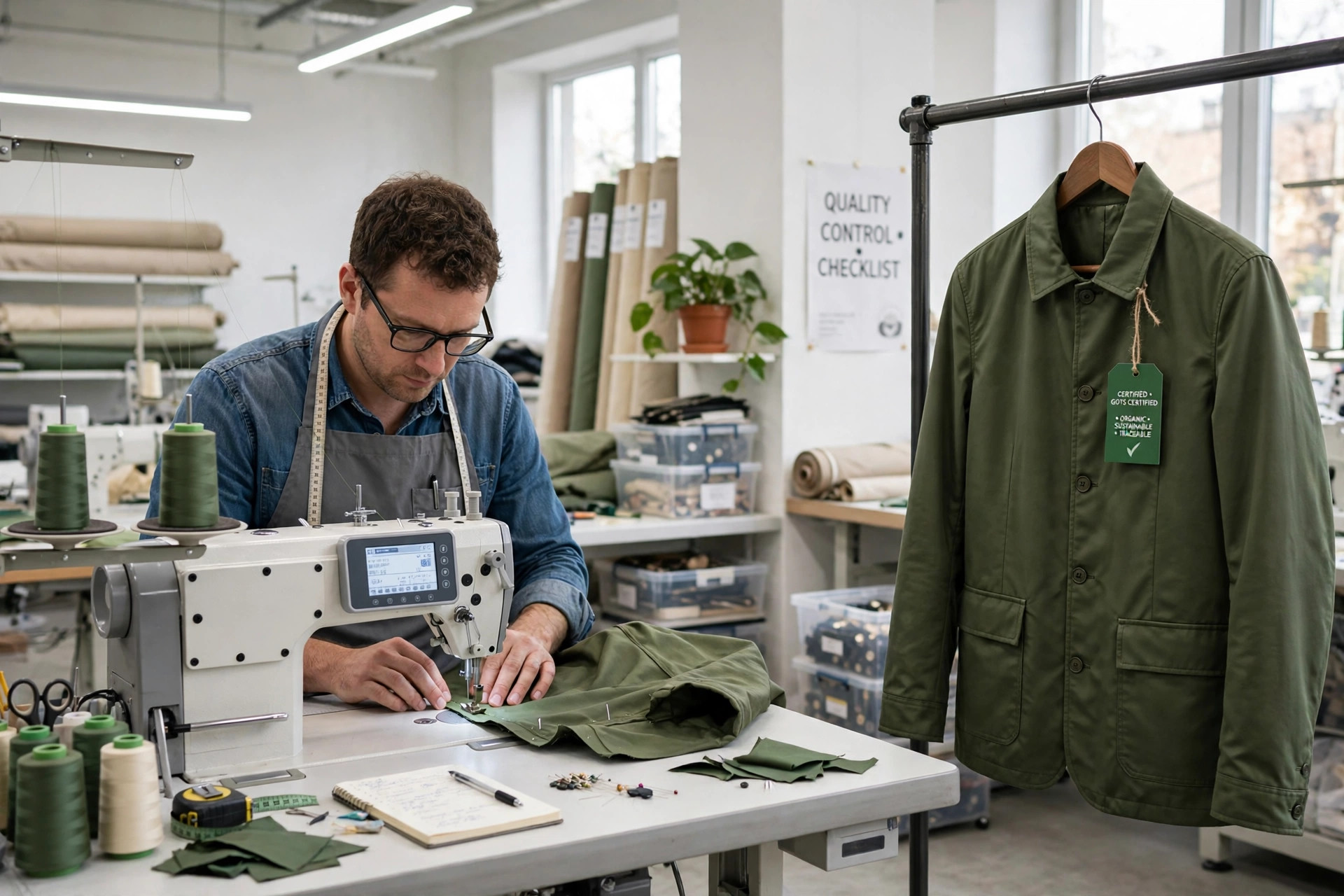
OEKO-TEX Made in Green is a traceable product label from the OEKO-TEX Association. A product may carry it only if it has been tested for harmful substances and was made in facilities audited under the OEKO-TEX STeP system for environmentally friendlier and socially responsible production. Each labeled product carries a unique product ID that consumers can check to see where it was produced.
What the Label Combines
Made in Green brings together two established OEKO-TEX building blocks. The first is product safety: the article must be certified under OEKO-TEX Standard 100, which tests textiles and components for substances harmful to human health. The second is production practice: the facilities making the product must be certified under OEKO-TEX STeP, which audits chemical management, environmental performance, quality management, and social responsibility at the factory level.
The result is a consumer-facing label with an unusual feature for the industry: traceability. The product ID or QR code on the label lets a shopper retrieve information about the production facilities involved and the countries where the article was made — turning a general sustainability promise into something checkable.
How a Product Qualifies
Label rights are granted through the OEKO-TEX system once the underlying certifications are in place: a valid Standard 100 certificate for the product and STeP-certified production for the facilities in its chain, as defined by the label’s current rules. The label holder is responsible for the accuracy of the supply-chain information attached to the product ID, and OEKO-TEX institutes can verify the chain behind a labeled article.
For brands, the practical work is supply-chain organization: the sewing factory alone is not the whole story, because wet processing stages such as dyeing and finishing are environmentally significant. Brands usually start by mapping which of their suppliers already hold STeP certification, then prioritize labeled ranges where the chain is complete.
Who Uses Made in Green
The label appears on apparel, home textiles, and baby and children’s products, and is especially common among European retailers and brands that want one label covering both product safety and production conditions. It occupies a different niche from content standards such as the Global Recycled Standard: Made in Green says how and where a product was made and that it was tested, rather than what percentage of it is recycled or organic.
For shoppers, the advice is simple — scan the code. A Made in Green ID that resolves to real facility information is the system working as intended, and it sets a useful benchmark for judging vaguer green claims elsewhere in the market.
FAQs
- What does Made in Green actually guarantee?
- That the product was tested for harmful substances under Standard 100 and produced in facilities audited under STeP for environmental and social criteria, with a traceable product ID linking to its production information.
- How can consumers check a Made in Green product?
- Each labeled product carries a unique ID or QR code. Entering or scanning it through OEKO-TEX’s label check shows the production facilities and countries involved in making that article.
- Is Made in Green the same as Standard 100?
- No. Standard 100 covers harmful-substance testing only. Made in Green requires Standard 100 and adds STeP-audited production plus product-level traceability information.
Sustainability Certifications & Standards
This guide is part of the Apparel Search sustainability certifications series. Browse the full series below, or start from the manufacturing guides hub.
- Global Recycled Standard (GRS) Certification
- Recycled Claim Standard (RCS) Certification
- Organic Content Standard (OCS) Certification
- Responsible Wool Standard (RWS) Certification
- Responsible Down Standard (RDS) Certification
- Responsible Mohair Standard (RMS) Certification
- OEKO-TEX STeP Certification
- OEKO-TEX Eco Passport
- Digital Product Passport for Textiles
- Extended Producer Responsibility for Textiles
- France’s Repair Bonus for Clothing and Shoes
- Cradle to Cradle Certified® Products
- B Corp Certification
- Leather Working Group Auditing
- Bio-Based Leather Alternatives
Apparel Search: explore the manufacturing guides hub and production & sourcing resources for the fashion industry.
Please note: OEKO-TEX Made in Green is maintained by the OEKO-TEX Association, and its requirements are revised over time. This page is a general overview provided for information only — it is not legal or compliance advice, and it may not reflect the most current version. Always confirm the current requirements directly with the OEKO-TEX Association or an accredited certification body before making certification or sourcing decisions, rather than relying on this website.