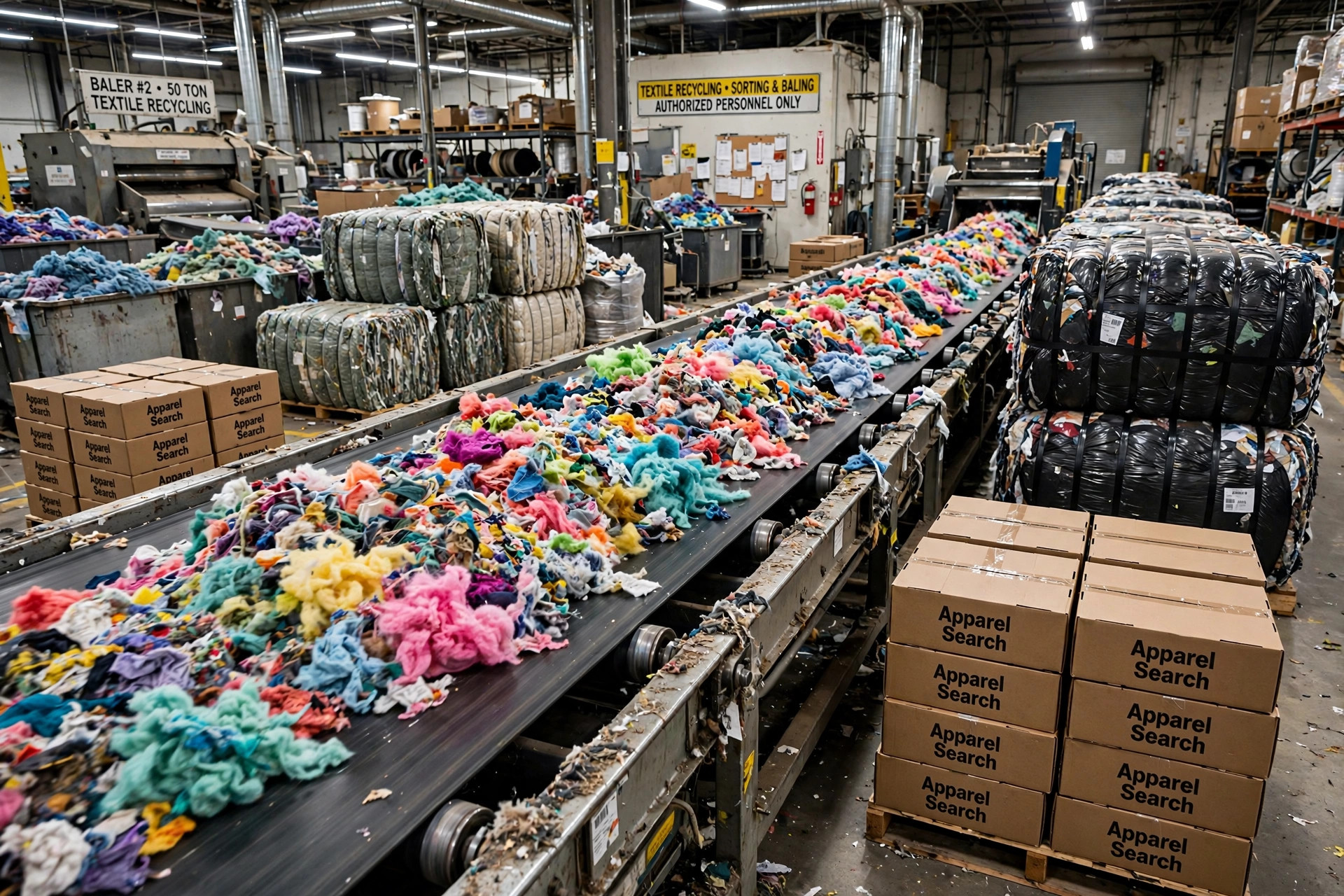
The Global Recycled Standard (GRS) is a voluntary, full-product standard maintained by Textile Exchange that verifies recycled content in a product and tracks it through the supply chain. Beyond recycled content, GRS also sets requirements for chemical use, environmental management, and worker protections at certified facilities, which is why brands treat it as a stronger claim than a simple recycled-content statement.
What GRS Covers
GRS applies to products made with recycled material — fibers, fabrics, garments, accessories, and other textile products — where a brand or supplier wants a third-party-verified recycled claim. The standard addresses the content itself, the custody of that material from recycler to finished product, and the practices of the facilities handling it. Environmental requirements cover areas such as chemical management and wastewater, and the social requirements draw on recognized principles for safe, fair working conditions.
Recycled inputs can be pre-consumer material, such as factory cutting waste, or post-consumer material, such as collected garments and plastic bottles converted into fiber. In both cases the material must be verified as genuinely recycled rather than virgin material relabeled, and its identity has to be preserved through documented transactions as it moves between companies.
How Certification and Chain of Custody Work
Each company that wants to make or support a GRS claim — recyclers, spinners, mills, manufacturers, and in some cases brands and traders — is audited by an approved certification body against the standard. Auditors check purchasing and sales records, mass-balance accounting, segregation of certified and non-certified material, and the facility’s environmental and social management. Certified sites are listed in Textile Exchange’s public directories, and buyers can ask suppliers for their scope certificate to confirm which sites and product categories are covered.
Movement of certified material is documented with transaction certificates issued between certified parties, creating a paper chain from the recycler to the final product. That chain of custody is what allows a claim at retail to be traced back, and it is also where claims most often break down: if any link in the chain is not certified, the claim generally cannot continue past that point.
Labeling and Who Uses GRS
Use of the GRS name and logo on products and marketing follows Textile Exchange’s claims rules, which set conditions such as minimum recycled-content thresholds for consumer-facing claims and require the certification body and license details to be identifiable. Brands should confirm the current claims policy before printing hangtags, because wording that overstates the claim — for example implying the whole product is certified when only a component is — is a common compliance problem.
GRS is widely used by apparel brands, outdoor and active labels, denim brands, and home-textile companies that want a defensible recycled claim, and by mills building recycled ranges for those customers. It sits alongside the lighter Recycled Claim Standard, the organic standards covered in our Organic Content Standard guide, and the fiber standard GOTS for certified organic products.
FAQs
- What is the difference between GRS and RCS?
- Both are Textile Exchange standards that verify recycled content and chain of custody. GRS adds environmental, chemical, and social requirements for certified facilities, while the Recycled Claim Standard focuses on recycled content verification alone.
- Does GRS certify a product or a company?
- Certification is issued to sites and companies for defined product categories, and the claim travels with the material through transaction certificates. A finished product can only carry the claim if every required link in its chain was certified.
- How can a buyer verify a GRS claim?
- Ask for the supplier’s current scope certificate, check that the site and product category match the goods being bought, and confirm the certificate with the issuing certification body or Textile Exchange’s public listings.
Sustainability Certifications & Standards
This guide is part of the Apparel Search sustainability certifications series. Browse the full series below, or start from the manufacturing guides hub.
- Recycled Claim Standard (RCS) Certification
- Organic Content Standard (OCS) Certification
- Responsible Wool Standard (RWS) Certification
- Responsible Down Standard (RDS) Certification
- Responsible Mohair Standard (RMS) Certification
- OEKO-TEX Made in Green
- OEKO-TEX STeP Certification
- OEKO-TEX Eco Passport
- Digital Product Passport for Textiles
- Extended Producer Responsibility for Textiles
- France’s Repair Bonus for Clothing and Shoes
- Cradle to Cradle Certified® Products
- B Corp Certification
- Leather Working Group Auditing
- Bio-Based Leather Alternatives
Apparel Search: explore the manufacturing guides hub and production & sourcing resources for the fashion industry.
Please note: the Global Recycled Standard (GRS) is maintained by Textile Exchange, and its requirements are revised over time. This page is a general overview provided for information only — it is not legal or compliance advice, and it may not reflect the most current version. Always confirm the current requirements directly with Textile Exchange or an accredited certification body before making certification or sourcing decisions, rather than relying on this website.