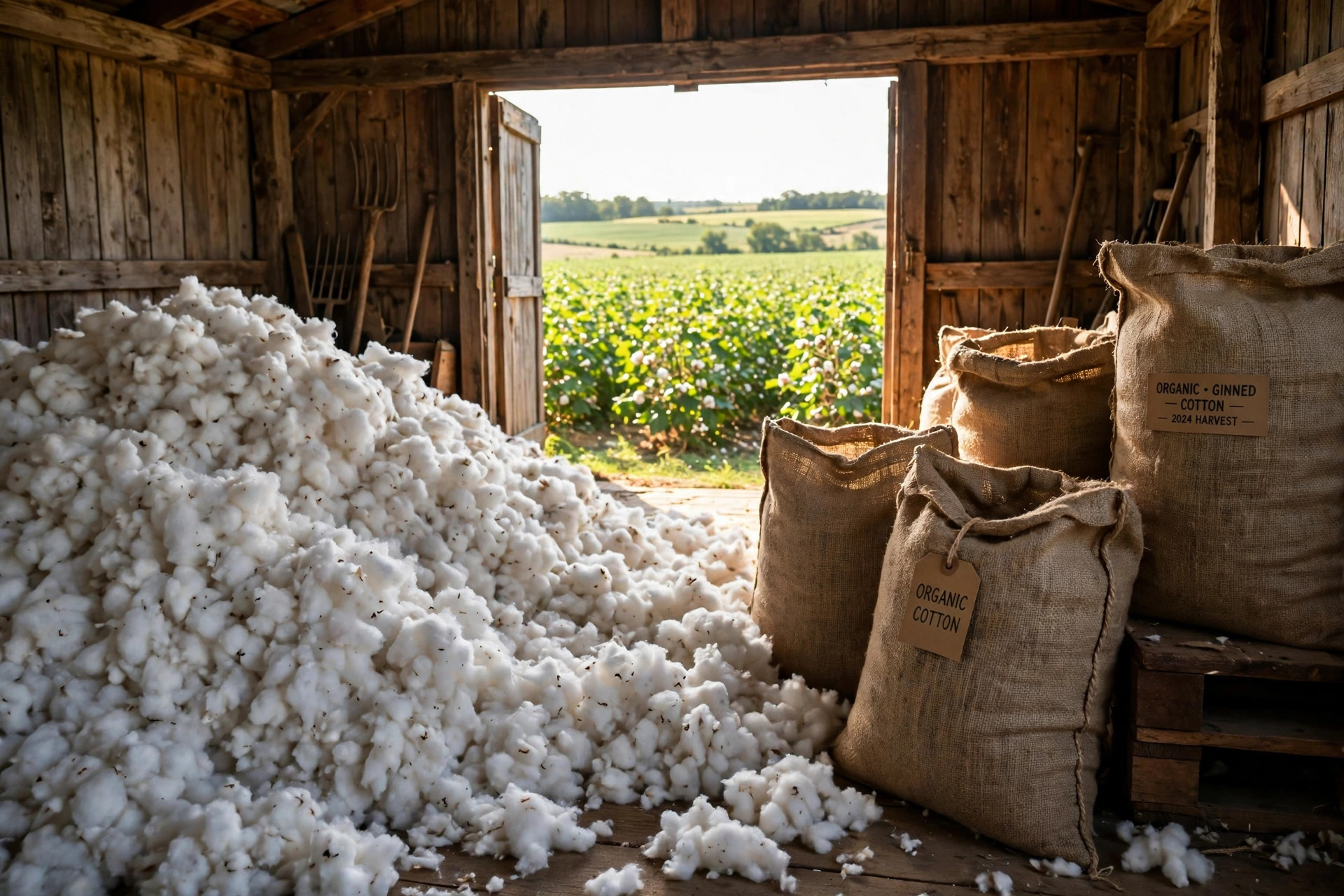
The Organic Content Standard (OCS) is a voluntary chain-of-custody standard maintained by Textile Exchange that verifies the amount of organically grown material in a product and tracks it from the farm through to the finished goods. OCS does not certify how the fiber was processed or dyed; it verifies content and custody, which makes it a flexible tool for blends and product categories where a full organic processing standard does not fit.
What OCS Covers
OCS applies to products made with organically grown fibers — most commonly organic cotton, but also organic wool, linen, and other organically produced raw materials. The organic status of the raw material itself rests on recognized organic farming certification at the source; OCS then protects that claim as the fiber is ginned, spun, woven or knitted, dyed, and made into finished products, using documented chain of custody at every transfer.
The standard is widely used for blended products, where organic fiber is combined with conventional or recycled fibers and the brand wants the organic share verified rather than estimated. It also serves categories and supply chains where the processing requirements of a full organic product standard are not being claimed, but an accurate, audited content claim still matters to buyers and consumers.
How Verification and Chain of Custody Work
Each organization handling OCS material is audited by an approved certification body. Auditors examine farm or first-processor certificates for the organic input, segregation and identification of certified material, production records, and the mass balance between certified inputs bought and certified outputs sold. Certified sites receive a scope certificate, and transfers between certified organizations are documented with transaction certificates so a buyer can trace the claim back to the source.
As with other Textile Exchange standards, an uncertified link breaks the verified chain. Brands therefore check that spinners, mills, and factories in an organic program all hold current certification for the relevant product categories before approving labels — and re-check at reorder, because certificates expire and scopes change.
OCS, GOTS, and Who Uses the Standard
The comparison buyers ask about most is OCS versus GOTS. GOTS is a full product standard: it verifies organic content and also sets processing, chemical, environmental, and social criteria through the supply chain. OCS verifies content and custody only, without processing rules. Many brands use GOTS for their flagship organic ranges and OCS for blends or categories outside GOTS’s practical reach, sometimes alongside recycled content certification in the same garment.
Apparel brands, baby and children’s labels, home-textile companies, and fiber promoters all use OCS claims. Whatever the category, claim wording follows Textile Exchange’s claims rules: the organic percentage must be accurate for the specific product, and labeling must identify the certifier behind the claim.
FAQs
- What does OCS certify?
- OCS verifies that the organically grown content claimed in a product is present in the stated amount and traceable through a certified chain of custody from the raw material source to the finished product.
- What is the difference between OCS and GOTS?
- OCS verifies content and custody only. GOTS also verifies content, but adds requirements for processing, chemicals, environmental management, and social criteria, making it the more comprehensive organic product standard.
- Can blended fabrics use OCS?
- Yes. OCS is commonly used for blends, including products combining organic fiber with conventional or recycled fibers, as long as the organic share is verified and the claim wording is accurate.
Sustainability Certifications & Standards
This guide is part of the Apparel Search sustainability certifications series. Browse the full series below, or start from the manufacturing guides hub.
- Global Recycled Standard (GRS) Certification
- Recycled Claim Standard (RCS) Certification
- Responsible Wool Standard (RWS) Certification
- Responsible Down Standard (RDS) Certification
- Responsible Mohair Standard (RMS) Certification
- OEKO-TEX Made in Green
- OEKO-TEX STeP Certification
- OEKO-TEX Eco Passport
- Digital Product Passport for Textiles
- Extended Producer Responsibility for Textiles
- France’s Repair Bonus for Clothing and Shoes
- Cradle to Cradle Certified® Products
- B Corp Certification
- Leather Working Group Auditing
- Bio-Based Leather Alternatives
Apparel Search: explore the manufacturing guides hub and production & sourcing resources for the fashion industry.
Please note: the Organic Content Standard (OCS) is maintained by Textile Exchange, and its requirements are revised over time. This page is a general overview provided for information only — it is not legal or compliance advice, and it may not reflect the most current version. Always confirm the current requirements directly with Textile Exchange or an accredited certification body before making certification or sourcing decisions, rather than relying on this website.