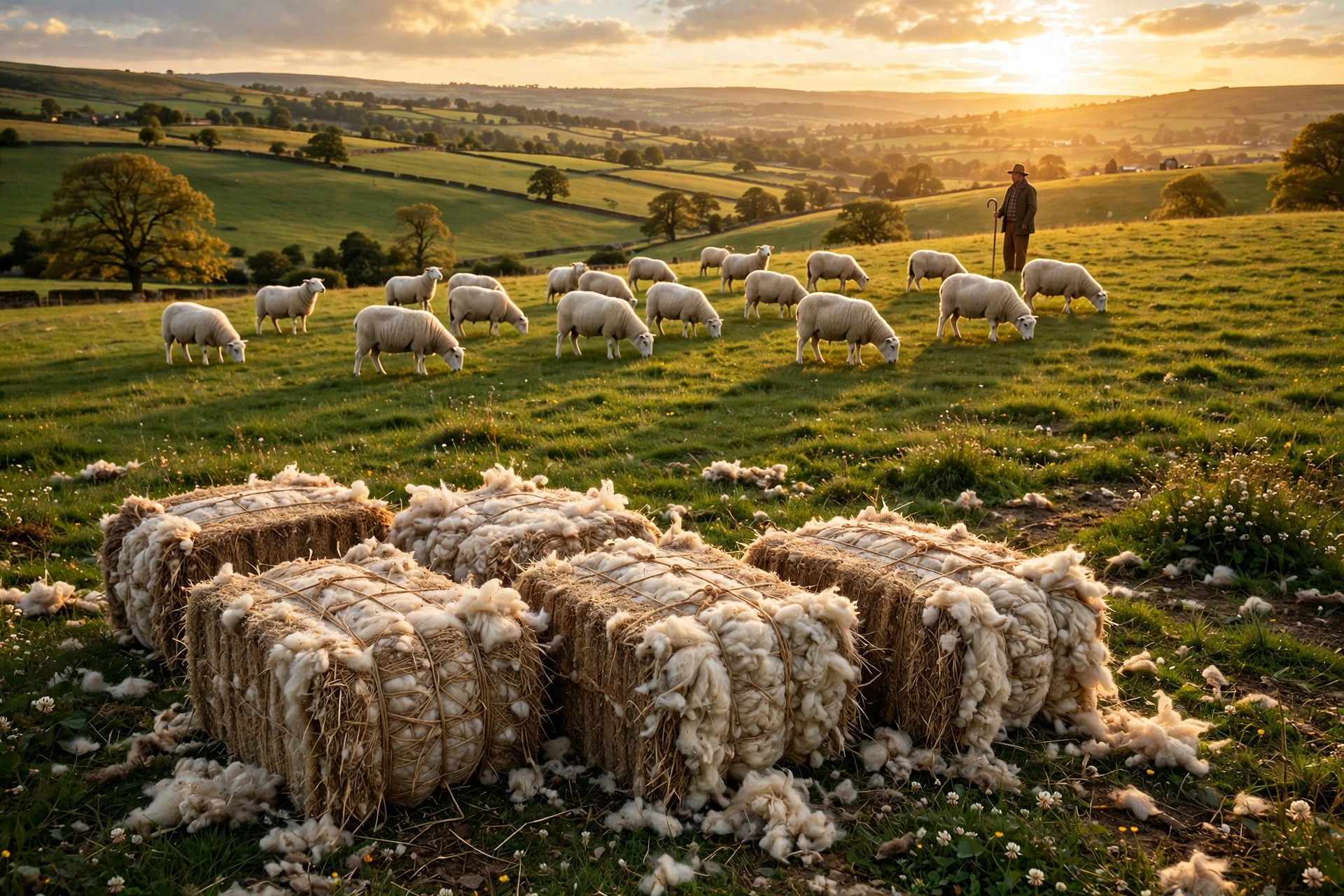
The Responsible Wool Standard (RWS) is a voluntary standard maintained by Textile Exchange that certifies wool from farms meeting requirements for sheep welfare and for the land the sheep graze. A certified chain of custody then tracks that wool from the farm through scouring, spinning, and garment making, so the claim on a finished sweater can be traced back to certified farms.
What RWS Covers
RWS farm requirements are built around the welfare of the sheep — nutrition, shelter, handling, shearing practice, health care, and living conditions — together with land management practices intended to protect soil health, biodiversity, and native species on grazing land. The standard was developed with farmers, animal-welfare specialists, brands, and supply-chain companies, and it addresses the practices consumers most often ask wool brands about, including how shearing is carried out and how sheep are treated across their lives.
The standard applies to wool supply chains worldwide, from large ranching operations to groups of smaller farms certified together. Because wool is pooled and traded internationally, the farm-level certification only becomes a product claim when every later stage — scourers, spinners, mills, and manufacturers — keeps the certified wool identified through the custody system.
How Certification and Chain of Custody Work
Farms are audited by approved certification bodies against the farm requirements, and each subsequent handler of RWS wool is audited for chain of custody: identification and segregation of certified material, transaction records, and volume reconciliation. Scope certificates identify which sites are covered, and transaction certificates document transfers between certified parties, allowing a brand to demonstrate the path from farm group to finished garment.
Buyers evaluating RWS supply should confirm that the certificates cover the specific wool type and product categories they are purchasing, and should expect the chain to be checked again at each season’s contracting. Wool bought on the open market without the documented chain cannot be upgraded into an RWS claim after the fact.
Claims and Who Uses RWS
Consumer-facing RWS claims follow Textile Exchange’s claims rules, which govern when the standard’s name and logo may appear on products and how certified content must be described. Brands in outdoor apparel, knitwear, tailoring, and footwear use RWS to answer growing buyer and consumer scrutiny of animal fibers, and it sits in a family with the Responsible Down Standard and the Responsible Mohair Standard for other animal materials.
For sourcing teams, RWS also provides a common language with wool suppliers: instead of each brand writing its own farm questionnaire, both sides work to one audited standard. It complements, rather than replaces, quality specifications for micron, yield, and color that wool buyers have always managed separately.
FAQs
- What does the Responsible Wool Standard cover?
- Animal welfare for sheep and land management on the farms that raise them, plus chain-of-custody verification that tracks certified wool through processing to the finished product.
- Does RWS certify finished garments?
- RWS certifies farms and each supply-chain site handling the wool. A finished garment can carry the claim when its wool comes through that unbroken certified chain and the claim follows Textile Exchange’s rules.
- How is RWS wool different from conventional wool?
- The fiber itself may be physically similar; the difference is verified practice. RWS wool comes from audited farms meeting defined welfare and land requirements, with documented custody the whole way.
Sustainability Certifications & Standards
This guide is part of the Apparel Search sustainability certifications series. Browse the full series below, or start from the manufacturing guides hub.
- Global Recycled Standard (GRS) Certification
- Recycled Claim Standard (RCS) Certification
- Organic Content Standard (OCS) Certification
- Responsible Down Standard (RDS) Certification
- Responsible Mohair Standard (RMS) Certification
- OEKO-TEX Made in Green
- OEKO-TEX STeP Certification
- OEKO-TEX Eco Passport
- Digital Product Passport for Textiles
- Extended Producer Responsibility for Textiles
- France’s Repair Bonus for Clothing and Shoes
- Cradle to Cradle Certified® Products
- B Corp Certification
- Leather Working Group Auditing
- Bio-Based Leather Alternatives
Apparel Search: explore the manufacturing guides hub and production & sourcing resources for the fashion industry.
Please note: the Responsible Wool Standard (RWS) is maintained by Textile Exchange, and its requirements are revised over time. This page is a general overview provided for information only — it is not legal or compliance advice, and it may not reflect the most current version. Always confirm the current requirements directly with Textile Exchange or an accredited certification body before making certification or sourcing decisions, rather than relying on this website.