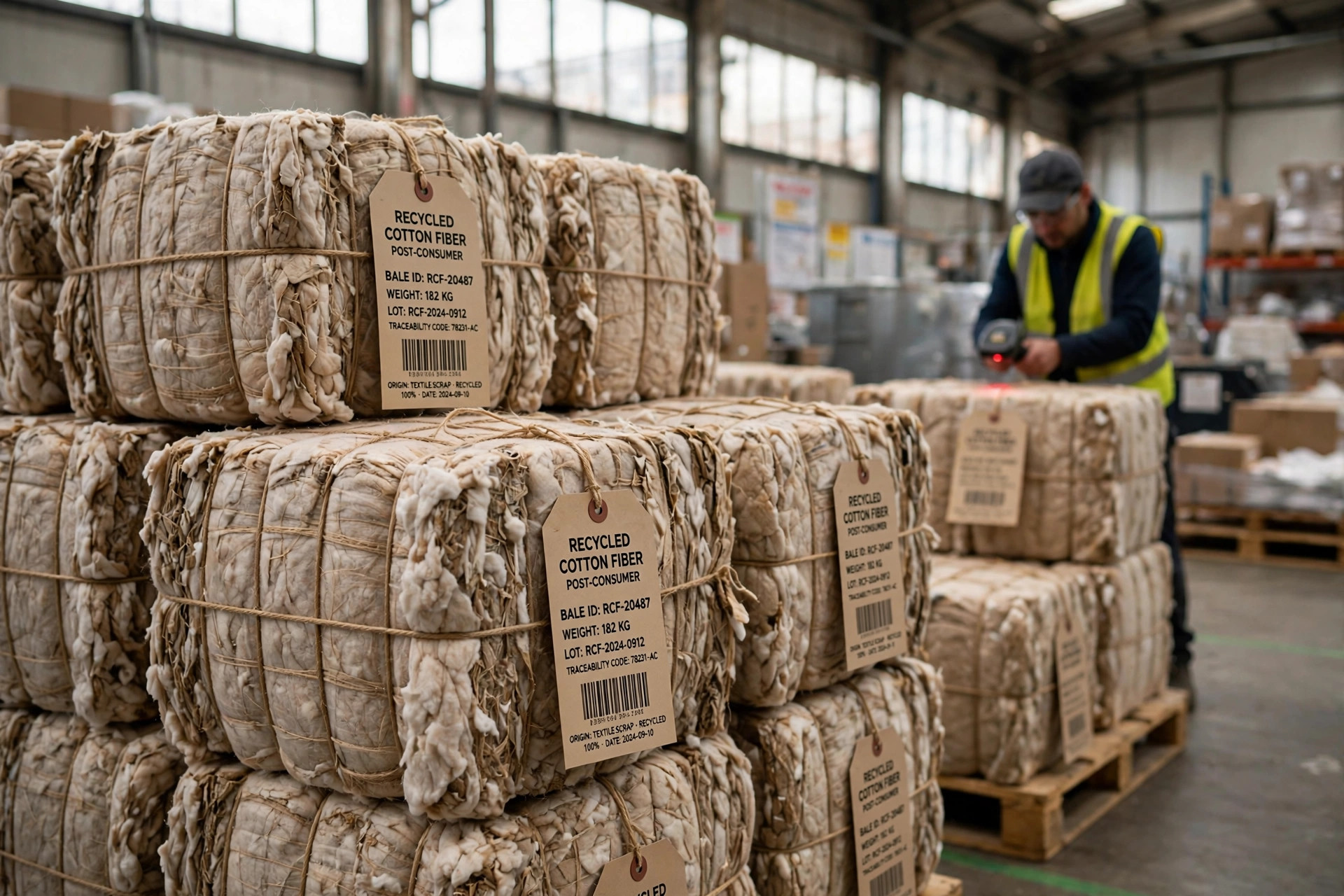
The Recycled Claim Standard (RCS) is a voluntary chain-of-custody standard maintained by Textile Exchange for tracking and verifying the content of recycled materials in a product. It does not set environmental processing or social requirements — its job is narrower and practical: to make sure that when a product claims recycled content, the claim can be documented from the recycler to the finished goods.
What RCS Covers
RCS applies to products containing recycled material, including recycled fibers, fabrics, garments, and accessories. The recycled input may be pre-consumer material diverted from manufacturing waste streams or post-consumer material collected after use, such as textiles recovered for fiber recycling. The standard defines how recycled material is identified, segregated, and accounted for so that the percentage claimed in the final product is supported by records.
Because RCS focuses on content verification, it is often the practical entry point for suppliers beginning recycled product lines. Companies that later want to add environmental and social assurances for the same recycled ranges can build toward the Global Recycled Standard, which uses the same custody model but adds facility requirements on top of it.
How Verification and Chain of Custody Work
Companies handling RCS material — recyclers, spinners, mills, garment factories, and other supply-chain parties making or passing on the claim — are audited by approved certification bodies. Audits review how recycled and non-recycled materials are kept apart or accounted for, the invoices and transport documents connecting purchases to sales, and the calculations behind any recycled-content percentage. Sites that pass receive a scope certificate naming the facilities and product categories covered.
As certified material moves between certified companies, transaction certificates document each transfer. A brand buying RCS goods should be able to follow that chain back to the recycler. If a stage of production sits outside certification, the verified claim generally stops there, which is why brands map their recycled supply chains before approving marketing language.
Claims and Who Uses RCS
Consumer-facing use of the RCS name and logos follows Textile Exchange’s claims rules, which distinguish between products meeting the conditions for a labeled claim and lower-content products where only more limited wording may be allowed. In practice, the safest habit is to tie every claim — hangtag, product page, or catalog copy — to the specific certificates behind that product rather than to a company’s certification in general.
Retailers and brands use RCS across basics, denim, fleece, and accessories where recycled content is the headline claim, and suppliers use it to serve multiple customers with one audited custody system. It complements material standards such as the Organic Content Standard and product-safety systems such as OEKO-TEX, which answer different questions about the same product.
FAQs
- What does RCS verify?
- That a product’s recycled content is real and traceable. Auditors check the identity and quantity of recycled inputs and the records connecting them through each certified stage to the finished product.
- How is RCS different from GRS?
- RCS verifies recycled content and custody only. The Global Recycled Standard uses the same custody approach and adds requirements for chemical management, environmental performance, and worker protections at certified facilities.
- Can a product carry an RCS claim if one supplier is not certified?
- Generally no — the verified chain has to be unbroken. Material handled by an uncertified link usually cannot continue to carry the certified claim beyond that point.
Sustainability Certifications & Standards
This guide is part of the Apparel Search sustainability certifications series. Browse the full series below, or start from the manufacturing guides hub.
- Global Recycled Standard (GRS) Certification
- Organic Content Standard (OCS) Certification
- Responsible Wool Standard (RWS) Certification
- Responsible Down Standard (RDS) Certification
- Responsible Mohair Standard (RMS) Certification
- OEKO-TEX Made in Green
- OEKO-TEX STeP Certification
- OEKO-TEX Eco Passport
- Digital Product Passport for Textiles
- Extended Producer Responsibility for Textiles
- France’s Repair Bonus for Clothing and Shoes
- Cradle to Cradle Certified® Products
- B Corp Certification
- Leather Working Group Auditing
- Bio-Based Leather Alternatives
Apparel Search: explore the manufacturing guides hub and production & sourcing resources for the fashion industry.
Please note: the Recycled Claim Standard (RCS) is maintained by Textile Exchange, and its requirements are revised over time. This page is a general overview provided for information only — it is not legal or compliance advice, and it may not reflect the most current version. Always confirm the current requirements directly with Textile Exchange or an accredited certification body before making certification or sourcing decisions, rather than relying on this website.