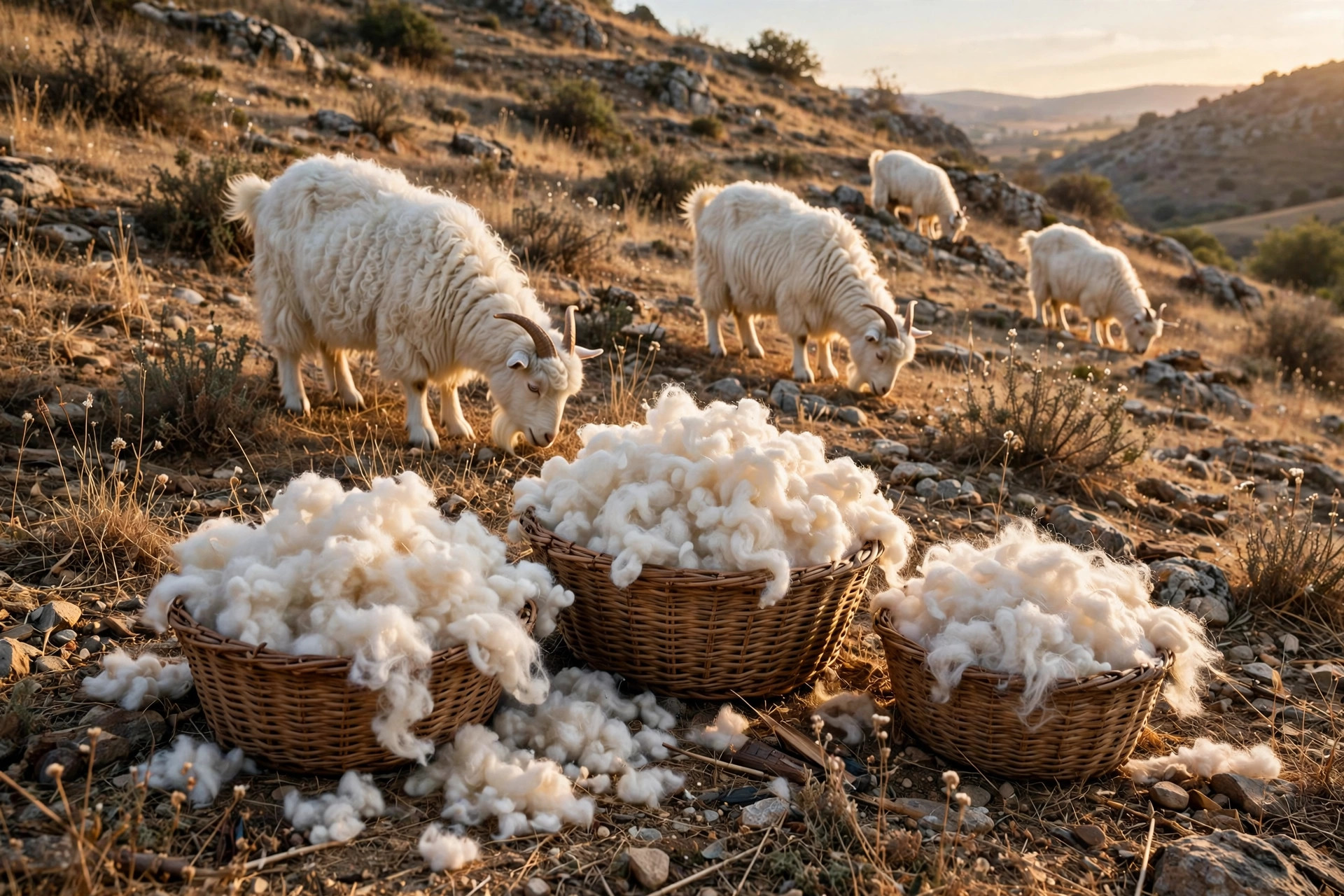
The Responsible Mohair Standard (RMS) is a voluntary standard maintained by Textile Exchange that certifies mohair from Angora goat farms meeting requirements for animal welfare and land management. Modeled on the approach of the Responsible Wool Standard, RMS adds a certified chain of custody so mohair can be traced from audited farms through scouring and spinning to finished knitwear and fabrics.
What RMS Covers
Mohair — the glossy, durable fiber shorn from Angora goats — comes from a concentrated global supply, with South Africa the dominant producing country. RMS farm requirements address how the goats are kept and handled: nutrition, shelter, health care, kidding, and shearing practice, together with management of the grazing land, including soil and biodiversity considerations. Shearing is a particular focus, because it is the moment of highest welfare risk in fiber production and the practice consumers most often question.
The standard emerged after public scrutiny of mohair sourcing led many brands to drop the fiber entirely. RMS gave the industry a middle path: keep supporting mohair farming communities, but only where practices are independently audited against a published standard. Farms can be certified individually or as part of a farm group, which helps smaller producers share the audit system.
How Certification and Chain of Custody Work
Approved certification bodies audit farms against the RMS requirements and audit each later handler — scourers, top makers, spinners, mills, and manufacturers — for chain of custody. Certified mohair must be identified and documented at every transfer, with volumes reconciled between what a site buys and what it sells as certified. Scope certificates and transaction certificates create the record a brand needs before it makes an RMS claim about a product.
As with other animal-fiber standards, the claim cannot be applied retrospectively. Mohair bought without the certified chain, however responsibly a buyer believes it was produced, cannot be sold onward as RMS material.
Claims and Who Uses RMS
Consumer-facing claims follow Textile Exchange’s claims rules for the standard’s name, logo, and content descriptions. Knitwear brands, luxury labels using mohair blends, and suppliers of mohair yarns and fabrics are the main users, often managing RMS alongside the Responsible Wool Standard because the two fibers are frequently blended and their farm systems are similar in structure.
For brands that left mohair during the controversy years, RMS also provides a documented basis for returning to the fiber. For buyers new to it, the practical first step is asking existing mohair suppliers whether they can source through certified chains — supply is smaller than for wool, so contracting early in the season matters.
FAQs
- What is mohair, and what does RMS certify?
- Mohair is the fiber of the Angora goat. RMS certifies that the mohair comes from farms audited for goat welfare and land management, tracked through a certified chain of custody to the finished product.
- How is RMS related to the Responsible Wool Standard?
- RMS follows the same model — farm welfare and land requirements plus supply-chain custody — adapted to Angora goats and mohair production. Both are maintained by Textile Exchange.
- Why did brands need a mohair standard?
- Public concern about goat handling, especially at shearing, led many brands to stop using mohair. RMS lets brands source mohair again with independently audited welfare requirements behind the claim.
Sustainability Certifications & Standards
This guide is part of the Apparel Search sustainability certifications series. Browse the full series below, or start from the manufacturing guides hub.
- Global Recycled Standard (GRS) Certification
- Recycled Claim Standard (RCS) Certification
- Organic Content Standard (OCS) Certification
- Responsible Wool Standard (RWS) Certification
- Responsible Down Standard (RDS) Certification
- OEKO-TEX Made in Green
- OEKO-TEX STeP Certification
- OEKO-TEX Eco Passport
- Digital Product Passport for Textiles
- Extended Producer Responsibility for Textiles
- France’s Repair Bonus for Clothing and Shoes
- Cradle to Cradle Certified® Products
- B Corp Certification
- Leather Working Group Auditing
- Bio-Based Leather Alternatives
Apparel Search: explore the manufacturing guides hub and production & sourcing resources for the fashion industry.
Please note: the Responsible Mohair Standard (RMS) is maintained by Textile Exchange, and its requirements are revised over time. This page is a general overview provided for information only — it is not legal or compliance advice, and it may not reflect the most current version. Always confirm the current requirements directly with Textile Exchange or an accredited certification body before making certification or sourcing decisions, rather than relying on this website.