Extended Producer Responsibility (EPR) for textiles is a policy approach that makes the company placing clothing, footwear, or household textiles on a market financially — and sometimes organizationally — responsible for those products at end of life. Under the European Union’s revised waste rules, member states are establishing textile EPR schemes, so brands selling in Europe will contribute to the cost of collecting, sorting, and treating textile waste.
The Idea Behind EPR
EPR shifts end-of-life costs from taxpayers and municipalities to the producers who put products on the market. In practice, a brand or importer registers in each market where a scheme operates, reports the quantities it places on that market, and pays fees to a producer responsibility organization that funds collection points, sorting, reuse, and recycling. The principle is long established for packaging, electronics, and batteries; textiles are the newer frontier as clothing volumes and disposal problems have grown.
A key design feature is eco-modulation: fees can be adjusted according to how durable, repairable, or recyclable a product is, so that harder-to-handle products cost their producers more. Done well, that turns end-of-life cost into a design signal — rewarding mono-material construction, durable make, and documented recycled content of the kind verified under standards such as the Global Recycled Standard.
How Schemes Operate
Although the EU framework sets common direction, schemes are organized nationally, and details — which products are in scope, fee structures, reporting formats, and collection targets — differ by country and evolve as schemes mature. France was an early mover with a textile EPR scheme administered through its eco-organization, and other member states are building or expanding their own under the revised EU waste framework. Companies selling across Europe should expect to register and report market by market rather than once for the whole EU.
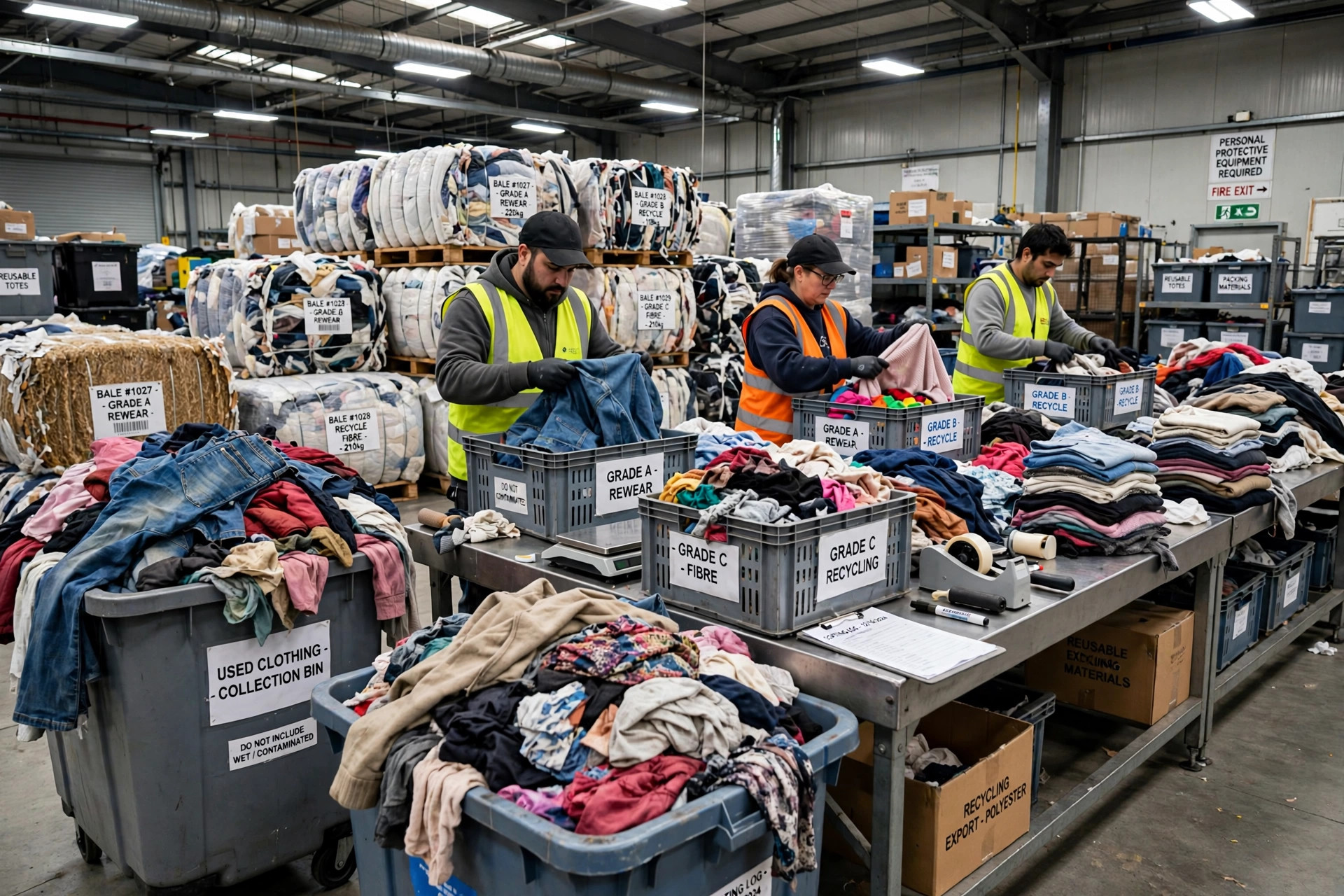
Collection funded by EPR is meant to keep textiles out of residual waste: separately collected clothing can be sorted for reuse first, then for fiber recycling, with only the remainder going to lower-value recovery or disposal. Separate collection of textile waste is itself an EU obligation, so municipal collection systems and producer schemes are developing together.
What It Means for Apparel Companies
For brands, EPR is first an administrative and data task — knowing exactly what is placed on each market, in what quantities and materials — and then a design and cost question, as eco-modulated fees make material choices financially visible. It connects directly to the Digital Product Passport, because composition data gathered for one obligation supports the other, and to national measures such as France’s repair bonus, which pushes the same market toward longer product life from the consumer side.
Because scheme rules change as they are implemented, companies should work from the official sources in each market they sell into and from their producer responsibility organization’s current guidance, rather than from general summaries — including this one.
FAQs
- Who counts as the producer under textile EPR?
- Generally the company that first places the products on that market — the brand, importer, or distance seller — rather than the factory that made them. Exact definitions are set by each national scheme.
- What do EPR fees pay for?
- The collection, sorting, and treatment of textile waste: collection points and logistics, sorting for reuse and recycling, and the administration and reporting systems behind the scheme.
- Do EPR fees depend on the product?
- Schemes increasingly use eco-modulation, adjusting fees by product characteristics such as durability and recyclability, so better-designed products can attract lower fees than hard-to-recycle ones.
Sustainability Certifications & Standards
This guide is part of the Apparel Search sustainability certifications series. Browse the full series below, or start from the manufacturing guides hub.
- Global Recycled Standard (GRS) Certification
- Recycled Claim Standard (RCS) Certification
- Organic Content Standard (OCS) Certification
- Responsible Wool Standard (RWS) Certification
- Responsible Down Standard (RDS) Certification
- Responsible Mohair Standard (RMS) Certification
- OEKO-TEX Made in Green
- OEKO-TEX STeP Certification
- OEKO-TEX Eco Passport
- Digital Product Passport for Textiles
- France’s Repair Bonus for Clothing and Shoes
- Cradle to Cradle Certified® Products
- B Corp Certification
- Leather Working Group Auditing
- Bio-Based Leather Alternatives
Apparel Search: explore the manufacturing guides hub and production & sourcing resources for the fashion industry.
Please note: Extended Producer Responsibility for textiles is maintained by the European Union and the national governments and schemes that implement it, and its requirements are revised over time. This page is a general overview provided for information only — it is not legal or compliance advice, and it may not reflect the most current version. Always confirm the current requirements directly with the European Commission or an accredited certification body before making certification or sourcing decisions, rather than relying on this website.