Laundry & Care
Microfibers & Your Laundry
What washing sheds, which fabrics shed it, and the habits that shed less — with the research quoted as the estimates it is.
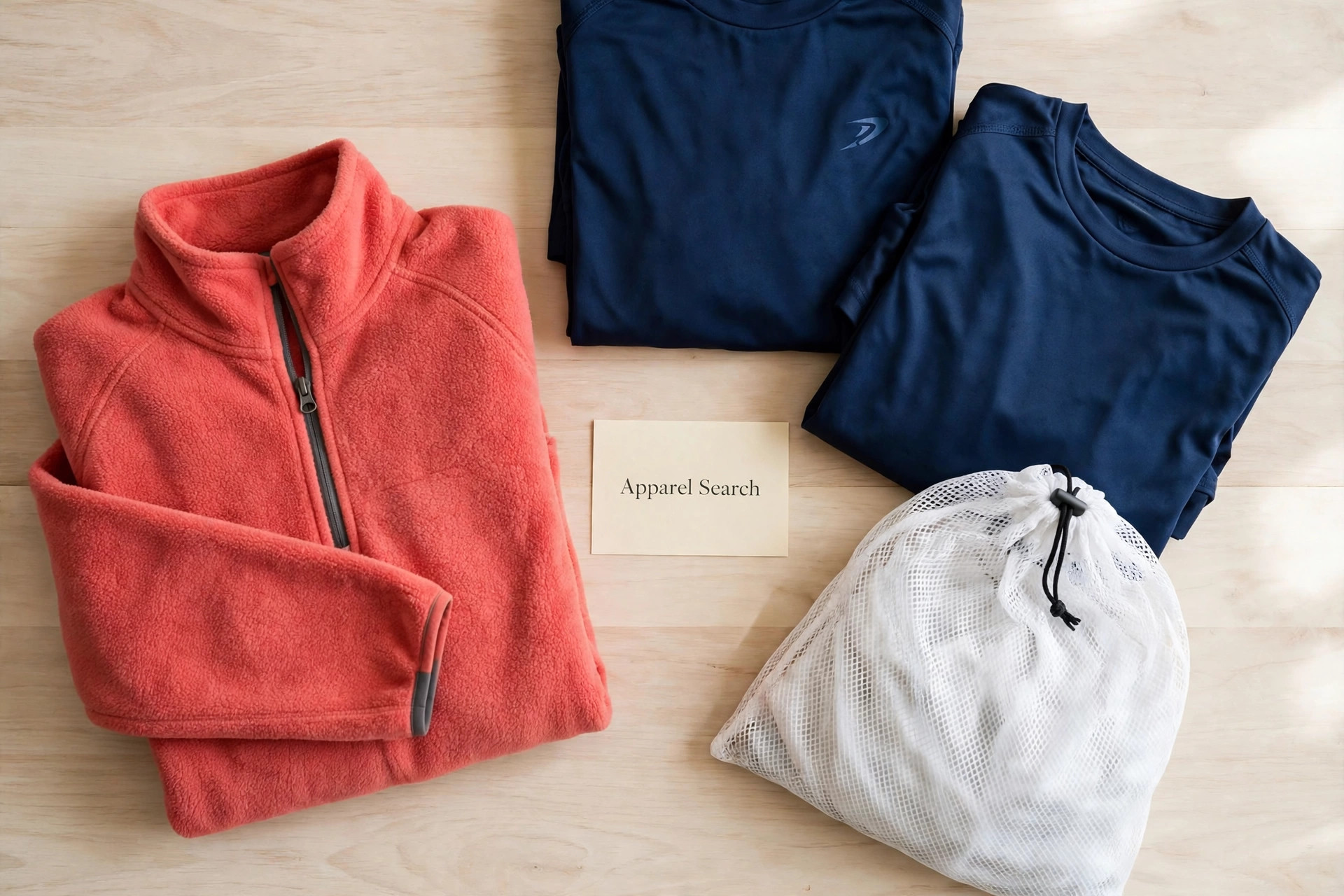
Every wash of synthetic clothing quietly sheds microscopic plastic fibers. They are called microfibers: tiny strands, usually under five millimeters long, that break off fleece jackets, leggings, athletic shirts and most other synthetic fabrics during washing, wearing and drying. The story is real but routinely overstated. The fibers are measurable, they do reach waterways, and a handful of laundry habits genuinely reduce them. They are also one source among several, and nobody selling a filter has the right to tell you that washing was the whole problem. This guide explains what microfibers are, which fabrics shed the most, what the research actually found, and the habits that cut shedding without turning laundry day into a chemistry project. The wider routines around it live in our laundry guide.
01 / Research
What the Research Shows
Two findings anchor most of the reporting on laundry microfibers, and both are worth quoting carefully, because both are estimates.
The ocean share. A widely cited assessment from the International Union for Conservation of Nature (IUCN, 2017) estimated that synthetic textiles contribute roughly 35 percent of the primary microplastics released into the oceans — “primary” meaning particles that enter the environment already microscopic, as distinct from fragments broken down from larger plastic. The IUCN was careful that this was a modeled estimate built on early data, and later studies have produced different figures, in both directions. Treat “about a third” as a reasonable order of magnitude for the laundry contribution to that one category of pollution — not as a measured constant, and not as a share of all ocean plastic.
The wash load. In laboratory work at the University of Plymouth (2016), researchers washed typical domestic loads and counted the fibers released. A 6 kg load of acrylic fabrics released on the order of 700,000 fibers in a single wash; polyester-cotton blends released far fewer, and polyester loads fell in between. The same program found that shorter, cooler cycles and gentler detergent conditions reduced the count. Later work by other groups has refined rather than overturned the picture: fabric construction matters at least as much as fiber type, and the first washes of a new garment tend to shed the most, settling down as loose surface fibers clear.
Two balancing facts belong in any honest account. First, natural fibers shed too — cotton and wool release plenty of fibers in the wash — but those fibers biodegrade rather than persisting as plastic, so the long-term concern is specific to synthetics. Second, many released fibers are captured in wastewater treatment sludge rather than reaching rivers; the share that escapes varies enormously by country and system. None of that makes the problem imaginary. It makes it a problem with proportions, which the habits below respect.
02 / Fabrics
Which Fabrics Shed the Most
Shedding follows construction more than marketing labels, but the pattern across studies is consistent enough to be useful.
The Heavy Shedders
Fleece and other brushed, lofted synthetics lead the list. The brushing process that makes fleece soft also raises millions of short fiber ends, and each wash works them loose. Loose-knit acrylic, economy fast-fashion knits cut from staple (short) fibers, and anything with a raised or fuzzy surface follow close behind. Our women’s fleece jacket guide covers the care side of the fabric that sheds most of all.
The Middle
Ordinary polyester and nylon garments of average construction shed moderately. Tightly woven fabrics — a dense rain shell, a smooth pair of travel pants — hold their fibers better than open knits of the same polymer, because there is simply less exposed surface to work loose.
The Lower Concern
Garments spun from long continuous filament yarns, tightly constructed, shed least among synthetics. Cotton, linen, wool and other natural fibers shed fibers that are not plastic and do not persist in the same way; blends sit between their components. The fiber-by-fiber background is in our polyester fiber definition.
The practical translation: if a small wardrobe change is available, it is not “never buy synthetics” — it is preferring well-made, tightly constructed synthetics over cheap, fuzzy, loosely knit ones, and keeping fleece for the jobs where its warmth earns its shedding.
03 / Habits
Wash Habits That Cut Shedding
None of these ask for new equipment. They are the same habits that make clothes last longer, which is why this page sits comfortably inside a laundry cluster rather than an alarm bell.
Wash synthetics less often
Fleece and gym clothes worn once for light duty rarely need the full cycle. Air them, spot-clean, and wash when dirty rather than by default. Every skipped wash is shedding that never happens, and most synthetic sportswear tolerates this well.
Run full loads
A full drum means garments move less and rub less against each other and the machine, and friction is the engine of fiber release. It is also the efficient habit anyway; our sorting and washing guide builds loads on the same principle.
Wash cold
Colder water is gentler on fibers and, in the Plymouth work, associated with lower release. Modern detergents are formulated for cold water, and most everyday loads lose nothing by it.
Choose shorter, gentler cycles
Long aggressive agitation sheds more than a short gentle cycle. For lightly soiled synthetics, the express or delicates program is enough — and it is kinder to the garment’s fit and surface.
Put fleece and delicates in a mesh bag
A fine-mesh laundry bag reduces garment-to-garment friction for the highest-shedding pieces. It is a physical barrier inside the wash, not a filtration claim; it also protects straps, hooks and lace, which is why bags earned their place in wash routines long before microfibers were a topic.
Air-dry when you can
Tumble drying works more fibers loose and blows some of them out with the exhaust. Line-drying synthetics — which dry fast anyway — avoids that last round of abrasion entirely and saves the energy as a bonus.
04 / Devices
Filters, Bags and Catchers
Three categories of products are sold for this problem. They are described here neutrally, because independent comparative testing is thin: treat every percentage on a package as the maker’s own claim, not a settled measurement.
External Washing-Machine Filters
A filter fitted to the machine’s drain line, catching fibers in the outflow before it reaches the drain. Plausible in principle — it intercepts the water that carries most shed fibers — but performance varies by model and installation, and the filter itself needs cleaning and eventual replacement. Some jurisdictions have begun requiring filtration on new machines; whether one suits your laundry setup is a plumbing question as much as an environmental one.
Fine-Mesh Laundry Bags
Beyond the friction benefit above, bags fine enough to hold a garment’s own shed fibers inside during the wash are sold for the purpose. Retained fibers go in the household trash rather than down the drain. The bags also slow water flow through the garment, so reserve them for the synthetics that shed most rather than bagging the whole load.
In-Drum Catchers
Floating balls and discs that tumble with the load and collect lint and hair on their surfaces. They demonstrably pick up visible lint; how much of the microscopic fraction they meaningfully capture is the part the evidence does not yet settle.
The honest ordering: the free habits in the previous section come first, because they are proven in the same studies that quantified the problem. Devices are a supplement for households that wash a great deal of fleece and synthetic sportswear, not a substitute for washing less and washing gently.
Perspective
The Honest Limits
Laundry is one source of microfibers and microplastics among several. Tire wear, road and household dust, paints, and the breakdown of larger plastic debris all contribute, and credible assessments differ on the ranking. A guide that told you your washing machine was the whole story would be selling something. What laundry offers is unusual agency: it is the source you personally control, at no cost, with habits that also extend the life of your clothes.
That second effect is arguably the larger one. The longest lever on clothing’s footprint is wear count: a garment worn for years sheds its early, heaviest washes once and then serves season after season, while a cheap replacement repeats the high-shedding new-garment phase over and over. Keeping clothes in service — through the repair ideas in our upcycling guide and the mending techniques in our visible mending guide — does more than any single wash-day decision. Care for the synthetics you own, buy better ones when you replace them, and let the estimates stay estimates.
Keep Going
The Laundry Cluster
More to Explore
- Laundry Guide — the hub guide for wash-day routines
- How to Sort and Wash Clothes — loads, temperatures and cycles by fabric
- Fabric Care Guides — care by fabric, from delicates to technical shells
- Slow Fashion Guide — keeping clothes in service longer
- Upcycling Clothes Ideas — new lives for worn garments
- Visible Mending & Sashiko — repair as decoration
- Microfibers: Fabric Definition — the glossary entry
- Microfiber: Fiber Definition — the fiber-level entry
- Polyester Fiber Definition — the synthetic behind most shedding
Questions
Common Questions
Do cotton and wool clothes shed microplastics too?
They shed fibers, but not plastic ones. Cotton and wool release plenty of strands in the wash — often more visible lint than synthetics — but those fibers are natural and biodegrade rather than persisting in waterways as microplastic. The microfiber concern is specific to synthetic fabrics: polyester, nylon, acrylic and their blends. A cotton-polyester blend sits in between, shedding a mix of both.
Which single change cuts shedding the most?
Washing less often. Every wash skipped is a wash with zero fiber release, and most fleece and sportswear worn lightly does not need a full cycle after every wear. Among in-wash changes, the laboratory studies point to a combination of full loads, cold water and shorter, gentler cycles — each reduces the friction and agitation that work fibers loose.
Is the first wash of a new garment really the worst?
Yes, in the research this pattern shows up consistently: new garments shed the most in their first few washes, as short loose fibers left from cutting and manufacturing work free, then the rate settles. It is one more reason the cheapest, most frequently replaced clothing carries an outsized share of the problem — each replacement restarts the high-shedding phase.
Should I stop buying synthetic clothes altogether?
That is a bigger decision than the laundry evidence requires. Synthetics earn their place in rain gear, swimwear and performance sportswear, and a well-made, tightly constructed synthetic garment worn for years is a different proposition from a loosely knit one replaced each season. If you want a proportionate response: keep synthetics for the jobs they do best, choose better construction when you buy them, and wash them gently and less often.