Apparel Search Consumer Guides
Upcycling Clothes: Ideas & Refashioning Guide
The shirt becomes a tote, the jeans become a skirt, the sweater becomes mittens: how transforming a garment into a different, better garment works, in the order to learn it.
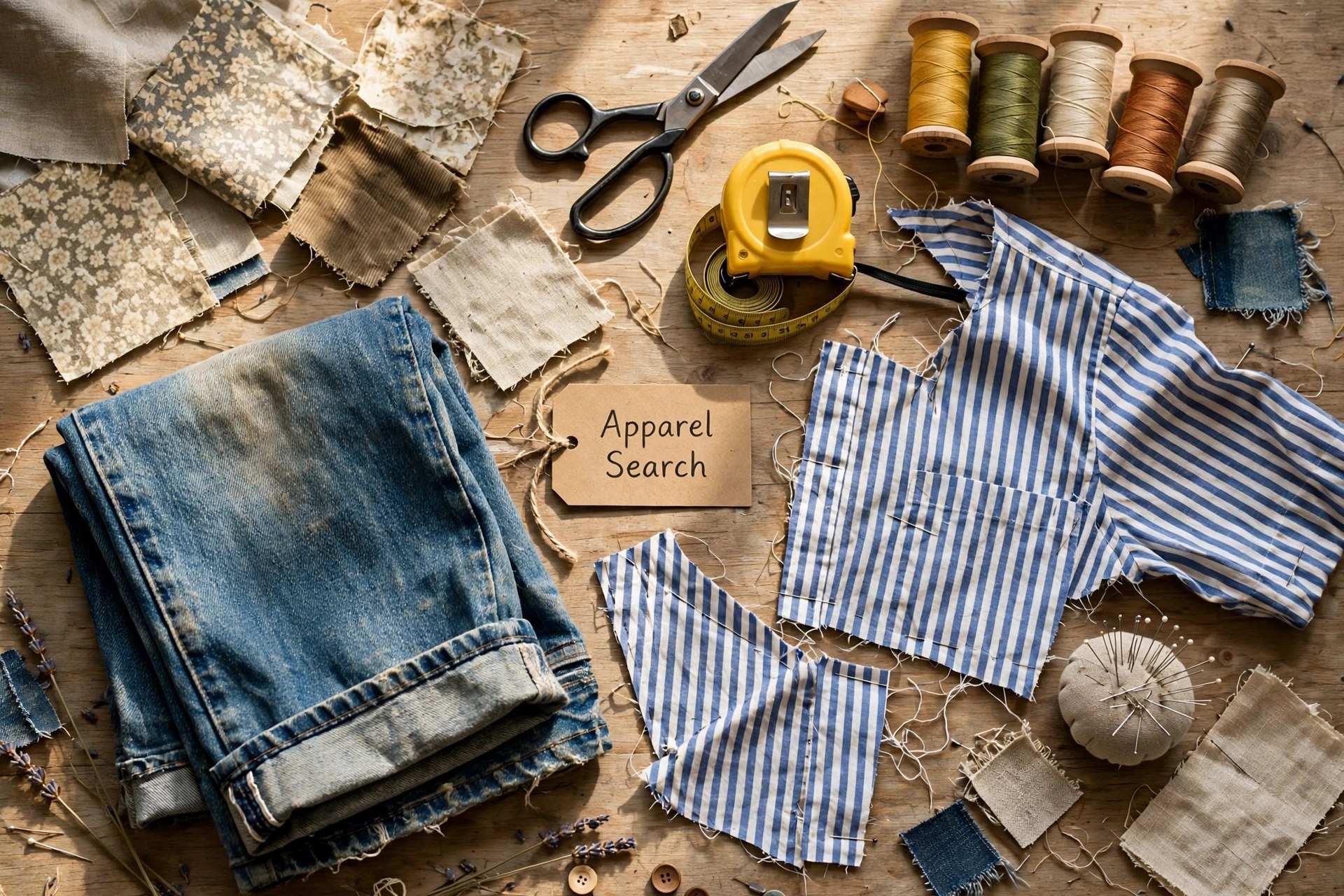
Every closet holds garments that are finished as what they are — the shirt that never fit, the jeans worn past wearing, the good suit in a cut nobody reaches for — but not finished as cloth. Upcycling, also called refashioning, is the craft of transforming those garments into different, better ones: not repairing them back to their old job, and not shredding them down to fiber, but cutting and sewing them into a new piece that keeps the fabric, the buttons, the pockets and often the character of the old one. This guide explains what the craft is, the order in which to learn it, the classic transformations that have worked for generations of home sewers, and how to choose the donor garments that make a project succeed. The companion page, refashioning projects for beginners, turns the ideas into first projects, step by step.
Search Apparel Search
Transformation, Not Repair — and Not Recycling
Three crafts share a wardrobe, and keeping them straight helps you pick the right one. Mending restores: the garment comes back as itself, and our visible mending guide covers the decorative wing of that craft — patches, darning and sashiko that show. Recycling destroys the garment to recover material: the fiber story is told in our guide to circular fashion and textile recycling. Upcycling transforms: the garment survives, changed. A pair of jeans that becomes a skirt has been upcycled; the waistband, pockets and denim all report for duty in the new piece, which is exactly why refashioned clothes so often look more interesting than new ones — they arrive with a history built in.
The Beginner Project Ladder
Refashioning rewards starting below your ambition. The ladder below is ordered by the skills each rung actually demands, and every rung produces something usable — which matters, because finished projects are what teach judgment.
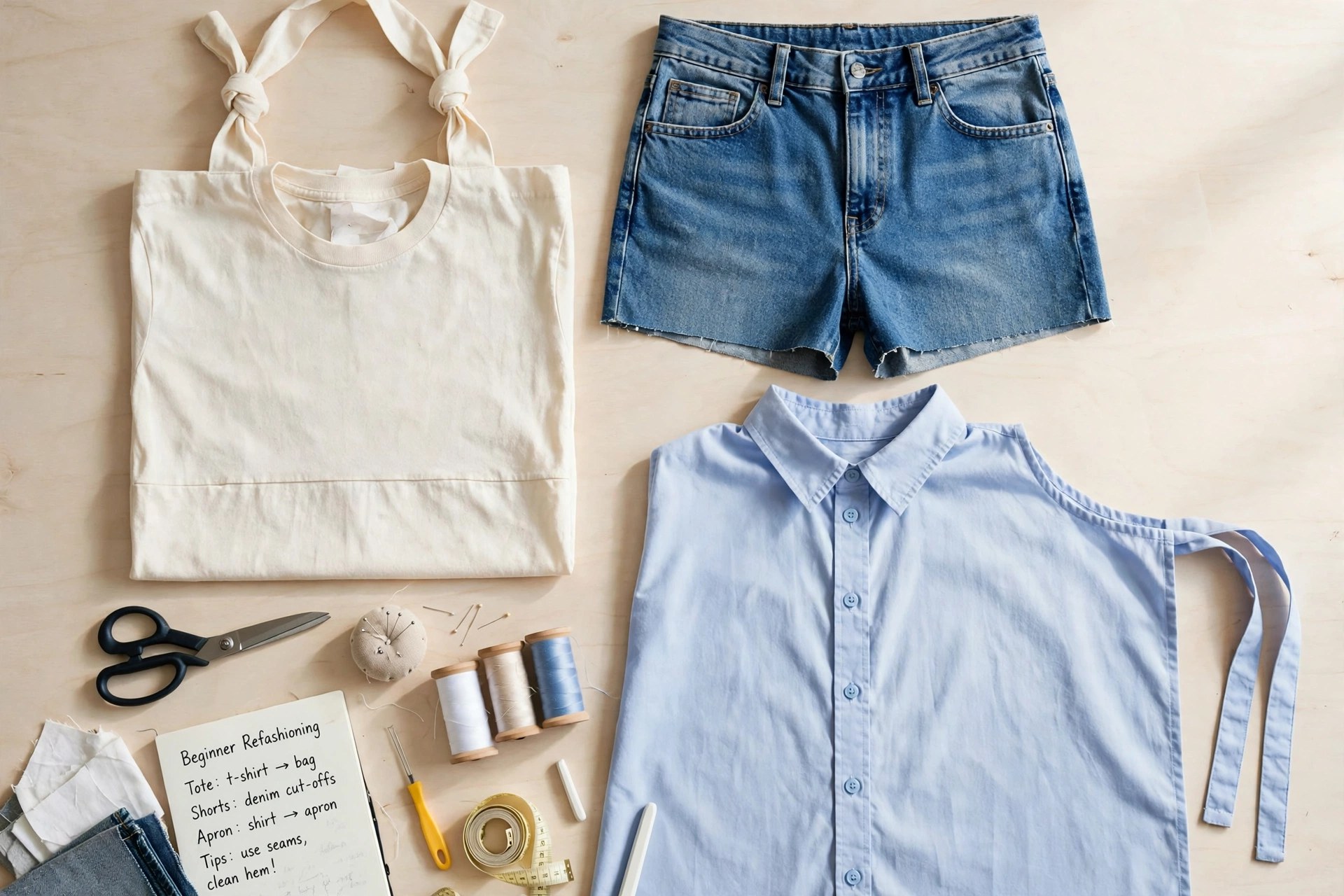
- Rung 1 — No-sew. Scissors, knots and ties only: t-shirt totes, cut-off shorts, no-sew scarves and headbands, a sweater turned into a cushion cover with the arms tied off. You learn to read fabric and cut with confidence.
- Rung 2 — Basic sewing. Straight seams and hems, by hand or machine: a shirt becomes an apron, jeans become a proper skirt with an inserted panel, a sweater becomes mittens or a hat. The gateway skills live in our hemming and basic hand sewing guide.
- Rung 3 — Confident. Working with fit and structure: a suit split into a two-piece, a dress restyled at the waist and hem, pieces combined — the top of one garment married to the skirt of another. This rung needs the seam vocabulary of our sewing basics: stitches and seams guide and, honestly, a few rung-2 failures behind you.
The Classic Transformations
Some conversions recur in every refashioning community because the donor garment is practically pre-built for its second life.
- Shirt to tote — or to dress. A button shirt already has finished edges, a placket and pockets; sewn shut at the hem it is a tote, and a large men’s shirt, belted and hemmed, is the classic shirt-dress conversion.
- Jeans to skirt, shorts or apron. Denim’s sturdiness survives everything. Cut-offs are the five-minute version; opening the inseams and inserting a fabric panel makes the skirt; the legs and waistband become a work apron with the original pockets exactly where hands expect them.
- Sweater to mittens or a hat. A felted wool sweater (one already shrunk in a hot wash is perfect) cuts without fraying, which makes it the kindest fabric a beginner can sew: mittens from the sleeves and body, a hat from the ribbed hem upward.
- Suit to two-piece. The confident rung’s signature: a dated suit separated and restyled — jacket cropped or worn over dresses, trousers hemmed to a current length — so the quality tailoring survives the dated silhouette.
Choosing Donor Garments
The donor decides the project more than the pattern does. Judge cloth, not fashion: hold the fabric to the light for thin spots, stretch knits and watch whether they snap back, and check the areas that wore hardest — collars, cuffs, seat, underarms — because transformation rarely rescues the weakest part of a garment; it usually inherits it. Then judge size: surplus is freedom. A donor a size or two too big gives seam allowance, panels and mistakes room; a donor that is already small can only shrink. Start at home — the closet organization guide’s audit pile is the classic first donor box — and thrift stores are the second source, where our thrifting and secondhand fashion guide covers judging garments on the rail. Natural fibers — denim, cotton, linen, wool — cut, press and sew most forgivingly; slippery synthetics and tired stretch jersey are advanced donors, however cheap.
Honest Skill and Time Framing
A tote takes fifteen minutes; a jeans-to-skirt conversion takes an evening; a restyled dress takes a weekend and a fitting or two. Refashioning’s real bargain is not speed — a new tote is faster to buy — it is a unique piece, made from cloth you already own, at the price of the learning. Budget the time as craft time, enjoy it as such, and let the savings be the bonus rather than the promise.
The Companion Project Guide
 Refashioning Projects for Beginners
Shop Sewing Supplies on Amazon
Fabric scissors, needles, thread, pins and a basic sewing kit — the small toolkit every project in this guide uses — are all stocked on Amazon.
Shop Clothing on AmazonThis link opens the Apparel Search shopping guide for Amazon, where the product links are kept in one place.
Dyeing is the upcycler's other lever: when a garment's shape is fine but its color is faded, stained or simply dull, new color can do what no amount of restyling will. Our dyeing clothes at home guide covers the fiber rules and the basic method, tie-dye patterns and techniques turn plain cotton into something unmistakably yours, and ice dye and reverse dye go the other direction — melting color in, or taking it away so a dark piece can start again.
Common Questions
What is the difference between upcycling, mending and recycling clothes?
Mending repairs a garment so it can go on being the same garment — a darned sock is still a sock. Recycling breaks a garment down into fiber or material for something new, usually industrially. Upcycling (or refashioning) sits between them: the garment itself is transformed, by cutting and sewing, into a different and ideally better item — jeans become a skirt, a shirt becomes a tote — with its fabric, buttons and character carried into the new piece.
What is the easiest first upcycling project?
The no-sew t-shirt tote: cut off the sleeves and deepen the neckline of a sturdy tee, tie or sew the bottom closed, and you have a shopping bag in fifteen minutes. It teaches the core refashioning judgment — reading a garment for what its fabric and seams can become — with scissors as the only tool, and our beginners project guide walks through it and the next rungs.
Where do the best donor garments come from?
From the back of your own closet first, then from thrift stores. Look for fabric quality rather than fashion: sturdy denim, real wool, heavy cotton and linen survive transformation; thin, stretched-out jersey does not. Buy or choose a size or two larger than you need — surplus fabric is the refashioner's seam allowance, and a too-small donor can only ever become something smaller.
Do I need a sewing machine to refashion clothes?
No. A whole first rung of projects is no-sew (totes, cut-offs, tied and knotted pieces), and hand sewing covers most simple transformations — hems, aprons, mittens — at a slower pace. A machine earns its place when projects get larger or fabrics get heavier, and our learn to sew guide lays out the honest starter kit for both routes.