Apparel Search · Home Dyeing
Ice Dye & Reverse Dye
Two opposite crafts in one guide: ice dye, which lets melting water mix the colors for you, and reverse dyeing, which takes color away from dark garments — with the bleach safety rules treated as seriously as they deserve.
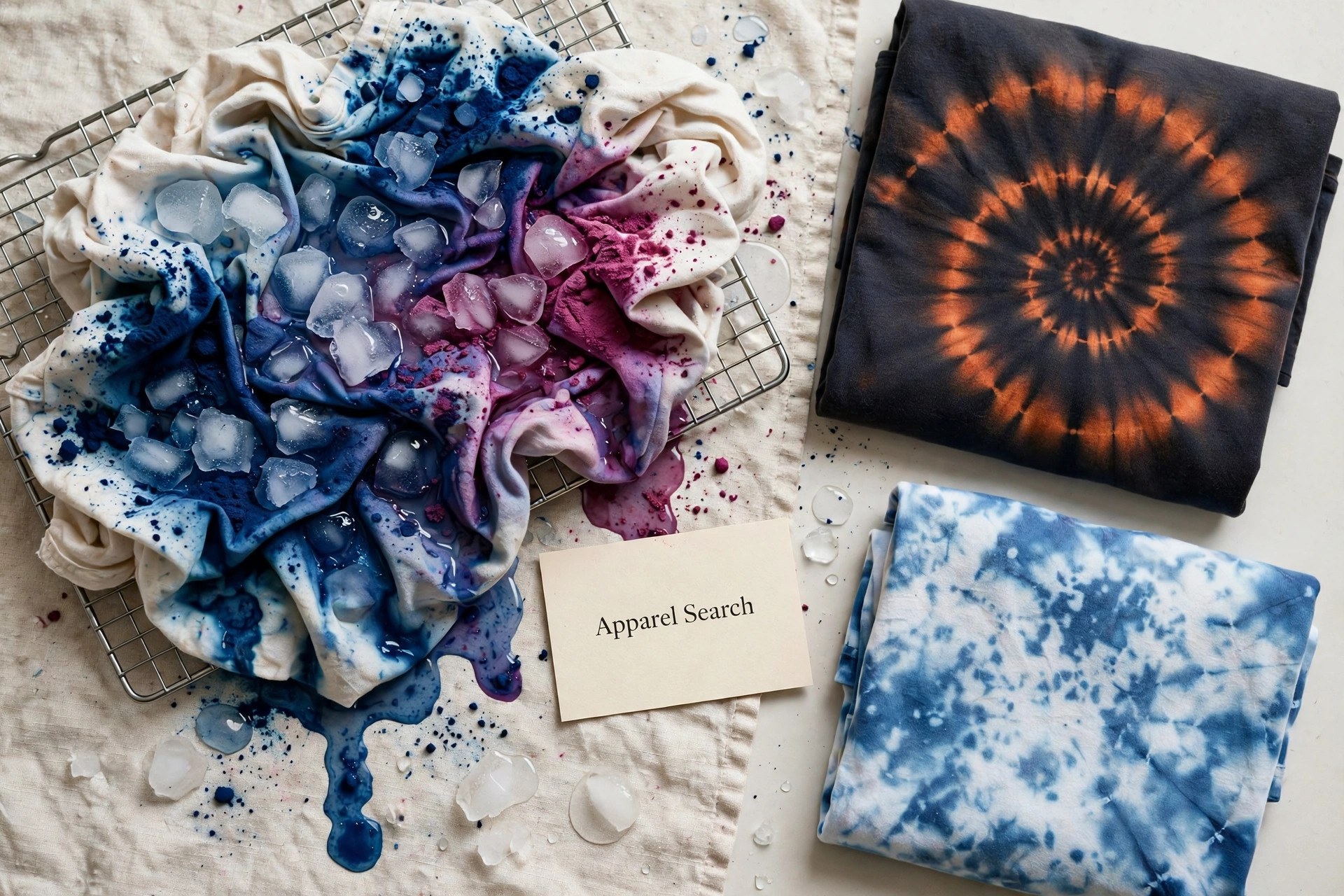
Most dyeing adds color under your control. These two techniques trade some of that control for effects no careful hand can fake. In ice dye, powdered dye sits on a bed of ice above the fabric, and as the ice melts the water carries the color down in slow, wandering paths. In reverse dyeing, the direction reverses entirely: color is removed from a finished dark garment, with a color remover or with bleach, leaving patterns of light where the dark used to be. Both build on the foundations in dyeing clothes at home — the same fibers, the same dye class, the same soda ash.
01 / Ice Dye
Ice Dye: Letting Meltwater Do the Mixing
Ice dye uses the same fiber-reactive dyes as tie-dye, applied dry instead of mixed. Its signature effect is splitting: many dye colors are blends, and meltwater moves their components at different speeds, so a single purple can arrive as violet with halos of blue and pink. No two pieces ever match, which is rather the point.
Soak and arrange
Pre-wash the garment and soak it in soda ash solution (at least 20 minutes), wring it damp, then arrange it — scrunched, pleated or spiral-folded — on a rack set over a container that will catch the meltwater.
Cover it in ice
Mound ice over the whole garment. Cubes give an even, gentle flow; crushed ice hugs the folds and melts faster for bolder color.
Sprinkle the dye powder
With gloves on and a mask over your nose and mouth (the dye is dry powder at this stage), spoon dye powder over the ice. For stronger color, the variation called dye-under-ice puts the powder directly on the fabric first, with the ice on top.
Let it melt, then cure
Leave the piece undisturbed until every cube has melted, then let it cure, damp, for the hours your dye's label directs — commonly up to 24 hours from application for the full bond.
Rinse and wash
Rinse cold, then warm, until the water runs nearly clear, and wash the piece on its own the first time, as with any fresh dye work.
Set expectations the way the craft demands: placement, fold depth, ice shape and room temperature all vote on the result. Keep quick notes on what you did, because the piece you fall in love with can only be repeated approximately — and the approximation is part of the charm.
02 / Reverse Dyeing
Taking Color Away: Remover vs. Bleach
Reverse dyeing starts from a garment that already has color and removes it in a pattern — bound or folded first, exactly as in tie-dye, so the removal follows the folds. There are two ways to remove color, and they are not interchangeable:
Color remover (the gentle first attempt)
Fabric color removers — discharge products, typically built on sodium hydrosulfite — strip dye from cotton and many other fabrics in a hot bath. They are noticeably kinder to the fibers than bleach, but the result is usually a soft cream or off-white rather than a pure white, the bath carries a strong sulfur smell that calls for ventilation, and a few dyes simply refuse to discharge. Follow the product's label for temperature and time.
Household bleach (the dramatic one)
Ordinary chlorine bleach (sodium hypochlorite) works fast and hard, and produces the famous reverse-dye look: a black cotton shirt spirals out rust-orange, because black fabric dyes are mixtures whose components bleach away at different rates. The orange is not a mistake; it is the garment's dye recipe showing. Bleach is also the option with real hazards and real fiber costs, which is why it gets its own section next.
The working pattern for either agent is the same: fold and bind the garment, apply or immerse the remover, watch the color lift (bleach acts in minutes; remover baths take longer), then stop the process — rinse thoroughly, and for bleach, a soak in a hydrogen peroxide solution is the customary way to neutralize remaining chlorine before washing. Then the piece can be worn as-is, or dyed straight over, which is section 04.
03 / Bleach Safety
Bleach Safety, Taken Seriously
- Never mix bleach with ammonia, or with acids such as vinegar or many toilet-bowl cleaners. The mixture releases toxic gas that can seriously injure your lungs. Bleach is used with water, and only water.
- Ventilate like you mean it. Work outdoors when you can, or with windows open and air moving. Bleach vapor irritates eyes and airways even outdoors-adjacent.
- Gloves and eye protection, every time — plus clothes and shoes you have already said goodbye to, and protection for the floor and nearby surfaces.
- Bleach weakens fibers. Cotton tolerates a brief, diluted exposure, but strong or repeated bleaching leaves fabric thinner and prone to sudden holes. Wool and silk are destroyed by chlorine bleach — never bleach them — and many synthetics yellow or are damaged. For a garment you care about, color remover is the safer first attempt.
- Dilute and work in short exposures (a bleach-and-water spray around half and half is a commonly used starting point for pattern work — your product's label governs), check the lift every minute or two, and rinse and neutralize promptly when the color reaches what you want. Always test on a hidden spot first.
- Store it like a chemical: in its original labeled container, away from children and pets, never beside ammonia or acid cleaners.
04 / Dyeing Over
Dyeing Over a Reverse-Dyed Piece
A reverse-dyed garment that has been thoroughly rinsed, neutralized and washed can go straight into an ordinary dye process — the tie-dye folds and soda ash soak, or a fresh round of ice dye, will work on it exactly as on a new garment. Two adjustments of expectation: the base is cream, rust or pale gold rather than white, so every dye color reads warmer over it; and areas the remover barely touched will stay deeper, giving an automatic two-tone depth.
Sometimes the best finish is no overdye at all. A bleach spiral on black cotton, a remover-softened vintage tee, an ice-dyed overshirt — these are finished pieces, rescued from the donation pile by subtraction or by weather. That rescue instinct is the heart of our upcycling clothes ideas and the repair mindset in the visible mending guide: the garment already exists, and the craft is in seeing what it can become.
Questions
Common Questions
Why did my ice dye come out pale?
Usually one of three causes: too little dye powder for the garment's weight, a garment soaked so wet that the meltwater arrived pre-diluted, or a cure cut short. Use a generous hand with the powder, wring the soda-ash soak out well, and give the piece its full curing time before rinsing.
What is the difference between color remover and bleach?
Color remover discharges the dye itself and is relatively gentle on fibers, but usually leaves a cream or off-white and cannot lift every dye. Bleach oxidizes color away faster and more dramatically — black cotton typically goes rust-orange — but it weakens fibers, destroys wool and silk, and demands strict safety handling.
Can I bleach a polyester or wool garment to lighten it?
No. Chlorine bleach damages or yellows many synthetics and literally dissolves protein fibers like wool and silk. Color removers are also unreliable on synthetics. Lightening only works dependably on cotton and other plant fibers; for protein and synthetic garments, overdyeing darker is the honest option.
My black shirt turned orange with bleach. Did I do it wrong?
You did it exactly right. Black fabric dye is a blend of component colors, and bleach strips them at different rates, leaving the rust and orange family behind. It is the signature reverse-dye look — wear it as it is, or overdye it, knowing the warm base will warm every color you add.
Keep Going
The Home Dyeing Family
Reverse work starts where the foundation guide starts: the fiber rules decide what can be stripped, soaked and re-dyed. The tie-dye guide supplies the folds that pattern both the color going on and the color coming off.