Apparel Search Garment Care Guides
Visible Mending Guide
Repair as decoration: darning, patching and sashiko stitching that fix the garment properly — and are meant to be seen.
Every repair tradition before this one taught the same lesson: match the thread, hide the stitches, make the damage disappear. Visible mending keeps the repair and drops the disguise. The patch is patterned, the darning yarn is brighter than the sweater, and the rows of stitching march across the jeans in thread chosen to be noticed. The garment comes back into service with its history on display — which, for a favorite piece, is exactly the point.
This guide is the decorative wing of the Apparel Search Garment Care Guide. Its sibling, basic clothing mending, teaches the classic repairs — buttons, seams, patches, darning, zipper first aid — with a discreet finish in mind. Everything here starts from those same sound repairs and asks one extra question: what if the fix looked good on purpose? The two technique guides below go deep on the methods; this page maps the territory and covers the judgment calls — when a mend is structural, when it is decoration, and which garments take a visible repair best.
Search Apparel Search
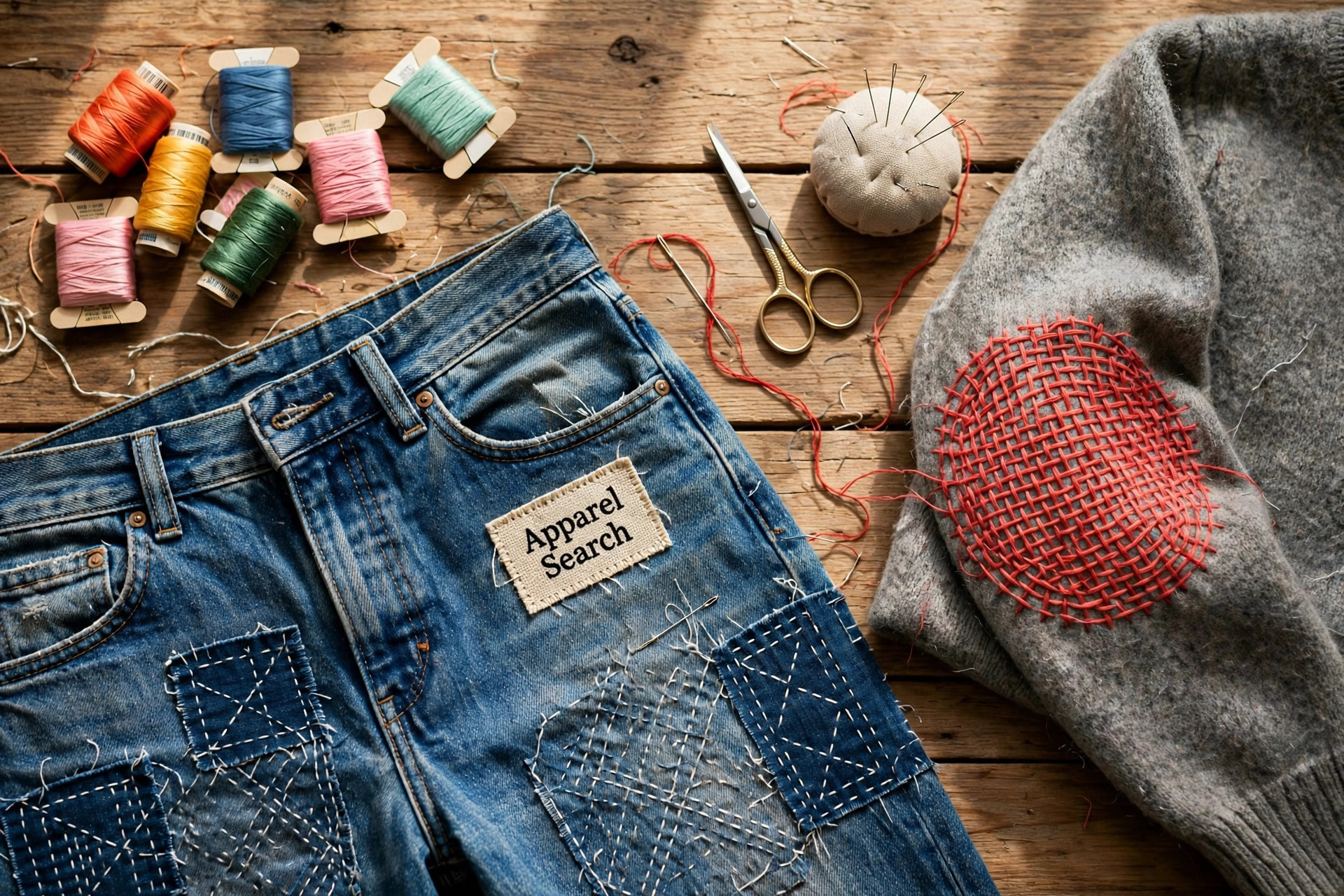
The Guides in This Section
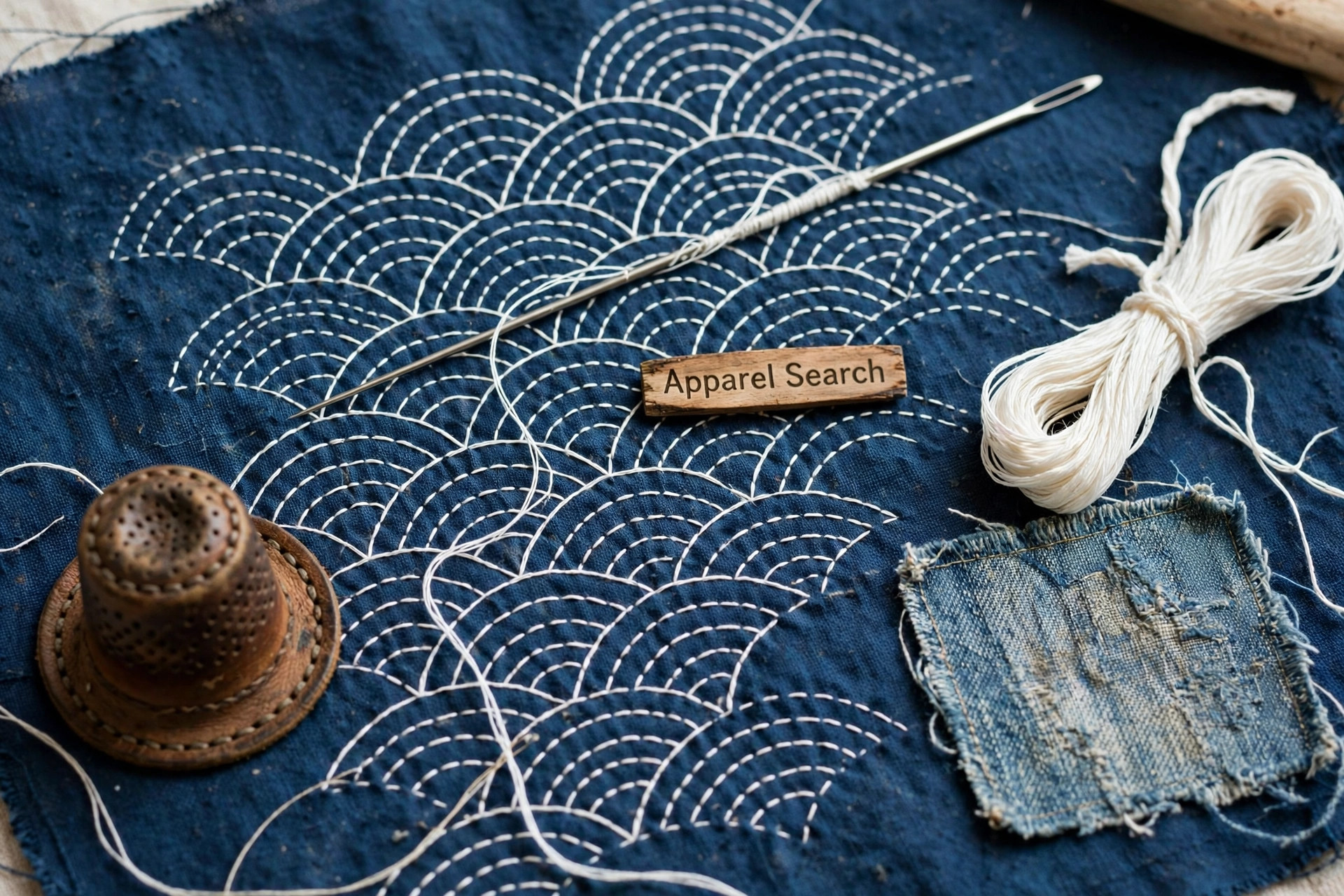 Sashiko Mending for BeginnersThe Japanese running-stitch tradition: how sashiko and boro grew from reinforcement into art, the stitch itself, and a first project — patching worn jeans — walked through step by step.
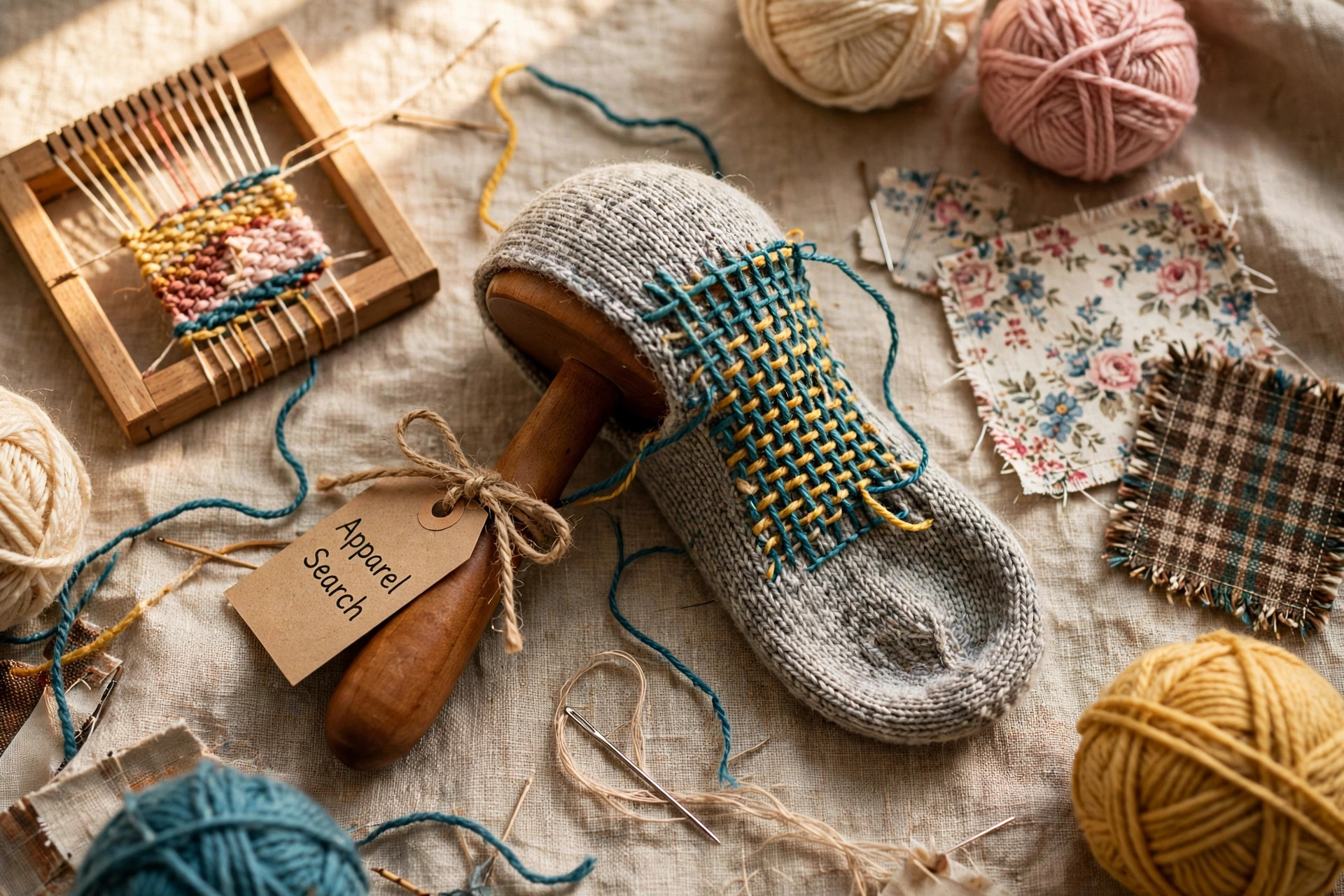 Decorative Darning and PatchingWoven darning freehand and on a loom, Swiss darning for knits, and the patch styles — on top, underneath, reverse appliqué — with the thread and color choices that make a mend sing.
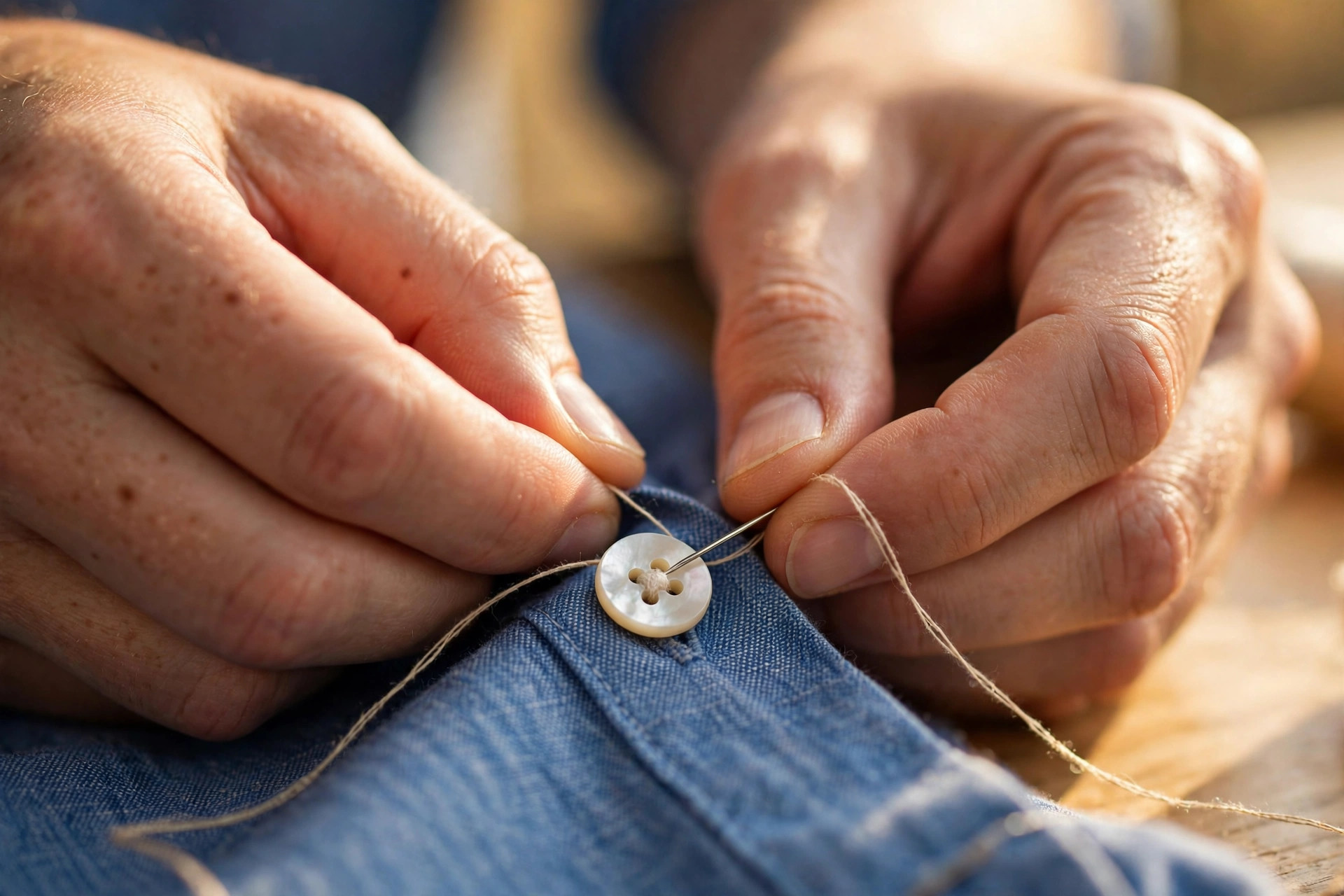 Basic Clothing MendingThe foundation repairs every wardrobe needs — buttons, split seams, patches, darning and zipper first aid — taught straight, for mends visible or invisible. Master these first; decorate second.
First, the Repair Has to Work: Structural vs Decorative
The one rule that separates visible mending from mere embellishment: decoration is the finish, never the structure. A mend does its job in three ways, and a good visible repair usually layers all three.
- Reinforcement — stitching or a patch added before failure, over fabric that has worn thin but not through. This is the oldest form of the craft: sashiko began as exactly this, rows of running stitch quilting a worn layer to a fresh one so the pair outlasted either alone.
- Coverage — a patch or a woven darn that bridges an actual hole. The new material must anchor in sound fabric on every side; stitching that lands in thin, tired cloth tears out under the same strain that made the hole.
- Decoration — the visible layer: contrast thread, a patterned patch, stitched motifs over the repair. Decoration rides on top of a sound mend. It never substitutes for one.
Read any worn garment with those three jobs in mind and the right technique usually chooses itself. Thin but whole? Reinforce. Holed? Cover, then decorate. Sound but stained or faded in one spot? That is decoration's home ground — an embroidered motif or an appliqué patch turns a blemish into the best part of the garment.
The Technique Map
Patching
The most approachable repair: a piece of cloth secured over (or under) the damage. Patches carry the load that worn fabric cannot, and because the patch is a design element by nature, patching is where most visible menders start. Styles, edges and placement are covered in the darning and patching guide.
Darning
Darning rebuilds the fabric itself, weaving new yarn or thread across a hole in a warp-and-weft grid. On knits it restores the exact spot that failed — heels, toes, elbows, moth holes — and in a contrasting yarn the little woven grid reads as a deliberate design. Freehand, loom and Swiss darning are compared in the darning and patching guide.
Embroidery over wear
Decorative stitching worked directly over a stain, a scorch mark, a small hole backed with fabric, or a faded patch. It asks for the least structural skill — the garment underneath must still be sound — and offers the most freedom: motifs, monograms, vines wandering out of a pocket. A hoop, a needle and embroidery floss are the whole kit.
Sashiko
The Japanese tradition that binds patching and embroidery into one system: rows of simple running stitch that quilt a patch and garment together, reinforcing and decorating in the same pass. Sashiko has its own needles, thread and centuries of pattern language, and it rewards beginners immediately. It has its own guide.
The Short Version
Fix it properly first — patch or darn anchored in sound fabric — then make the fix beautiful on purpose. Match the technique to the damage: reinforcement stitching for thin fabric, a patch or darn for holes, embroidery for sound fabric with a blemish. Choose thread and patch fabric that contrast when you want the mend to show, and let the garment's story stay visible.
Which Garments and Fabrics Take a Visible Mend?
Denim is the classic canvas: sturdy, stitch-friendly, and already culturally fluent in patches. Jeans knees, inner thighs and back pockets are the most-mended spots in the modern wardrobe, and sashiko on denim is where the contemporary craft found its audience. Our denim fabric guide explains the cloth you are stitching through.
Knits and sweaters take darning beautifully — a woven darn flexes with the knit, and Swiss darning can rebuild the stitch pattern itself. Wool sweaters are the prestige project: worth the yarn, worth the care.
Cotton and linen shirts, dresses and workwear patch cleanly and embroider well. A worn elbow, a torn pocket corner, a stain at the hem — all fair game.
Poor candidates: very stretchy fabrics (repairs pucker and strain differently from the cloth), delicate silks and sheers (the mend outweighs the garment), and waterproof or coated technical shells, where every needle hole is a leak — those belong to tape and seam sealer, not thread. When a garment's fault is fit rather than damage, that is alteration, and the clothing alterations guide covers what to ask of a tailor.
Starter Supplies
Visible mending is a low-cost craft: most of the kit is already in a basic sewing box, and the basic mending guide lists that foundation kit. The visible-mending additions are few.
- Thread with presence — perle cotton and six-strand embroidery floss for stitching that shows; sashiko thread and long sashiko needles if the Japanese route appeals; yarn matched to your knits for darning.
- Patch fabric — a small stash of scraps: denim offcuts, quilting cotton, worn-out shirts retired into patch stock. Save the good garments you finally retire; they mend the next ones.
- A thimble — a palm thimble for sashiko, a standard thimble for everything else. Denim and layered patches are hard on fingers.
- Marking tools — chalk or a water-erasable pen for stitch lines and patch outlines; sashiko patterns are often drawn or transferred before a stitch is sewn.
- The usual allies — small sharp scissors, pins or basting thread, an embroidery hoop for flat decorative work, and a darning mushroom or small loom if socks are on the repair list.
Shop Mending Kits and Supplies on Amazon
Needles, perle cotton, embroidery floss, darning tools and starter mending kits are gathered on the Apparel Search shopping guide:
Shop Mending Supplies on AmazonThis link opens the Apparel Search shopping guide for Amazon, where the product links are kept in one place.
Common Questions
What is visible mending?
Visible mending is repair that is meant to be seen. Instead of matching thread to fabric and hiding every stitch, the mender chooses contrasting thread, a patterned patch or decorative stitching, so the fix becomes part of the garment's design. The repair still has to work — a visible mend is a real structural repair first and a decoration second. The approach grows out of traditions like Japanese boro, where patched and stitched cloth was kept in service for generations, and it suits anyone who would rather celebrate a garment's history than disguise it.
Is a visible mend as strong as an invisible one?
It can be stronger. Strength comes from the structure underneath — a patch anchored in sound fabric, stitching that spreads the strain, darning woven firmly across a hole — and none of that depends on the thread matching. A sashiko-reinforced patch, where rows of stitching quilt the patch and garment together, is often tougher than the invisible alternative. What weakens a mend is skipping the structure: a few decorative stitches over an unsupported hole look charming for a week and tear out by the fifth wear.
What should a beginner mend first?
Something worn but not worn out, in a forgiving fabric: a pair of jeans with a thinning knee, a sweater with a small moth hole, a shirt with a worn elbow. Denim and medium-weight cotton are the kindest canvases because they hold stitches well and show them clearly. Start with a patch or a simple darn, keep the first project small enough to finish in one sitting, and let it be imperfect — a slightly wonky first mend that gets worn beats a perfect one still pinned to the fabric.
Visible or invisible mending — which should I choose?
Choose by garment and by wearer. Invisible mending suits formal clothing, workwear with a dress code, and any piece whose owner simply prefers the repair not to show; our basic clothing mending guide teaches those matched, discreet repairs. Visible mending suits everyday clothes, children's clothes, denim and knits — and any garment whose owner likes the idea of the repair telling a story. Many wardrobes use both: invisible on the interview suit, a bright woven darn on the favorite sweater.
Mending Is Garment Care
A repaired garment is a garment that skips the landfill and the replacement purchase at once. Visible mending lives inside the Garment Care Guide alongside washing, stain removal and storage, and it is the hands-on heart of making clothes last longer — the repair habit, done with flair.