Apparel Search Garment Care Guides
Sashiko Mending for Beginners
Japan's running-stitch tradition: reinforcement that became an art form, taught from the first loaded needle.
Of all the repairs in the visible mending guide, sashiko is the one with a centuries-deep pedigree. Sashiko — the word means "little stabs" — is a Japanese embroidery technique built from a single humble stitch, the running stitch, worked in even rows through layered cloth. It began as pure practicality: in the cold north of rural Japan, cotton was precious and winters were hard, so worn garments were patched and then quilted together with line after line of stitching, each row adding warmth and strength. Generation by generation, those patched textiles — called boro — became layered works of indigo and white that museums now collect.
That history deserves a sentence of respect before any technique: sashiko is a living Japanese tradition, not a generic aesthetic, and learning it well means learning where it comes from. The good news for beginners is that the tradition is also genuinely welcoming — the stitch is the simplest in sewing, the supplies are few, and a first project can be finished in an evening.
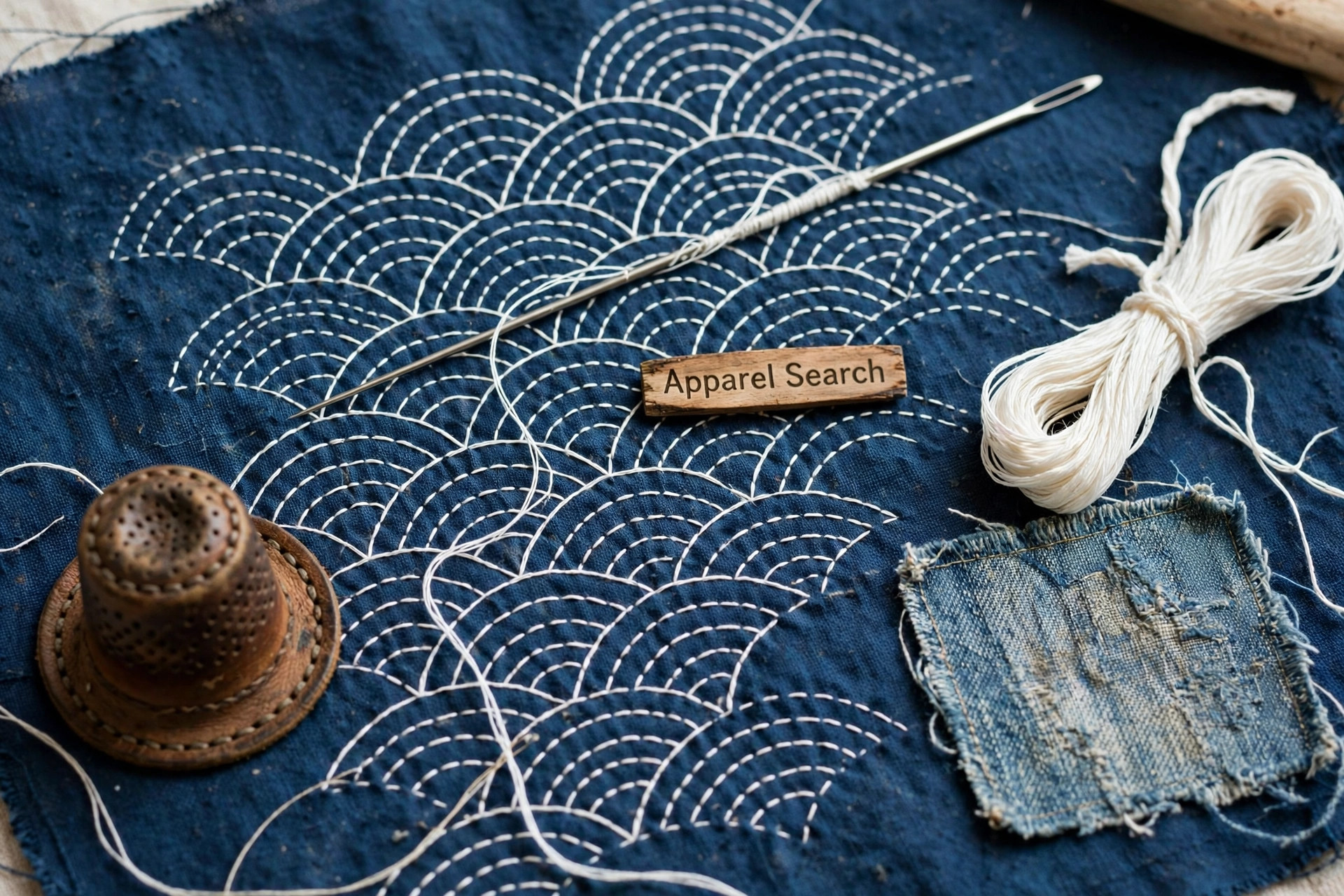
The Stitch: Loading the Needle
Sashiko's running stitch differs from the beginner's one-stitch-at-a-time version in one mechanical way: several stitches are loaded onto the needle before it is pushed through. The needle weaves in and out of the cloth three or four times, gathering a small pleat of fabric, and then a palm thimble — a disc of leather or metal worn against the palm — pushes the needle's eye end through in one rocking motion. The result is a faster rhythm and, with practice, strikingly even stitches.
Aim for consistency over size. Traditional work often runs about three stitches on top to two beneath per inch of line, but an even, relaxed spacing of your own beats a strained copy of anyone's count. Keep the thread tension gentle — sashiko lines should lie flat, never pucker the cloth — and let rows sit a consistent distance apart. Our stitches and seams guide covers the plain running stitch and its hand-sewing relatives if the basics themselves are new.
Layers: Why Sashiko Is Structural
A line of sashiko across a single layer is embroidery. A line of sashiko through two or three layers — the garment, a patch beneath it, sometimes a soft backing cloth — is construction. The stitches quilt the layers into one thicker, stronger textile, spreading strain across the whole stitched field instead of concentrating it at the hole's edge. That is the entire secret of boro's durability, and it is why a sashiko patch on jeans outlasts a patch merely sewn around its rim: rim stitching holds the edges, but sashiko holds everywhere.
The traditional palette — white thread on indigo-dyed cotton — is history made visible: indigo was the common dye, undyed thread the common thread. Modern menders use every color, and colored thread on contrasting cloth is a legitimate contemporary dialect of the craft. What does not change is the grammar: running stitch, layered cloth, patterns built from repetition.
The Patterns
Classic sashiko patterns (moyozashi when the pattern is drawn in lines, hitomezashi when stitched on a counted grid) carry centuries of meaning: seigaiha, overlapping quarter-circles like ocean waves; asanoha, a geometric hemp-leaf star; shippo, interlocking circles standing for the seven treasures; tortoiseshell, arrow-feather and wave patterns besides. Beginners are not expected to start there. Parallel straight lines, a simple grid, or rows of running stitch following the patch's edge teach the rhythm first — the patterns wait patiently, and pre-printed sashiko cloth panels exist precisely for learning them. Patterns are traditionally marked with a hera creasing tool, chalk or transfer paper before stitching begins.
A First Project: Sashiko-Patching Worn Jeans
- Choose the damage. A knee wearing thin, an inner thigh rubbed pale, a pocket corner tearing away — jeans are the ideal first canvas, and our denim fabric guide explains the twill you will be stitching through.
- Cut a patch bigger than the problem. Denim or sturdy cotton, extending at least an inch beyond the worn area on every side, so its edges land in sound fabric. Place it under the hole for the classic boro look, or on top if the surrounding denim is too tired to hold stitches.
- Press and pin. Iron everything flat, trim loose threads from the hole's edge, and pin or baste the patch so it cannot creep. Ten minutes of preparation saves every later frustration.
- Mark your lines. Chalk parallel lines across the patch, roughly a quarter to a half inch apart, extending a little past the patch edges onto the jean. Straight and evenly spaced matters more than close.
- Stitch the rows. Thread a long sashiko needle with white thread, knot, and work row by row — loading three or four stitches, pushing through with the palm thimble, easing the fabric off the needle. Keep the lines lying flat; if the cloth puckers, your tension is too tight.
- Cross or continue. One direction of rows is a complete, traditional mend. A second pass at right angles makes a grid and doubles the reinforcement — a good choice for inner thighs and other high-strain spots.
- Press again and wear. A final press settles the stitching. The patch is now part of the jeans — stronger than the day they were bought, and better looking for the story it tells.
Supplies
- Sashiko needles — long (about 2 inches), sharp, with a large eye; sold in mixed packs.
- Sashiko thread — matte, non-divisible cotton, traditionally white; one skein mends a great deal of denim.
- Palm thimble — leather or metal disc; the tool that makes the loaded stitch comfortable.
- Marking tools — chalk, hera marker or water-erasable pen; pre-printed pattern panels for learning the classics.
- Patch cloth — indigo cotton for tradition, any sturdy woven for the modern dialect; thrifted shirts and retired jeans are honorable sources.
Common Questions
Is sashiko hard for a complete beginner?
No — it is one of the friendliest entry points in all of hand sewing. The stitch itself is the running stitch, the first stitch most people ever learn: the needle simply weaves in and out of the fabric in a line. Everything else is rhythm and patience, not difficulty. Beginners start with straight parallel rows on a patch, where slight unevenness reads as handmade charm, and graduate to the traditional geometric patterns once their spacing evens out. If you can thread a needle, you can begin sashiko today.
What thread and needle does sashiko use?
Traditional sashiko uses a long needle — around two inches — with a large eye, and a matte, non-divisible cotton thread made for the craft, most often white on indigo cloth. The long needle matters: sashiko is sewn by loading several stitches onto the needle at once and pushing it through with a palm thimble, which is faster and more even than stabbing stitch by stitch. Perle cotton or embroidery thread can substitute while you learn, but proper sashiko thread gives the flat, slightly textured line the patterns are drawn for.
Can sashiko be done by sewing machine?
A machine's long straight stitch can imitate the look, and machine quilting through a patch and garment does reinforce them. But sashiko as a practice is hand work: the loaded-needle rhythm, the palm thimble and the slight life in a hand-run line are the craft, and the portability — a patch, a needle, a skein of thread — is much of its pleasure. Machine stitching is a reasonable shortcut for large areas of plain reinforcement; for the patterned, decorative work, the hand stitch is both easier to control and truer to the tradition.
Where does boro fit into sashiko?
Boro is what sashiko built. In rural Japan, families patched worn clothing and bedding again and again — each patch held with sashiko stitching — until the textile became a layered collage of indigo cloth and white stitching. The word comes from a term for rags and tatters; the result, born of hard necessity, is now treasured as art. Modern boro-style mending borrows the look and the method — layered patches, visible running stitch — while crediting the tradition it comes from. Treating the history with respect is part of practicing the craft.
Back to the Visible Mending Guide
The technique map, structural vs decorative repair, and the garments that take a visible mend best.