Before a single quality garment is replaced, it deserves one question: could a tailor give it back? Alteration is the oldest form of wardrobe recycling — taking a well-made piece that no longer fits and returning it to service for a fraction of its replacement cost. After a major size change, a rail of suits, coats, trousers and dresses is often not a loss but an inventory. This guide works through what tailors can genuinely do, what no machine can fix, how many sizes down an alteration can honestly travel, and how to decide, garment by garment, where the alteration money earns its keep.
A Garment Guide, Not Medical Advice
This guide is about clothing — fit, tailoring and wardrobe strategy. It offers no medical or weight advice, and nothing here is a recommendation about how anyone’s body should change. If your size is changing for medical reasons, those questions belong with your own doctor or care team; the clothing questions are what these pages can help with.
01 / The Everyday Repertoire
What a Tailor Can Take In
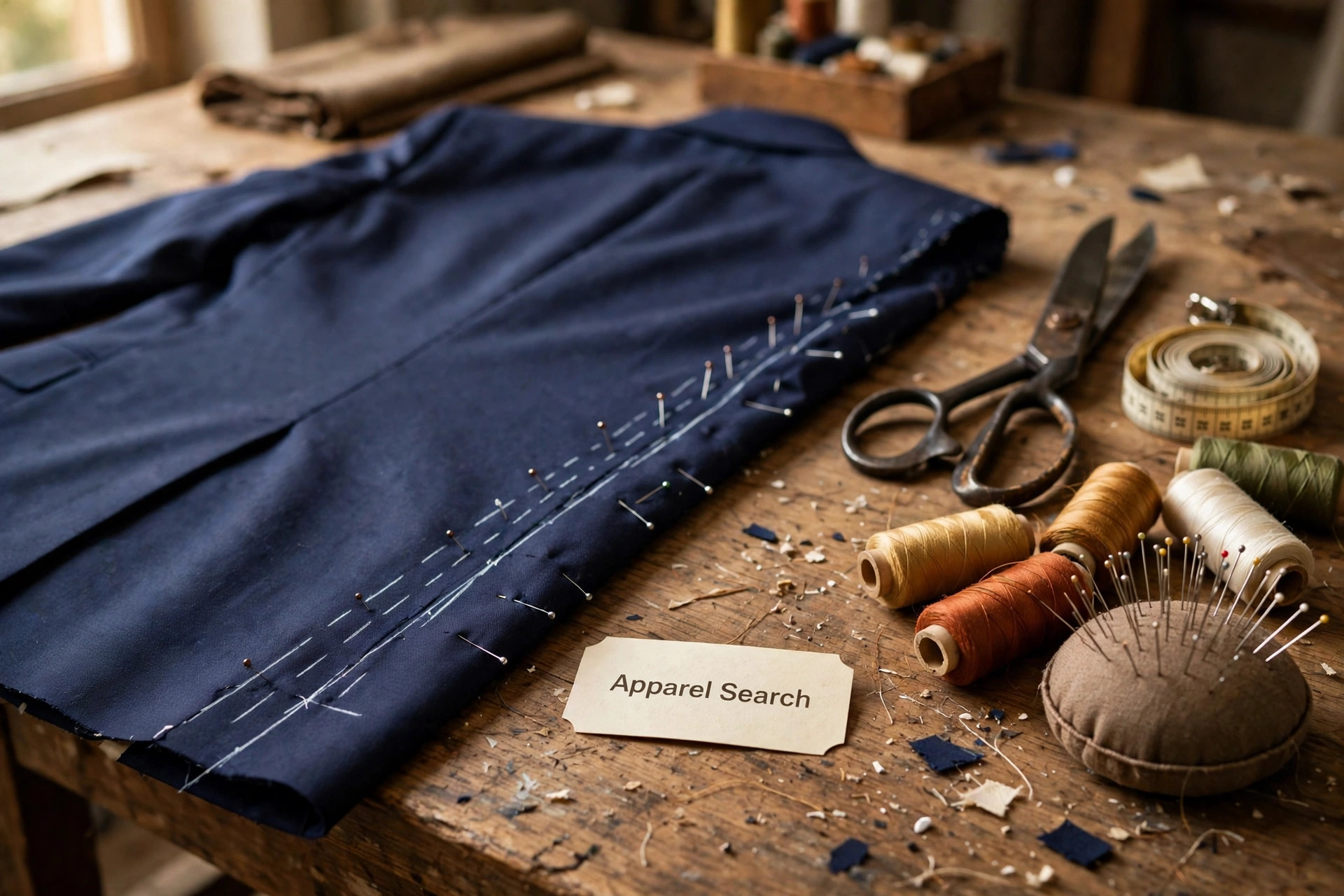
The everyday repertoire is generous. Waists come in by suppressing seams or adding darts. Side seams on shirts, blouses, dresses and jackets run in to remove fullness through the body. Trousers taper, hems rise, sleeves shorten to the new wrist. Buttons move — a small distance that buys real room or takes it away. Dresses reshape at the back zip and side seams; skirts re-sit at the waistband.
Done well, these jobs are invisible: the garment simply fits again, keeping its fabric, its construction, and its history with you. Our clothing alterations guide lists the routine jobs in full, with the fittings that go with them.
02 / Flesh, Not Bones
What Cannot Be Fixed at the Machine
Every garment has a skeleton, and alterations work on the flesh, not the bones. The shoulders of a jacket are its frame: built, padded and canvassed to a size, and remaking them means remaking the jacket — the one job honest tailors decline. Armholes sit where the skeleton puts them; raising them wholesale is reconstruction, not alteration. Nothing can be lengthened beyond its hem and seam allowances, because the cloth for the extra length does not exist. The rise of a trouser, the placement of pockets, the balance of a pattern across a much smaller body — these can drift a little and no more.
Which is why fit at the shoulder remains the first test of any jacket, as our guide to how a suit should fit sets out: buy and keep by the shoulders, alter by the waist.
“Alterations work on the flesh of a garment, not its bones. The shoulders are bones.”
03 / Honest Ranges
How Many Sizes Down Is Realistic?
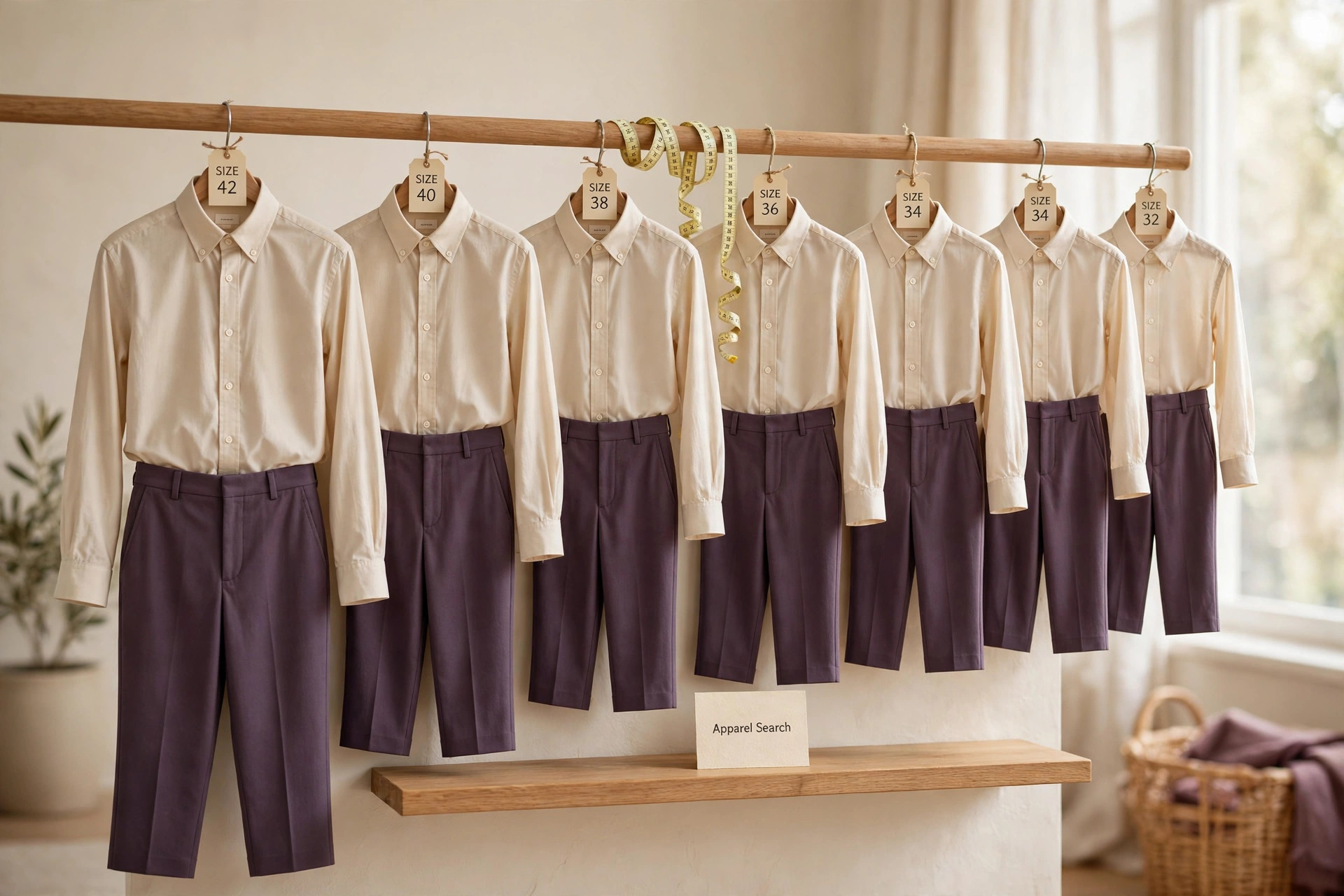
Ask ten tailors and you will hear one rule in different words: a garment tolerates roughly one to two sizes of taking-in before its proportions start to argue. Trousers are the most forgiving at the waist — seat and waistband can come in substantially — but take in too much and the pockets migrate and the crease leaves the center of the leg. Dresses and skirts depend on their seam allowances and construction; a simply built dress travels further than a boned or heavily styled one.
Jackets are the strictest: the body can come in about a size, sometimes two on a generous cut, while the shoulders set the hard limit described above. Knitwear barely alters at all — it can be reshaped slightly, not resized. Take these as the honest ranges to plan around, and let a tailor’s verdict on the actual garment outrank any general rule, including this one.
04 / The Arithmetic
Worth Altering vs Worth Replacing
The arithmetic is cost per wear measured against replacement cost. Alter the suit whose cloth and canvas would cost five times the tailor’s bill to replace; replace the inexpensive trousers whose alteration quote approaches their original price. Fabric quality, construction, and how often the piece will be worn decide — sentiment may vote, but it should not chair the meeting. Our guide to how much alterations cost gives typical prices by job, so a quote can be judged before it is accepted.
A sensible order for a whole wardrobe: the coat and the best suit first — highest replacement cost, most wears — then the workhorse trousers and skirts, then dresses, and shirts and knitwear last. Many of those are cheaper replaced, or serve on as bridge pieces, unaltered, under a layer.
05 / Pin It, Then Move
The Fitting Itself
Arrive at the fitting dressed for the garment: the shoes it is worn with, the undergarments and layers it sits over, the belt it closes with. A hem pinned over the wrong shoes is a wrong hem. Ask the tailor to pin the intended result, and then move in it — sit, reach, climb an imaginary stair — because a fit that only works standing still is a photograph, not a garment.
Start with one garment as a test piece: it calibrates the tailor’s hand to your preference before the rail follows. And agree the limits aloud. A good tailor saying “this one cannot come in further without spoiling it” is giving the most valuable sentence in the shop.
06 / The Decline List Is the Credential
Finding a Tailor for the Work
Look for alterations experience rather than repairs alone: the shop that restyles dresses and recuts suits thinks differently from the one that mostly hems and patches. Ask what garments they take in most, whether they fit on the body or work from measurements, how many fittings a jacket takes, and what they will decline — the decline list is the credential.
Local dry cleaners often keep a capable alterations hand for routine work; the structural jobs belong with a dedicated tailor. Take the test piece first, judge the result in daylight and in motion, and only then hand over the wardrobe.
Questions
Common Questions
Can a tailor take in a suit jacket after weight loss?
The body of the jacket, yes — usually about a size, sometimes two on a generous cut. The shoulders, no: they are the jacket’s frame, and fixing them means remaking the garment. If the shoulders still sit correctly, the jacket is a strong alteration candidate; if they droop past your own, it is not.
How much does it cost to tailor down a wardrobe?
It varies by garment and job — a trouser waist is a modest job, a jacket body a serious one — and by region. Our alteration costs guide gives typical prices by job; the useful comparison is never the bare quote but the quote measured against the cost of replacing that garment at equal quality.
Can jeans be taken in at the waist?
Yes — a common job, done at the center back or with darts, and routine for a modest amount. Large reductions get complicated, because the pockets, yoke and rivets were placed for the original waist; past a point the jeans stop looking like themselves, and replacement is the honest answer.
Should I alter everything at once?
No. If your size is still moving, alter only what you need now and let the rest wait — an alteration taken in twice is paid for twice. Start with one test garment, then the high-value pieces; the companion guide below covers the in-between strategy.
More to Explore
The Companion Guides
Tailoring is one part of the transition. The hub sorts the whole closet; the second companion covers dressing while sizes are still moving.