A major size change does something no single shopping trip can fix: it makes a whole wardrobe wrong at once. The coat that carried last winter now swims at the shoulders. Trousers that fit in spring slide by autumn. Shirts button, technically — and then gape, pull, or hang. This is not a vanity problem; it is a logistics problem, and it has a logistics answer. You do not need a new wardrobe. You need a plan: sort what you own into what a tailor can rescue, what must be replaced, what can bridge the gap cheaply, and what is honestly finished — then rebuild, in stages, a smaller core of clothes that fit the body you have now.
Search Apparel Search
A Garment Guide, Not Medical Advice
This guide is about clothing — fit, tailoring and wardrobe strategy. It offers no medical or weight advice, and nothing here is a recommendation about how anyone’s body should change. If your size is changing for medical reasons, those questions belong with your own doctor or care team; the clothing questions are what these pages can help with.
01 / More Than the Waist
Why Fit Changes Everywhere — Not Just the Waistband
Most people expect a size change to show up at the waistband, and it does — but the waist is only the most honest reporter. Shoulders narrow as the frame beneath them changes, so jacket shoulders begin to slide and droop. Neck size moves, and collars that once closed neatly start to stand away or choke. The rise of a trouser is cut for a particular relationship between waist and seat; change one and the other drags. Sleeve and trouser lengths stay the same while the fullness around them shrinks, which is why hems suddenly feel longer even though nothing has grown. Even hats and gloves can change size.
The practical lesson is to judge every garment on its own new fit, never by its label. Brands cut differently, sizes drift between makers and across the years, and the number that used to be “your size” is now just a rumor. Try each piece on its own merits: where does it pull, where does it pool, where does it slide? That honest inventory — not the size printed in the neck — is what the rest of this guide sorts and spends money on.
02 / The Unnamed Country
The In-Between Sizes Problem
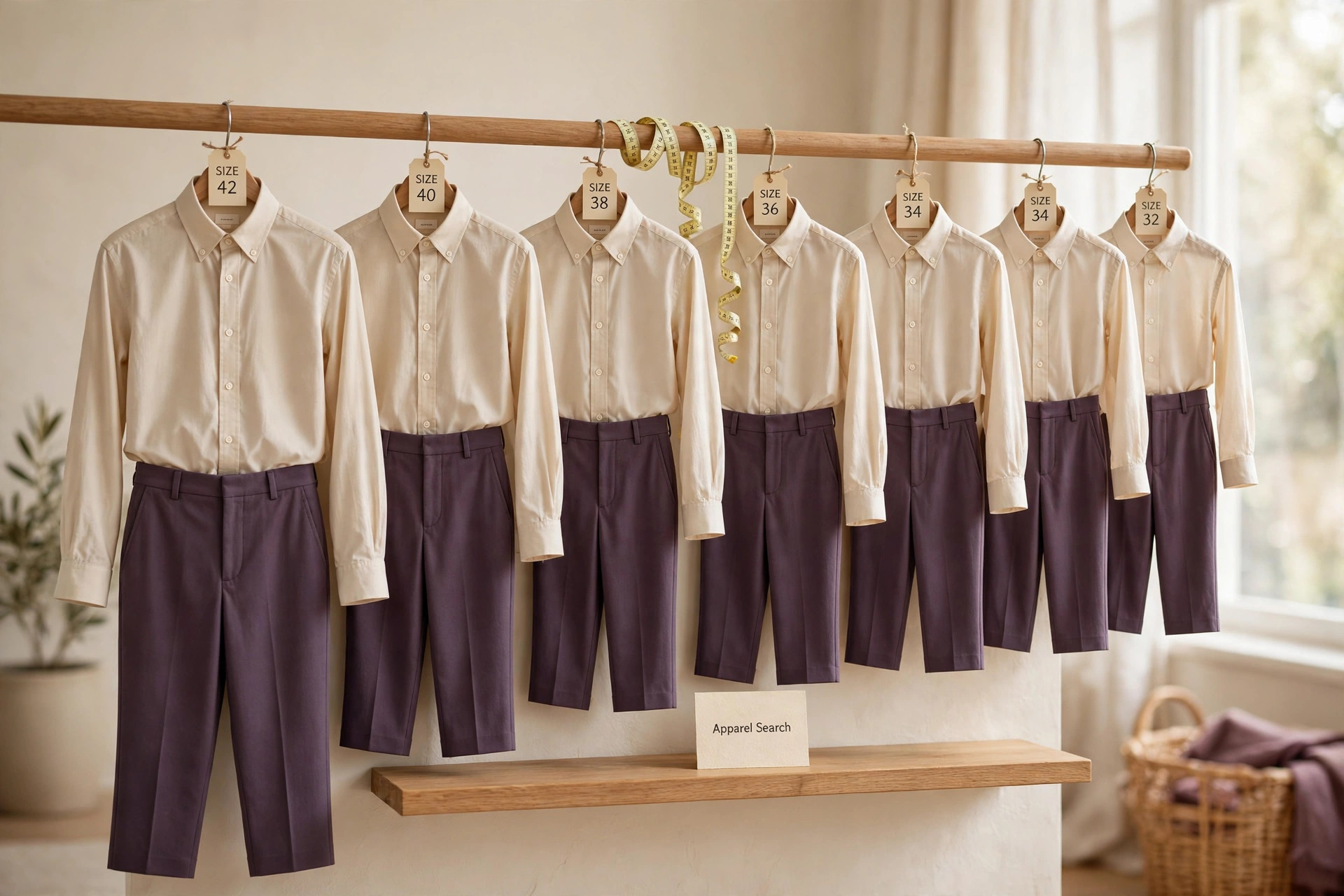
Between the old size and the new one there is usually a country with no name on the label: too small for one size, swimming in the other. The in-between is wider in some categories than others — tailored trousers are unforgiving, knit tops barely notice — and it can last for months. Living in-between means owning the truth of it: at any moment during a change, part of your wardrobe will be in the wrong size, and that is a property of the process, not a personal failure.
The companion guides in this cluster approach the in-between as a place to dress deliberately rather than a waiting room where you are not allowed to look put together: forgiving constructions now, tailored rescues where they pay, and patience about the rest. Start with the sort.
“Judge every garment by its fit today, never by its label. The number that used to be your size is now just a rumor.”
03 / Four Buckets
Sort the Closet: Tailor, Replace, Bridge, Retire
Work the rail once, garment by garment, and give every piece a bucket. Try things on; guessing from the hanger wastes the effort.
- Tailor it
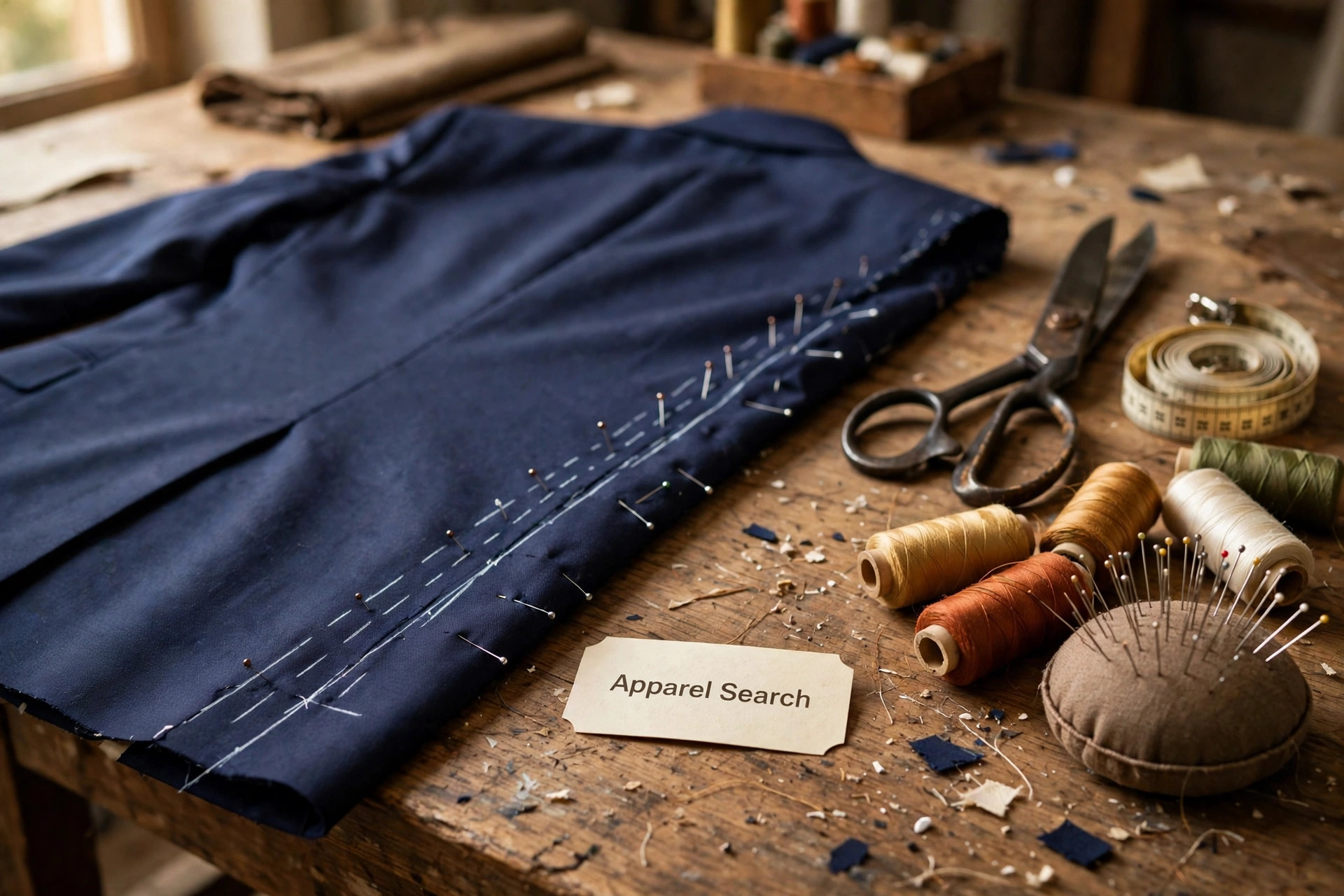
- Quality pieces whose fabric and construction deserve rescue: the good suit, the serious coat, well-made trousers and dresses. Their problem is fullness, not structure — exactly what alteration exists for. Our tailoring after weight loss guide works through the limits garment by garment.
- Replace it
- Fit-critical basics whose fit cannot be altered into honesty: the trousers and shirts worn weekly, underwear and base layers, anything worn against the skin daily, where a wrong fit announces itself by noon.
- Bridge it
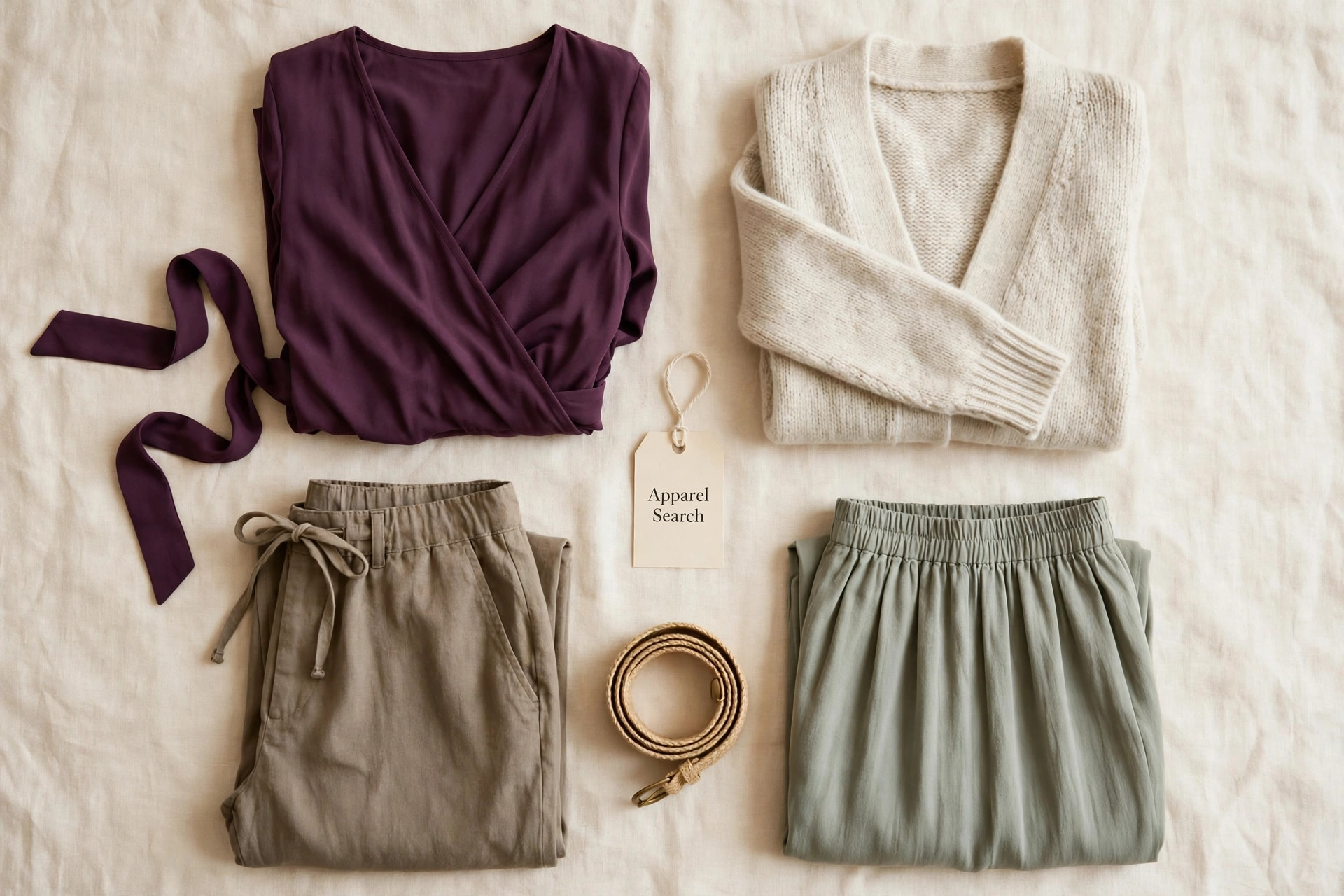
- The forgiving pieces that cover the transition: wrap and tie styles, drawstring and elastic-waist bottoms, knits that hold their shape, open layers. Some are already in your closet; the rest are the only new buys worth making mid-change.
- Retire it
- Pieces that fail every test — wrong in structure, tired in fabric, or kept only because they once cost money. Let them go cleanly, by sale, donation or recycling, rather than letting them occupy the rail as a reproach.
04 / Shock Absorbers
Transitional Pieces That Forgive
Some constructions absorb a size swing gracefully, and they are the wardrobe’s shock absorbers. Wrap dresses and tops tie where the body is today. Drawstring and part-elastic waists forgive a range of mornings. Knits with recovery — the kind that return after stretching rather than bagging — hold their line across a size. Belted shapes redraw the waist wherever it currently sits. Open layers — cardigans, overshirts, unlined jackets — read as intention rather than fit. And anything cut with a generous seam allowance carries a quiet promise to a future tailor.
When you do buy during a transition, buy from this list. The tailored, the structured and the exactly fitted can wait for a settled size — they are stage-three purchases, and buying them early is how a transition wardrobe becomes an expensive museum of almost-fits.
05 / The Tape, Not the Tag
Measure Again, Honestly
Your old measurements are history, and sizing by memory is how money gets wasted. Take fresh numbers — chest, waist at its true position, hips, inseam, neck — with a soft tape, over light clothing, standing naturally. Write them down with the date. During a change you will take them more than once, and the series matters more than any single reading: it tells you whether a size is settling or still in motion.
Then shop by the tape, not the tag. Labels are the least reliable fact on a garment; measurements are the closest thing clothing has to truth. The Apparel Search body measurements guide walks through taking each measurement the way pattern-makers expect it. If a friend can help with the back measurements, so much the better — accuracy here is what saves returns later.
06 / The Order of Spending
Rebuild the Core Wardrobe in Stages
Resist the single heroic shopping trip. A staged rebuild spends the same money in a smarter order. Stage one is fit-critical and immediate: the few pieces worn daily, in constructions that fit now. Stage two is the workhorses — the trousers, skirts, shirts and knitwear that carry a week — bought as the size they must serve begins to settle. Stage three is the good stuff: the coat, the suit, the occasion pieces, bought last and bought best.
The capsule method is the natural frame for a rebuild — a short list of combining pieces, one palette, no orphans — and our capsule wardrobe guide teaches it in full. Price each stage by cost per wear rather than by the ticket: the cost comparison in fashion shopping guide shows the arithmetic that makes an expensive coat cheap and a bargain blouse dear.
Shop Transitional Wardrobe Basics on Amazon
Ready to shop? Product links are kept in one place on the Apparel Search shopping guide:
Shop Clothing on AmazonThis link opens the Apparel Search shopping guide for Amazon, where the product links are kept in one place.
Questions
Common Questions
How long should I keep clothes in my old size?
Keep a small, deliberate reserve while your size is still settling — the best few pieces, stored clean — and let the rest go once a new size has held steady across a season or two. A full rail of old sizes is not insurance; it is clutter with a story attached. The good pieces you do keep are exactly the ones worth having tailored if you ever need them again.
Should I replace my whole wardrobe at once?
No — stage it. Fit-critical daily pieces first, workhorses second, the expensive tailored pieces last. Staging spreads the cost, matches each purchase to the size it will actually serve, and keeps you from buying a full wardrobe at a size you are only passing through.
Which clothes are worth tailoring after a size change?
The quality, structured pieces: suits, coats, well-made trousers, good dresses — garments whose fabric and construction would cost far more to replace than to alter. Inexpensive basics rarely survive the arithmetic. The companion tailoring guide below works through the limits garment by garment.
What do I wear while my size is still changing?
Forgiving constructions: wrap and tie styles, drawstring and elastic waists, knits with recovery, belted shapes and open layers — bought sparingly, secondhand where possible, and rented for occasions. The companion guide below is devoted to exactly that in-between wardrobe.
More to Explore
Two Companion Guides
This hub sorts and stages the rebuild. Its two companions handle the moving middle and the tailor’s rail.