Apparel Search Consumer Guides
The Capsule Wardrobe Guide
A small wardrobe of pieces that all work together — planned once, worn on repeat.
A capsule wardrobe is a small, deliberate set of clothes in which nearly everything works with nearly everything else. Instead of a closet full of individual pieces competing for attention, you keep a short roster — built around your real life, a few colors that agree with each other, and pieces you genuinely wear — and getting dressed becomes a matter of combining rather than hunting. The number of pieces is not the point. The point is that every piece earns its place by fitting your life, fitting the other pieces, and being worn on repeat.
This guide gathers the Apparel Search capsule pages into one place: the step-by-step method for building one, capsules tuned for the office and for travel, a fall and winter version for the current season, and an honest budget route for building one slowly. Throughout, the garment-by-garment detail lives in our women's clothes guide, while the pages below cover the planning — how to choose the roster and make it hold together.
Search Apparel Search
The Guides in This Section
 How to Build a Capsule WardrobeThe step-by-step method: audit your closet, choose a palette, draft the core list with realistic piece counts, test the outfits, then shop the gaps last.
 Work Capsule WardrobeA mix-and-match office capsule: a dozen pieces, a sample two-week rotation, and how to tune it from business casual to formal offices.
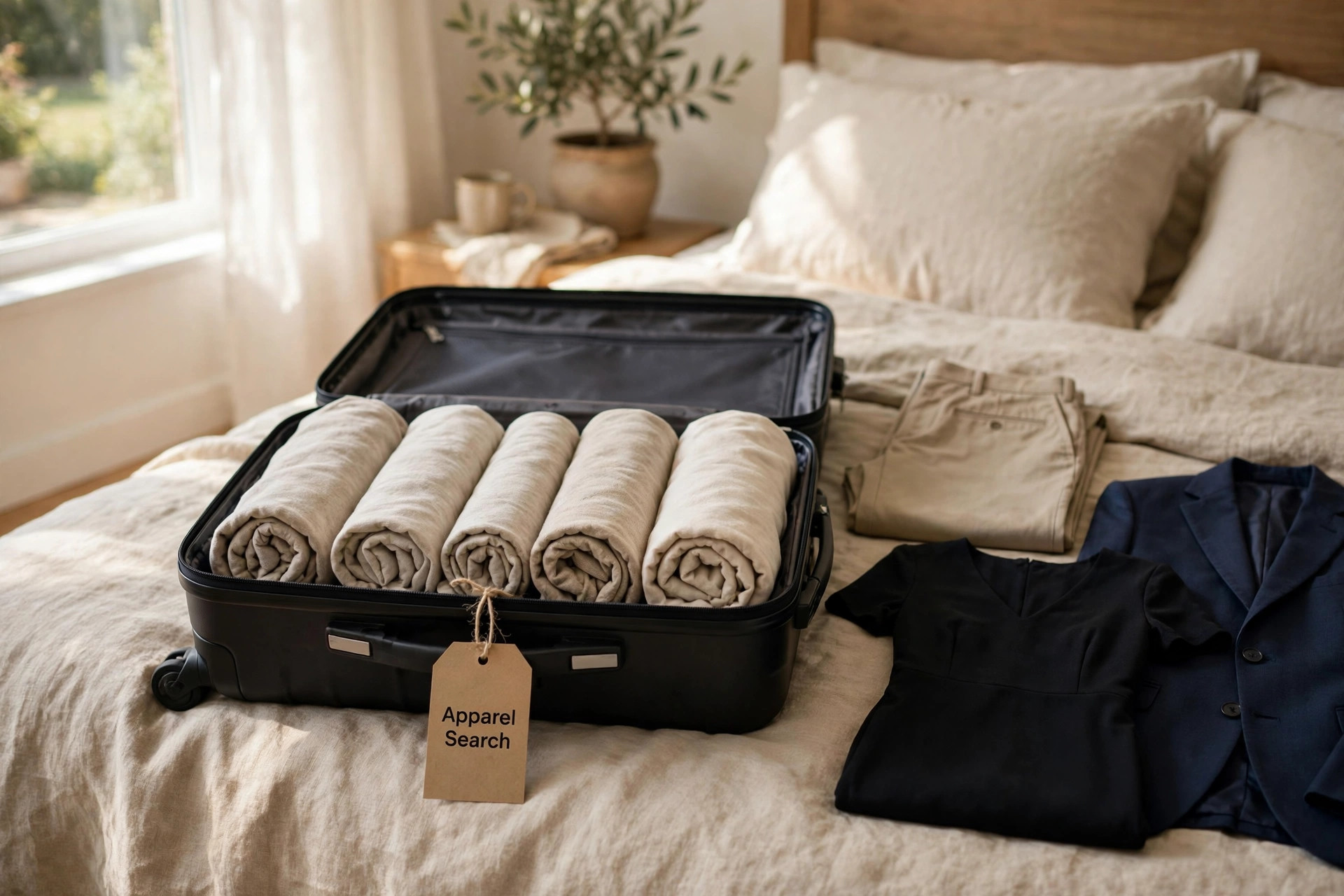 Travel Capsule WardrobePack a capsule, not a suitcase of maybes: one-bag thinking, wrinkle-resistant fabrics, the outfit math, and a sample seven-day packing list.
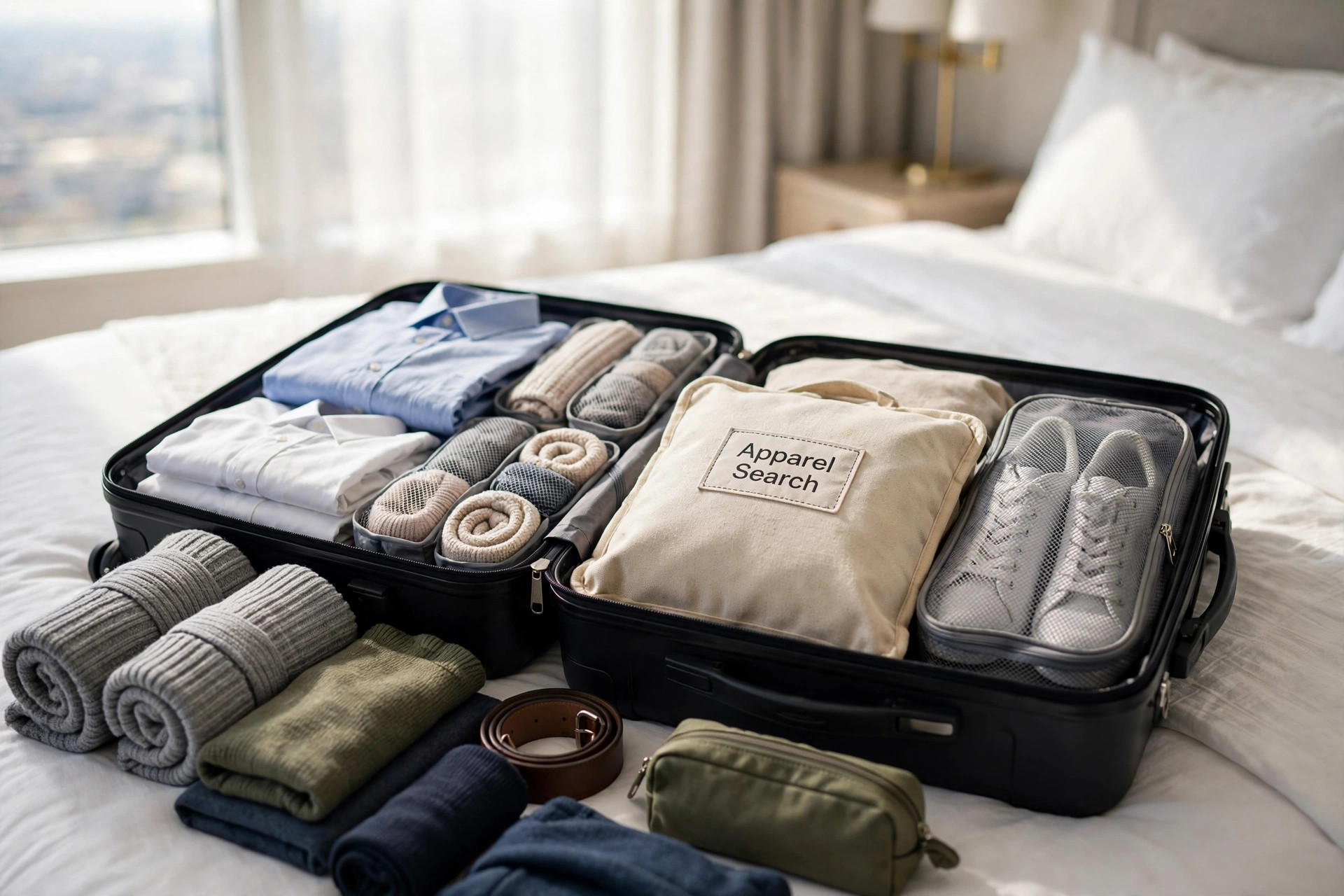 Travel Packing GuideChoosing the pieces is the capsule method; packing them well is a craft of its own — cubes, folds and rolls, the shoes-first order, carry-on math, and folding a suit so it arrives wearable.
 Fall & Winter Capsule WardrobeThe seasonal capsule for right now: layering pieces, a coat and boots strategy, and holiday-event add-ons that join the roster instead of cluttering it.
 Capsule Wardrobe on a BudgetBuild one slowly, in the right order: what to buy first, cost-per-wear math, and the secondhand strategy that fills a capsule for a fraction of retail.
What a Capsule Is — and Is Not
It is not a magic number. The internet loves exact counts — 33 pieces, 37 pieces — but real wardrobes answer to real lives. A nurse, a lawyer and a retiree in different climates need different rosters, and a working range of roughly 25 to 50 pieces (including shoes, excluding underwear, workout gear and occasion wear) covers most people comfortably. Treat any number you read, including ours, as a starting point to adjust, not a commandment to obey.
It is not a uniform, and it is not all black. A capsule can hold color, print and personality; it simply asks those pieces to cooperate. Three base neutrals and a few accent colors that you love will make a wardrobe of thirty pieces combine like a wardrobe of a hundred. What a capsule refuses is the orphan: the lovely top that goes with nothing you own.
It is not a purge you will regret. The method in our step-by-step guide starts with an audit and a holding box, not a donation bag. Pieces leave when they have proven — over months, not minutes — that they no longer serve your life. A capsule is built by editing and keeping, not by throwing away.
Why It Works: The Math of Wearing More
A capsule pays in two currencies. The first is combinations: ten tops that all pair with four bottoms are forty outfits, while thirty random tops that each match one bottom are thirty. The second is cost per wear: a smaller wardrobe means every piece is worn far more often, so the honest price of a garment — its cost per wear — falls even when you buy better quality. Capsule wearers routinely discover that the expensive coat in a capsule is cheaper, per wearing, than the bargain coat in a stuffed closet that was worn four times.
Companion Guides
Building a capsule later in life? Our wardrobe essentials for women over 50 lists the staples worth owning well — the same core pieces, chosen with a cost-per-wear eye. And if your capsule is built, our consumer guide to capsule wardrobe & outfit planning shows how to plan a week of outfits from it in minutes.
Go Deeper: The Pieces Themselves
Common Questions
How many pieces are in a capsule wardrobe?
Most workable capsules land between about 25 and 50 pieces including shoes — and the right number is the one that covers your actual week without orphans. Climate, work, laundry habits and social life all move the count. Treat any exact figure, including the famous 33 and 37, as a starting point to adjust rather than a rule.
Does a capsule wardrobe have to be all neutrals?
No. The usual recipe is two or three base neutrals — navy, black, grey, camel, denim — plus a few accent colors you love, because pieces in a shared palette combine freely. A capsule built only from colors you never wear would fail at its real job, which is making your actual clothes work harder.
Will I get bored wearing a capsule wardrobe?
Most people report the opposite: boredom usually comes from a closet of pieces that go with nothing, so the same three outfits repeat anyway. A capsule of thirty cooperating pieces makes dozens of combinations, and accessories, scarves and shoes rotate the look without adding clutter.
How long does it take to build a capsule wardrobe?
The audit and planning take an afternoon. Filling the gaps honestly takes longer — a season is a sensible pace, buying in priority order as budget allows. Many people run a first capsule entirely from clothes they already own and let it improve round by round.
Start With the Method
The build order matters more than the shopping: audit first, palette second, gaps last. Our step-by-step guide to building a capsule wardrobe walks the whole sequence in an afternoon. It begins with the closet itself: our closet organization and wardrobe audit guide shows how to sort, audit and arrange what you own first.