The Warm-Season Counterpart
The Same Capsule, Dressed for Heat
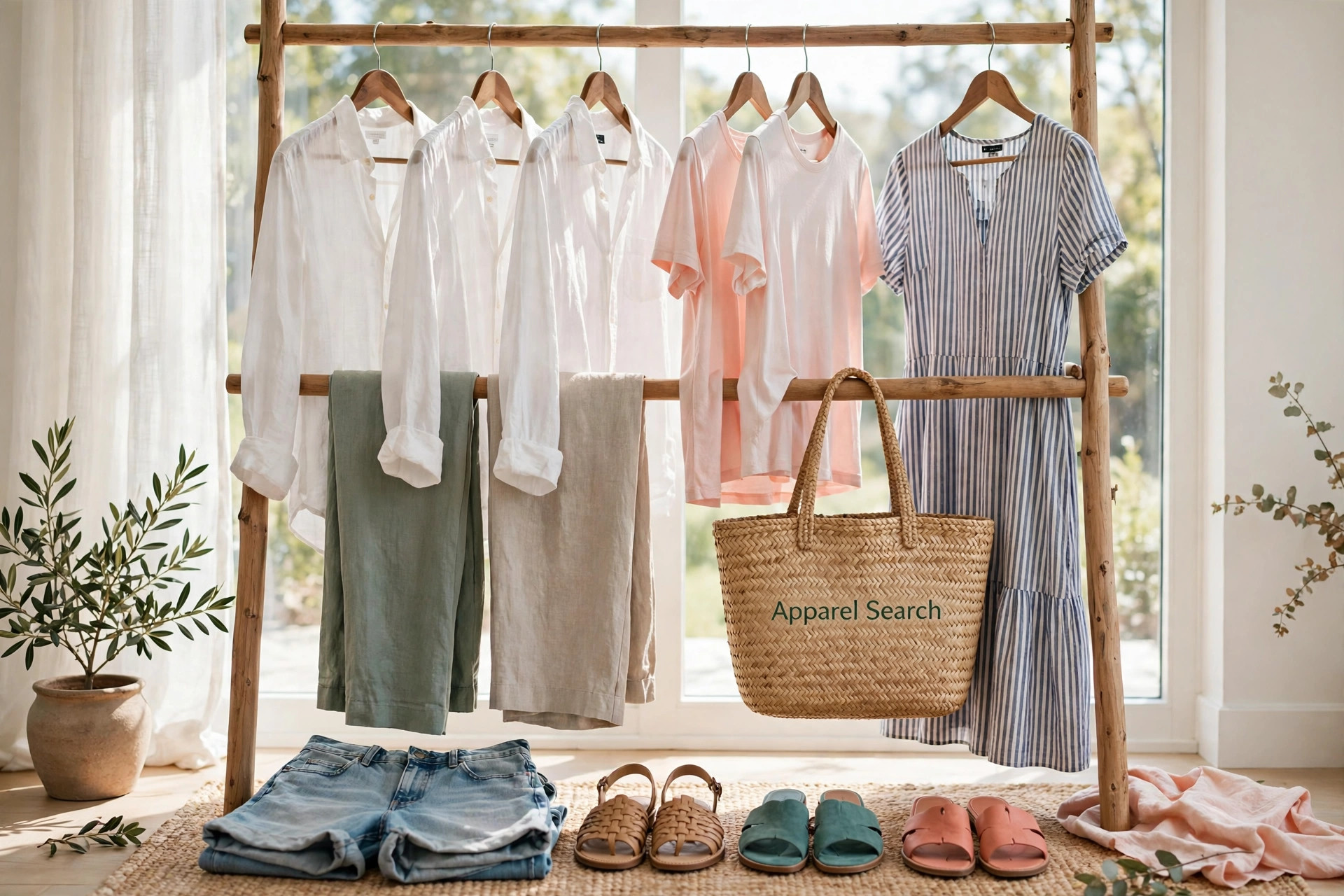
A spring and summer capsule is not a second wardrobe. It is the warm-season half of the same system described in our capsule wardrobe guide: a stable core that stays all year, with the heavy layers swapped for pieces that breathe. Where the fall & winter capsule wardrobe guide is built around insulation, this one is built around air — lighter fabrics, a brighter palette, and clothes that survive a hot commute and still look composed at dinner.
The reward is the same as in winter, only larger: roughly 25 to 30 pieces that combine into weeks of outfits, and mornings with nothing to decide. Build it with the method in how to build a capsule wardrobe — audit first, palette second, shopping last.
The Roster
The Core List: Roughly 25 to 30 Pieces
- Tops (7–8): three cotton tees, two linen or poplin shirts, a sleeveless top, a light blouse, and one dressier top for evenings.
- Bottoms (5–6): linen trousers, cotton chinos or wide-leg trousers, light-wash or white denim, tailored shorts, and one or two skirts that take a tee as easily as a blouse.
- Dresses (2–3): a shirt dress, a sundress, and one dress that steps up for weddings and dinners with a shoe change.
- Light layers (2–3): a cotton or linen knit cardigan, an unlined blazer or overshirt, and a light rain jacket.
- Shoes (4): white trainers, sandals, loafers or espadrilles, and one dressier pair.
- Finishing pieces (3–4): a woven tote, sunglasses, a light scarf for air conditioning and evenings, and a swimsuit where the season calls for one.
Counts flex with climate and dress code, but the proportions hold: more tops than bottoms, because tops change the look most and need washing most often in summer.
Side by Side
Fabric Swaps: Fall & Winter vs Spring & Summer
Fall & Winter
- Wool coats and heavy knits
- Merino and thermal base layers
- Corduroy, flannel and lined trousers
- Boots, closed shoes, thick socks
- Dark, grime-hiding colours
Spring & Summer
- Unlined jackets and light knits in cotton or linen yarn
- Linen shirts, trousers and dresses that crease gracefully
- Cotton poplin, chambray and lighter denim
- Sandals, trainers and breathable loafers
- Light neutrals lifted by one or two clear accent colours
The swap is mostly a fabric swap, not a style swap. The shirt shape you wore in flannel returns in linen; the trousers return in cotton; the knit returns a gauge finer. Linen is the headline fabric — breathable, quick to dry, and honest about its creases — with cotton close behind, and lighter knits reserved for mornings and over-air-conditioned rooms.
Colour
A Palette That Lightens Without Starting Over
Keep the neutrals that already anchor your closet — white and off-white join navy, stone and khaki well — then lighten the accent side: coral, soft teal, butter yellow or sky blue in two or three pieces each is enough to make the wardrobe read as summer. The test is unchanged from winter: every accent must sit with every neutral, and no piece may match only one partner. Prints belong too, in small doses — a striped tee, a floral skirt — as long as their colours come from the same palette.
Getting Dressed
Outfit Formulas That Carry the Season
Linen shirt + tailored shorts + sandals is the hot-day default. Tee + wide-leg linen trousers + trainers covers errands, travel and casual work. Shirt dress + loafers + light knit over the shoulders moves from office to evening without a change. Blouse + white denim + dressier sandals is the dinner formula, and the sundress stands alone whenever thinking is not on the agenda. Five formulas, endlessly repeated, are the point of the capsule — variety comes from accessories, not more clothes.
For Men
The Men’s Adaptation
The same roster translates directly: linen and poplin shirts replace the flannel, cotton tees and a light polo cover the base, chinos and linen trousers replace the heavier trousers, tailored shorts join for weekends, and an unlined blazer plus a light knit covers cooler evenings. Footwear swaps boots for loafers, white trainers and sandals. The dedicated men’s capsule wardrobe guide builds the year-round men’s core in full; treat this page as its warm-season rotation, in the same palette logic and the same 25-to-30-piece range.
Twice a Year
The Seasonal Swap-Over: What to Store, What to Keep
Do the changeover in one session, as the weather turns. Store: the serious coat, heavy knits, boots and thermal layers — washed first, folded rather than hung, and boxed where you can reach them for a cold snap. Keep out: the year-round core — tees, shirts, jeans, trainers, the blazer. Bring in: the stored warm-season pieces, tried against the palette before they earn rail space; anything that no longer fits the formulas is a donation candidate, not a passenger. Finish by listing genuine gaps, and only then shop — the discipline the capsule wardrobe on a budget guide uses to keep a capsule cheap.
On the Road
Travel-Friendly by Design
A warm-season capsule is the easiest wardrobe to travel with: the fabrics are light, the palette already coordinates, and a week of outfits fits a carry-on. Linen and cotton knits roll without damage, sandals pack flat, and the light knit doubles as the flight layer. The travel capsule wardrobe guide turns the same thinking into a packing list; a summer capsule is already 90 per cent of it.
Questions
Common Questions
How many pieces are in a spring and summer capsule wardrobe?
Around 25 to 30 pieces for most people, counting shoes but not underwear, swimwear or occasion wear. The count matters less than the rule behind it: every top should work with at least three bottoms, and every piece should earn its place in more than one outfit formula.
What fabrics work best for a warm-weather capsule?
Linen, cotton, and blends of the two carry most of a warm-season capsule: linen for shirts, trousers and dresses, cotton for tees, poplin shirts and denim, and light knits in cotton or linen yarn for cooler evenings. Choose breathable weaves with enough body to hold their shape in heat and humidity.
How do I swap a fall and winter capsule over to spring and summer?
Work in one session: wash and store the heavy coats, boots and thick knits, keep the year-round core of tees, shirts, jeans and trainers in place, then bring out the stored warm-season pieces and check them against your palette and outfit formulas before filling any gaps.
More to Explore
Search Apparel Search